April 2025

Varying effects of public pensions: Pension spending and old-age employment under different pension regimes

By Kun Lee Socioeconomic consequences of pension reforms have often been discussed without careful consideration of institutional contexts, despite the fact that institutional designs of public pensions differ substantially across countries. This study argues that the outcomes of pension reforms vary depending on the institutional structure of public pensions, by showing that the associations between public pension spending and old-age employment rates of different socio-demographic groups vary across different institutional contexts. Using time-series cross-section data from 20 European countries and...

Retirement in the USA: The Outlook of the Workforce 25th Annual Transamerica Retirement Survey

By Transamerica Institute Retirement in the USA: The Outlook of the Workforce, a collaboration between Transamerica Center for Retirement Studies (TCRS) and Transamerica Institute, delves into the retirement prospects of the U.S. workforce including workers who are employed by others, self-employed workers, and workers who are unemployed but looking for work. Based on a survey of more than 6,100 members of the workforce, the report delves into their life priorities and outlook, personal finances, retirement expectations, and how they are saving,...

The Social Security Retirement Age

By Congressional Research Service The Social Security full retirement age (FRA) is the age at which workers can first claim full (i.e., unreduced) Social Security retired-worker benefits.1 Among other factors, the age at which an individual begins receiving Social Security benefits has an impact on the size of the monthly benefits. Claiming benefits before the FRA can substantially reduce monthly benefits, whereas claiming benefits after the FRA can lead to a substantial increase in monthly benefits. Benefit adjustments are made...

Optimal Investment-Consumption and Retirement Choice with Labor and Pension Incomes

By Hyun Jin Jang & Seon Hwa Lee This study examines lifetime optimal investment, consumption, and retirement timing decisions under a heterogeneous consumption utility function and the presence of pension earnings. Using the duality method, we derive the optimal wealth, investment-consumption strategies, and voluntary retirement region. Through simulation analysis, we assess the impact of pensions on these decisions. Our findings highlight the critical role of pensions in retirement planning, alongside wages and labor costs. Notably, pension benefits encourage earlier voluntary...

Robots and Informal Employment in China

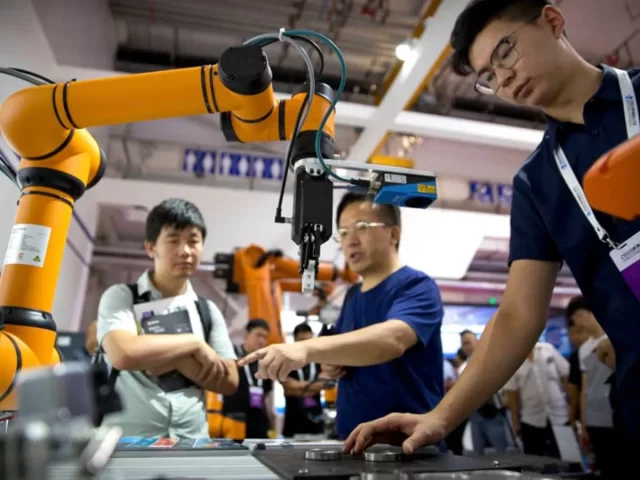
By Haiyan Lin This paper examines labor adjustments between the informal and formal sectors in response to the adoption of industrial robots in China. Using a longitudinal household data from 2010 to 2018, I find that robotization increases informal employment. Quantitatively, one more robot per thousand workers increases the share of informal employment by 1.16 percentage points. The reallocation is not driven by new entrants or re-entrants, but by workers initially employed in the formal sector. Displaced formal workers tend...

March 2025

Minimum Wage Policy and the Gender Wage Gap

By Hang Anh Nguyen, Martin O'Brien & Alfredo Paloyo Minimum wage policies have become a nearly universal feature of modern labour markets, with over 90% of countries implementing statutory wage floors since 2012 (Del Carpio & Pabon, 2014). Yet, despite their widespread adoption, the economic effects of minimum wages remain highly contested. Advocates argue that they boost earnings for lowwage workers, reduce income inequality, and mitigate poverty, while critics contend that they suppress productivity, distort wage structures, and incentivise firms...

How and Why the Gender Pension Gap in Urban China Decreased between 1988 and 2018

By Björn Gustafsson, Peng Zhan & Hanrui Jia In urban China, gender gaps in employment and earnings have steadily increased since the 1990s. Such gender gaps are important because pension rights and amounts are based on labor force participation and wages. However, as this study demonstrates, despite the rise in gender differences in the urban labor market, the average gender pension gap decreased between 1988 and 2018. In this paper, we describe the evolution of the fragmented pension system in...

The Macroeconomy After Tariffs

By Davide Furceri, Swarnali A Hannan, Jonathan D Ostry & Andrew K Rose What does the macroeconomy look like in the aftermath of tariff changes? This study estimates impulse response functions from local projections using a panel of annual data that spans 151 countries from 1963 to 2014. Tariff increases are associated with persistent, economically and statistically significant declines in domestic output and productivity, as well as higher unemployment and inequality, real exchange rate appreciation, and insignificant changes to the...

Gender pension gaps in a private retirement accounts system: A dynamic model of household labor supply and savings

By Clement Joubert & Petra E. Todd  This paper develops and estimates a dynamic model of individuals’ and couples’ labor supply, savings, and retirement decisions to analyze how the design of Chile’s privatized pension system and a reform undertaken in 2008 affect gender pension gaps and old-age poverty. Chile has one of the longest-running private retirements accounts systems in the world, which has served as a model for many countries. The paper estimates the dynamic model using pre-reform data...

February 2025

2025 Employee Sentiment Study

By AON Successful organizations recognize the critical importance of their people and what is valuable to them. Investing in their potential, aspirations and resilience, and providing them with choice and flexibility that caters to their diverse needs is not just a necessity — it is the foundation for delivering long-term sustainable growth. This study is based on findings from Aon’s Employee Sentiment survey and insights from Aon’s team of human capital specialists. It equips senior business, human resources, and people leaders...