July 2024

Unemployment in Informal Labor Markets in Developing Countries

By Emily Breza & Supreet Kaur Developing countries typically exhibit low rates of rural wage employment. For example, in India, male workers whose primary source of earnings is wage labor report working on only 46 percent of days per year.1 Bangladesh has a similarly low 55 percent rate of employment among landless males, and the rates are even lower in sub-Saharan Africa. What do these low employment rates mean? One possibility is that they reflect extremely high involuntary unemployment. Alternatively, the rates...

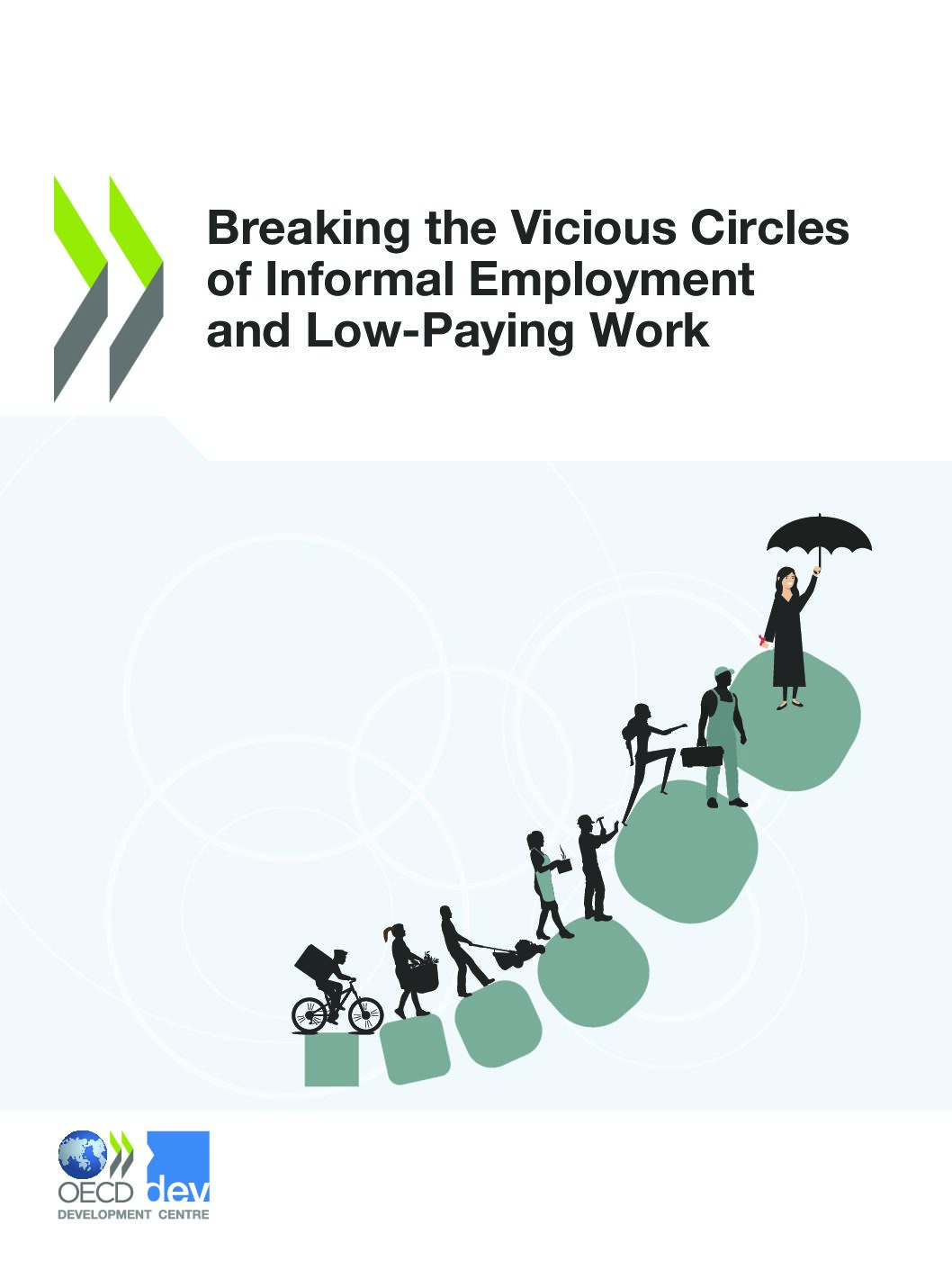
Breaking the Vicious Circles of Informal Employment and Low-Paying Work

By Organisation for Economic Co-operation and Development This report adds two perspectives on informality. First, it disassembles the mechanics of the deleterious links between informal employment, low-paying work and low skills. It shows that informal employment is highly persistent, and that the vulnerability of informal workers is passed on to their children in the absence of adequate education, skills and social protection policy. Second, the report underscores the double burden of informality and low-paying work that a large share of...

Career Expectations and Outcomes: Evidence (on Gender Gaps) from the Economics Job Market

By Brooke Helppie McFall, Eric D. Parolin & Basit Zafar This paper investigates gender gaps in long-term career expectations and outcomes of PhD candidates in economics. For this purpose, we match rich survey data on PhD candidates (from the 2008-2010 job market cohorts) to public data on job histories and publication records through 2022. We document four novel empirical facts: (1) there is a robust gender gap in career expectations, with females about 10 percentage points less likely to ex-ante expect to get...

The Impacts of Raising the Public Pension Eligibility Age on the Lifestyles of Elderly People: Evidence from Japan

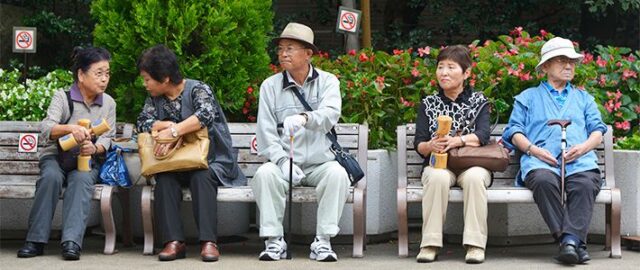
By Shinya Inukai With many countries facing rapid population aging, the sustainability of public pensions has become a pressing issue. I evaluate the impacts, including both employment and time allocation, of public pension reform on the lifestyles of the elderly. In Japan, all residents aged 20 or older are covered by the public pension, with eligibility determined mechanically based on age. I focus on the reform raising men's eligibility age from 60 to 61 in 2001 and estimate its impact...

June 2024

LGBTQ+ people still face discrimination and economic inequality. These policies could help.

By Emma Ockerman LGBTQ+ people have long been subjected to economic inequality, including higher poverty rates, a greater likelihood of experiencing homelessness, and lower median earnings. Though economic policies that would broadly uplift low-income people and workers in the U.S. — including access to better-paying jobs, a higher minimum wage, paid family and medical leave, paid sick days, child-care support, and quality healthcare — would similarly benefit LGBTQ+ people who might lack such resources, experts and advocates say, LGBTQ+ people face the additional burden of...

LGBT Workers in the Labor Market

By Caroline Medina, Lindsay Mahowald & Rose Khattar The COVID-19 pandemic and ensuing economic crisis resulted in significant hardship for people across the country: Tens of millions of people lost their jobs, unemployment rates increased, and economic activity declined. To mitigate these economic impacts, federal policymakers enacted multiple relief bills, including the American Rescue Plan Act. These investments shortened the recession in the wake of the pandemic and have helped propel a historic economic recovery resulting in the most jobs...

May 2024

Female Labor Supply and Rural Pension Eligibility in Brazil

By Gaurav Khanna, Margaret Lay, Stephanie Lee & Benjamin Thompson In 1991, Brazil expanded its rural old-age pension to cover millions of previously uncovered women, conditional on work requirements.  We use a difference-in-differences approach to show that this expansion drastically increased women’s employment by nine percentage points, or 26 percent.  This increase in labor force participation occurred among women who were immediately age-eligible, and among younger cohorts that would be eligible in the future. These results illuminate the capacity of...

Older Adult Employment: 2021 Annual Report

By SeniorLiving.org Workers over the age of 55 represent a huge and essential segment of the American economy, and their influence is growing. In fact, by 2030, one in four U.S. workers will be 55 or older. In part because they account for such a large share of the workforce, older adults have been hit hard by the Covid-19 pandemic, and many states had a decline in the number of workers over 55 remaining in the workforce. But overall, the 55-and-older...

The growth of the older workforce

By Richard Fry & Dana Braga The share of older adults holding a job today is much greater than in the mid-1980s. Some 19% of adults ages 65 and older are employed today. In 1987, only 11% of older adults were working. Today’s share is similar to that of the early 1960s, when 18% of older Americans worked. As the employment rate among older adults has gradually risen since the 1990s, employment among younger workers has followed a different pattern. Jobholding...

April 2024

Latent Cumulative Disadvantage: US Immigrants’ Reversed Economic Assimilation in Later Life

By Leafia Z Ye One of the most salient findings in research on immigration has been that immigrants experience substantial economic mobility as they accumulate more years in the host-society labor force and eventually approach earnings parity with their native-born counterparts. However, we do not know whether this progress is sustained in retirement. In this paper, I develop a framework of Latent Cumulative (Dis)advantage and hypothesize that even as immigrants are approaching parity with the native-born in terms of current...