
August 2019

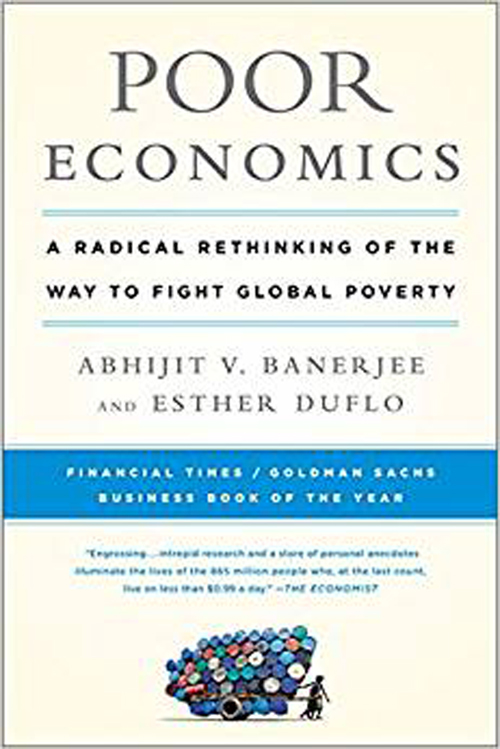
Poor Economics: A Radical Rethinking of the Way to Fight Global Poverty

By Ford Foundation International Professor of Economics and Director Poverty Action Lab Abhijit Banerjee, Esther Duflo Two practical visionaries upend the most common assumptions about how economics works in this gripping and disruptive portrait of how poor people actually live. Why do the poor borrow to save? Why do they miss out on free life-saving immunizations, but pay for unnecessary drugs? In Poor Economics, Abhijit V. Banerjee and Esther Duflo, two award-winning MIT professors, answer these questions based...
Gender Gap in Savings Goal Choice: Evidence from Mixed Methods

Ariane Hillig, Jerome Monne, Janette Rutterford, Dimitris Sotiropoulos There has been a good deal of research on gender psychological differences in the context of financial decision making, but no research on the impact of gender difference in the setting of savings goals. To address this question we use two unique datasets, one quantitative and one qualitative. Our quantitative results show that men set more challenging savings goals than women, even when we control for wealth, income, and portfolio risk...

Behavioral Finance: What Everyone Needs to Know

By H. Kent Baker, Greg Filbeck, John R. Nofsinger People tend to be penny wise and pound foolish and cry over spilt milk, even though we are taught to do neither. Focusing on the present at the expense of the future and basing decisions on lost value are two mistakes common to decision-making that are particularly costly in the world of finance. Behavioral Finance: What Everyone Needs to KnowR provides an overview of common shortcuts and mistakes people make...

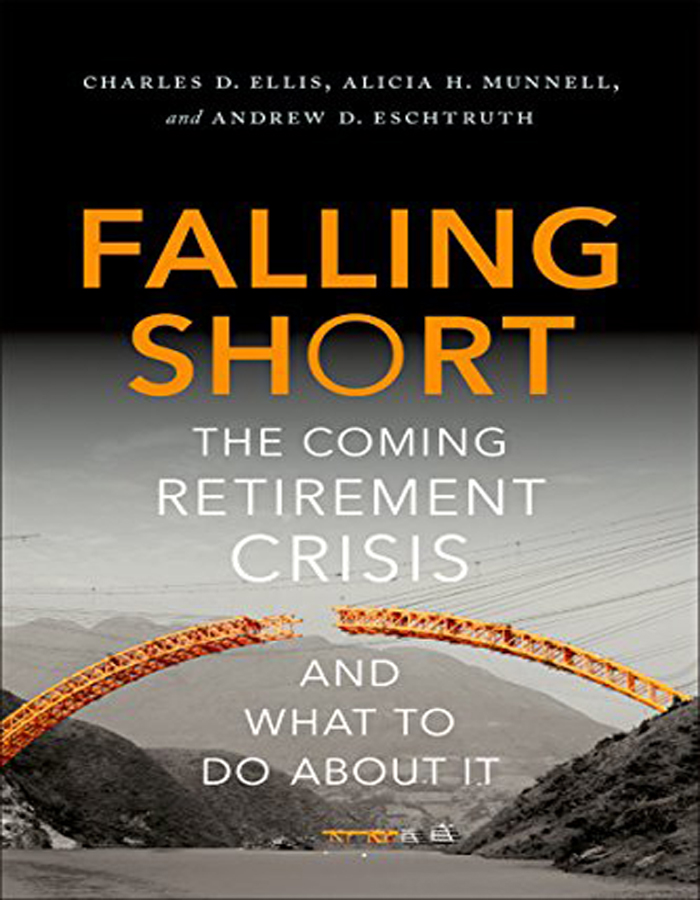
Falling Short: The Coming Retirement Crisis and What to Do About It

By Charles D. Ellis, Alicia H. Munnell, Andrew D. Eschtruth  The United States faces a serious retirement challenge. Many of today's workers will lack the resources to retire at traditional ages and maintain their standard of living in retirement. Solving the problem is a major challenge in today's environment in which risk and responsibility have shifted from government and employers to individuals. For this reason, Charles D. Ellis, Alicia H. Munnell, and Andrew D. Eschtruth have written this concise guide for...

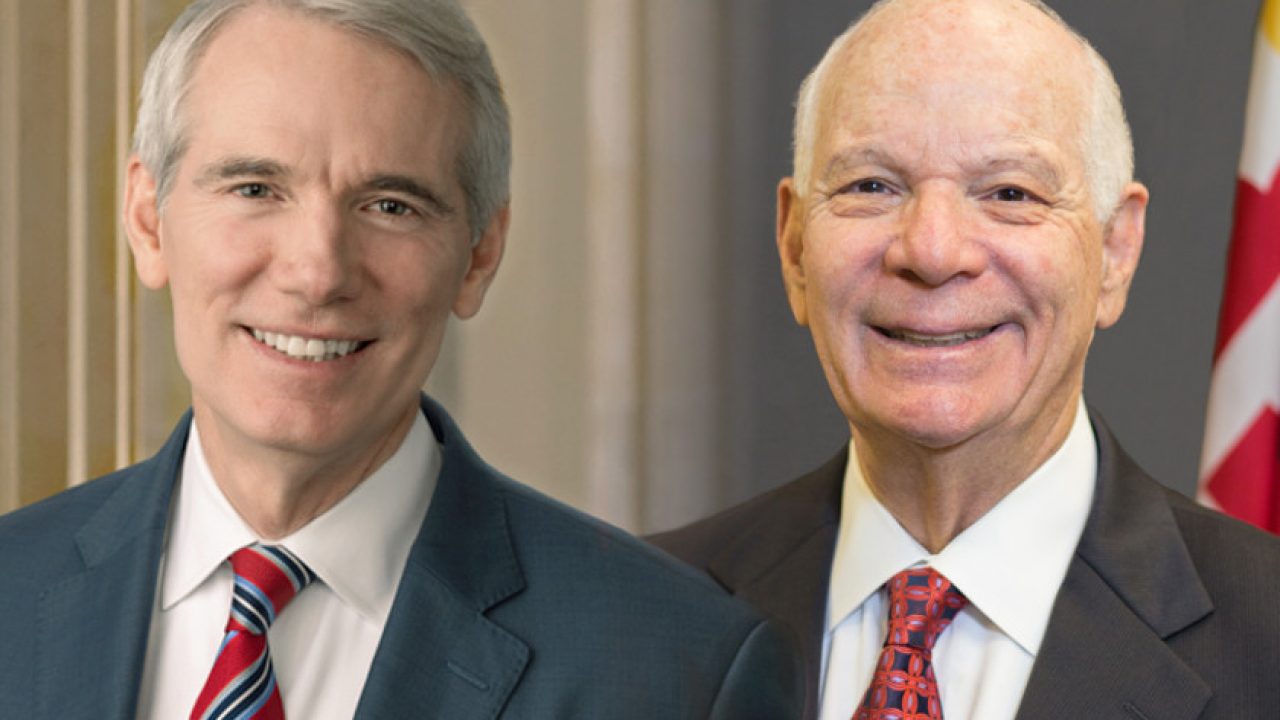
The False Promise of Portman-Cardin Pension Reform

By Michael Doran This article analyzes the pension-reform bill introduced in 2019 by Senator Portman and Senator Cardin. Earlier Portman-Cardin bills, enacted in 1996, 2001, and 2006, substantially increased the amounts that higher-income families can save in tax-qualified retirement plans and IRAs, but they included only modest and mostly ineffective measures to encourage retirement savings by lower- and middle-income families. Despite the tens of billions of dollars in tax subsidies spent under the earlier Portman-Cardin legislation, retirement-account values today...

Multiemployer plans: evaluating a proposal to spread the pain

By Alicia Munnell, Jean- Pierre Aubry, Wenliang, Hou, Anthony Webb The Multiemployer Pension Reform Act (MPRA) allows multiemployer plans facing insolvency to apply for approval from the Treasury to cut accrued benefits of plan members to prolong plan solvency—a departure from the benefit protections of Employee Retirement Income Security Act. To assess the law's impact, this paper models Central States Teamsters – by far the largest – plan to have applied under the new law to reduce benefits. Using...

July 2019

Longevity: a new asset class

By David Blake A little over a decade ago, a new asset classemerged, one linked to longe vity risk, i.e., unanticipatedchanges in life expectancy. The Life Market has two seg-ments: a macro-segment with assets linked to groups of lives,such as members of a pension plan or a book of annuitants;and a micro-segment with assets linked to individual lives,such as life settlements. For the market to become global,certain market requirements need to be satisfied, such asunderstanding the causal factors underlying...

Selecting a Social Security Age to Balance Consumption and Risk

By Barry Cobb, Jeffrey Smith This paper uses Monte Carlo simulation to determine the maximum consumption given retirement at age 62, initial wealth, risk tolerance, and Social Security take decision. Coile et al. (2002) argue for a delay, because the payment increases 7% for each year. Focusing on maximizing the expected present value of benefits may be misguided. This paper shows that, conditional on retirement at age 62, initial consumption is always maximized by taking Social Security no later...

Navigating Complex Financial Decisions at Retirement: Evidence from Annuity Choices in Public Sector Pensions

By Robert L. Clark, Robert G. Hammond, David Vanderweide Choices regarding the disposition of wealth at retirement can have substantial implications for retirement income security. We analyze the factors determining annuity option choices offered by a public sector defined pension plan with no default annuity option. Using combined administrative records and survey data, we explore the role of individual and household characteristics as well as risk preferences, time preferences, and financial literacy. The evidence is consistent with predictions over which...

The Future of Finance is Now: The Most Important Trends in Finance for the Coming Decade Have Already Started

By Jason Schenker The Future of Finance is Already HereIndustries are being disrupted by new and emerging technologies. The coming decade will bring an acceleration of technological innovation, adoption, and disruption. But finance has long been an industry at the forefront of technology adoption, which is why some of the most critical technological innovations and solutions for finance have already emerged. The Future of Finance is Now explores the most important innovations in finance technology (FinTech) as...