November 2023

China’s aging population could make it ‘the world’s largest nursing home’: Economist

Some economists are worried that China’s aging population and debt-fueled, real estate–focused economic model are leading it toward “Japanification.” That’s jargon for a lengthy period of deflation, low economic growth, and weakness in the property market that can be caused by financial distress from extreme debt loads. Veteran strategist Ed Yardeni, founder and president of Yardeni Research, on Tuesday even wrote a note titled “China: The World’s Largest Nursing Home,” detailing some of his fears about the future for the world’s second-largest economy. Like...

S. Korea’s youth population expected to halve in 30 years

The number of young South Koreans was expected to halve in 30 years amid the rapidly aging population and the record-low birthrate, the country's statistical agency said Monday. The number of those aged 19-34 totaled 10,213,000 in 2020, taking up 20.4 percent of the country's total population, according to Statistics Korea. The number was forecast to drop to 5,213,000 in 2050 after steadily declining from 13,849,000 in 1990 to 12,883,000 in 2000 and 10,967,000 in 2010. The percentage of youth to the...

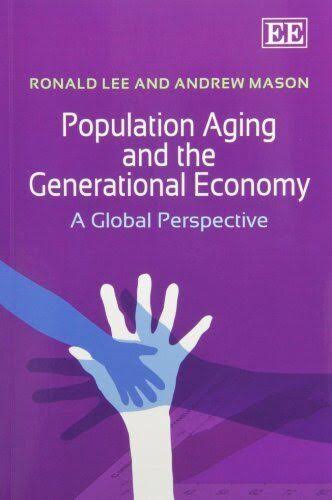
Population Aging and the Generational Economy: A Global Perspective

By Ronald Lee & Andrew Mason Over coming decades, changes in population age structure will have profound implications for the macroeconomy, influencing economic growth, generational equity, human capital, saving and investment, and the sustainability of public and private transfer systems. How the future unfolds will depend on key actors in the generational economy: governments, families, financial institutions, and others. This path-breaking book provides a comprehensive analysis of the macroeconomic effects of changes in population age structure across the globe. The result...

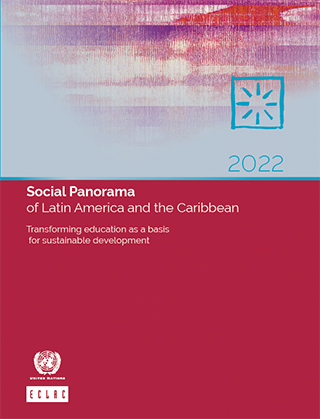
Social Panorama of Latin America and the Caribbean 2022: Transforming education as a basis for sustainable development

By ECLAC Social Panorama of Latin America and the Caribbean, 2022 has four chapters. Chapter I presents the relevant macroeconomic background in terms of the evolution of per capita GDP, employment, household income distribution and the consumer price index, and looks at how income inequality and poverty have changed over the past two decades (2002–2021). The chapter also discusses changes that occurred in social stratification during the pandemic. Chapter II addresses the worrying silent crisis of education as another of the...

Climate change in an ageing world

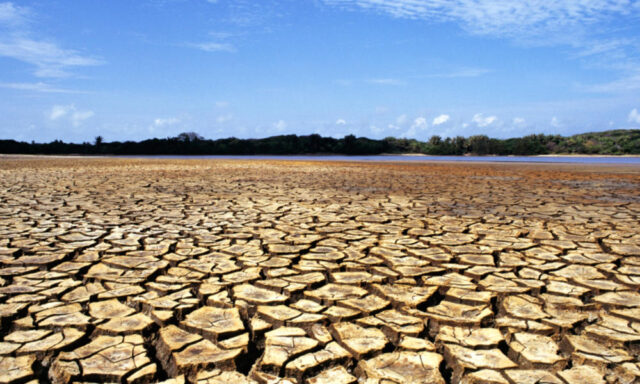
The world is turning a blind eye to the need to address the profound link between the rapidly ageing population and climate change – leaving older people invisible in debates about how to address the crisis. With HelpAge’s new report on climate change, we look at what is happening around the world and share recommendations for a more inclusive response to climate change. Intersection between climate change and population ageing The ageing population is triggering one of the most significant social changes...

Unionization of Retired Workers in Europe

By Vinzenz Pyka & Claus Schnabel We shed light on an understudied group: retirees in unions. Using representative individual-level data of 19 European countries, we find that the share of retirees in unions and the union density of retirees increased between 2008 and 2020. Econometric analyses indicate that on average retired workers' probability of union membership is 17 percentage points lower than that of active workers. This finding is consistent with social custom models and cost-benefit considerations. We further find that...

Societal aging and its impact on Singapore

By Cynthia Chen, Julian Lim, Abhijit Visaria & Angelique Chan  Societal aging is arguably one of our most critical demographic challenges (World Bank, 2016). Singapore is aging at a much faster rate compared to other countries. It will take only 27 years to transition from an 'aging society' in 1999 (7% of the population aged 65+) to a 'super-aged society' in 2026 (with 20% of its population aged 65+) (Tan Teck Boon, 2015). Japan, China, Germany, and the United States took, or will take,...

Japan to curb pension benefit increases for 2nd straight year

Japan is expected to curb the increase in national pension payouts for the second year in a row using an adjustment that reduces benefits when compared against rising consumer prices, Nikkei has learned. Benefits will grow by an estimated 2.6% in fiscal 2024, leaving recipients somewhat worse off after inflation. Public pension benefits in principle rise along with inflation and wage growth so that pensioners can maintain purchasing power. But the number of pensioners is swelling while the working population shrinks, putting strain on the...

Malaysia. Pension system needs upgrading as nation heads towards ‘super-aged society’

MALAYSIA is undergoing a significant demographic shift towards an ageing population.  The World Bank has projected that with 14% of the population aged 65 and above by 2044, it will officially be an “aged society”. By 2056, Malaysia is expected to become a “super-aged society”, with over 20% of its population in that category.  While this brings challenges in areas such as employment, income security and aged care, the shift also presents economic opportunities, particularly in the field of aged care services.  Meanwhile,...

Kenyan Aging Study Aids Sub-Saharan Africa’s Population Shift

The population of Africa is the youngest in the world-but that is expected to change rapidly in the coming decades. Over the next three decades, the proportion of older Africans will triple across the continent. This population will nearly quadruple in Kenya, one of the most rapidly aging countries in Sub-Saharan Africa. And yet demographers report that robust longitudinal data to address the economic and health-related consequences of this demographic transition are largely missing. The Longitudinal Study of Health and Ageing in Kenya (LOSHAK), a...