February 2021

Addressing the financial timebomb of ageing Australia

The 2015 Intergenerational Report found that Australia’s aged dependency ratio (the number of people over 65 for every working-age person 15 to 64) is expected to double over the next 40 years. This means there will be fewer taxpayers supporting a growing demand for pensions and services, including health and aged care. In addition, the rate of home ownership is continuing to decline among young Australians, suggesting more people will face the ongoing costs of renting once they retire. The superannuation guarantee...

Ageing can be cured—and, in part, it soon will be

ld age is a massacre,” wrote Philip Roth, long before the pandemic underscored its hazards. Even those who count as young must often watch the ineluctable drift of loved ones into decrepitude. Andrew Steele has a hopeful message for all those facing this prospect (ie, everyone). Old age needn’t be a massacre; in fact, old age needn’t even be old. Mr Steele’s thesis in “Ageless” is that ageing can be cured—and, at least in part, that it very soon will...

January 2021

How to help an ageing population stay wealthy for longer

Longevity can be harnessed as a force for good and a driver of economic growth. Financial providers increasingly diversify their products to support the wealth and lifespan of their consumers. Nudging behaviour towards financial planning and wellbeing can lead people to make better decisions. Two thirds of the world’s population will be 65 years and above by 2050, according to the UN, and the projection for the global ageing economy is already estimated to reach $27 trillion by 2025...

Covid-19 And The Future Of Aging: Technology For Connecting

By Joseph F. Coughlin Milken Institute Center for the Future of Aging: What impacts will the Covid-19 pandemic have on development of technologies that enable older adults to connect with their communities and live independently? Joseph F. Coughlin: By April last year, the nation changed overnight. Work commutes, shopping trips, nights out and visits with friends and family were abruptly halted. We retreated into our homes. Both fear and caution locked us inside. Suddenly, all of us were part of...

How to close the digital gap for the elderly

China's ageing population makes it important the country digitally enables the elderly. Globally, tech companies are trying to train the elderly up, giving in-store support with digital payments. Advanced technologies are being specifically adapted to the elderly, with a view to improving their quality of life. Many young people have embraced the convenience of digital technologies such as online shopping, car hailing, digital payments, and telemedicine. But many elderly without a grasp of the latest knowledge are at risk...

China’s plan to ease the pension pressure

China's pension system has been continuously developed since its launch in 1951, with a focus mainly on public pensions. Through seven decades of development, China has made impressive strides in retirement payments, with a public pension coverage of almost 960 million people in 2019. However, the size of the pension in China is still relatively small, mainly due to a lack of a private pensions system that encompasses enterprise annuities, occupational annuities, and pensions for individuals. As it faces...

China’s demographic time bomb quickly ticking down

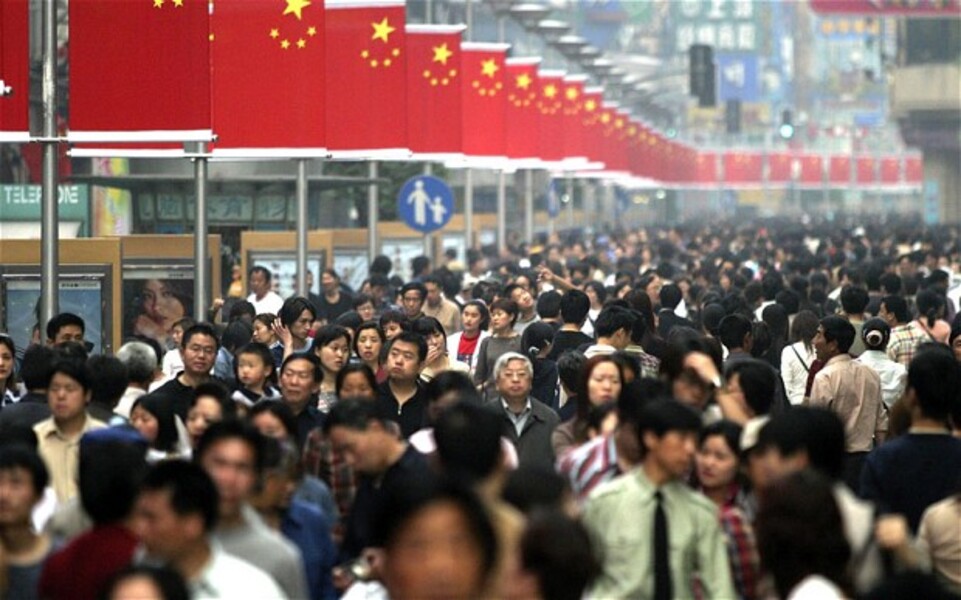
China’s declining demographics are gloomier than previously estimated, a life and death challenge for the world’s second-largest economy policymakers have so far failed to address. Preliminary provincial findings of a nationwide census now underway indicate that population growth in 2019 plunged to a 60-year low, despite Beijing’s move in 2016 to abandon its notorious “one-child” policy. The 14.65 million newborns recorded across China last year were a third lower than the annual average throughout the 1990s and 2000s...

China Pensions Outlook

By KPMG Welcome to KPMG’s fourth annual report tracking developments in China’s pension industry. China’s ageing demographics and the consequent challenges continued to draw attention during 2019 and triggered a number of fundamental changes. This report updates and builds on our research in China’s pension industry. In the report, we analyse why Pillar One will continue to be the most important and fastest- developing sector of the pension system in China. We also offer our view on what supporting...

China faces its biggest transformation to date

An ageing population, overreliance on investment and the shifting geopolitical landscape are key challenges as the Asian giant shifts gears, says David Dollar. China’s well-known story of spectacular growth, at around 10 per cent annually for 40 years, is coming to an end because of both domestic and global factors. In analysing China’s prospects for the next several decades, three particular challenges are striking: The shift from a labour-surplus to a labour-scarce society; the shift from investment to innovation as the...

December 2020

Study: Over 142 million people aged 60 years are unable to meet their basic daily needs

At least 14% of all people aged 60 years and over ̶ more than 142 million people ̶ are currently unable to meet all their basic daily needs according to the Baseline report for the Decade of Healthy Ageing, released by the World Health Organization today. Read also UN organizations launch new initiative to improve the lives of older people The Baseline report brings together data available for measuring healthy ageing, defined by WHO as "the...