October 2022

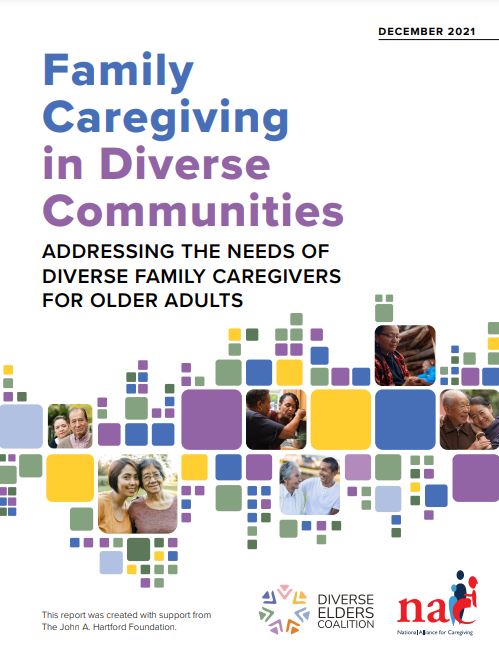
Family Caregiving in Diverse Communities – Addressing the needs of diverse family caregivers for older adults

By Diverse Elder Coalition & National Alliance for Caregiving WHO WE ARE This report is the product of a series of activities conducted by the Diverse Elders Coalition and its member organizations, and in partnership with the National Alliance for Caregiving, to better understand and highlight the lived experiences of diverse family caregivers for older adults. Founded in 2010, the Diverse Elders Coalition (DEC) advocates for policies and programs that improve aging in our communities as racially and ethnically diverse people;...

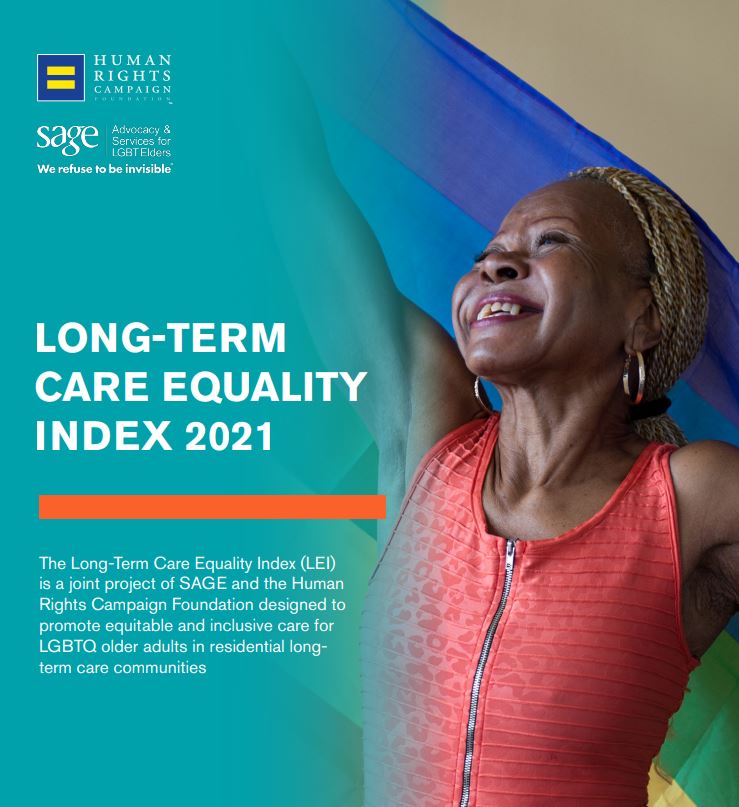
Long-term care equality index 2021

By SAGE Try as we might, we may never fully process and adequately convey what we, people working in long-term care communities and hospitals, have experienced during these past fifteen months. But just like the virus which we cannot see but has nonetheless turned our world upside down, even though we cannot see what has happened to us and others from within, we carry our experiences, and their effects on us, in our heart, mind, body, and spirit. In the...

Intergenerational Solidarity

By Alan Gutterman Aging is a natural progression of the life cycle and society will always have persons of different ages who need to learn to live alongside one another. One of the most consistent themes in the debate regarding the realization of the human rights of older persons is the need to strengthen “intergenerational solidarity” between and among all levels of families, communities and nations in order to achieve social cohesion and a society for all ages and build...

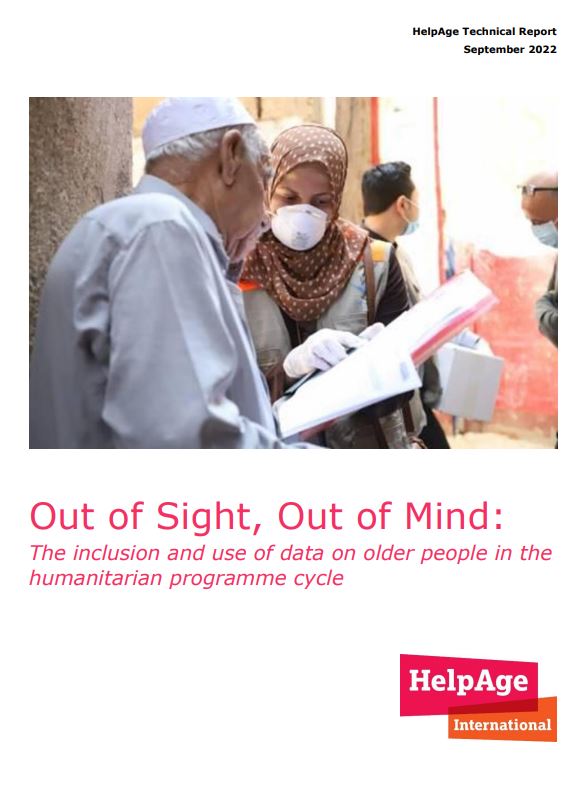
Out of Sight, Out of Mind: The inclusion and use of data on older people in the humanitarian programme cycle

By HelpAge International Humanitarian principles and basic human rights afford everyone the right to safe and dignified access to assistance and protection on an equal basis. Older people are among those most at risk in humanitarian crises, yet older people’s rights are frequently denied, and they receive little targeted attention from governments, donors, or humanitarian agencies. HelpAge International’s 2018 study, ‘If not now, when?’, highlights significant failings in how the humanitarian system includes older people when responding to crises. A...

Germany. Pension levels in the east are still well below the west level

More than 30 years after reunification, the pension level in East Germany is still well below the level in West Germany. In 2021, for example, pensioners in eastern Germany received an average of EUR 1,329 after 45 years of contributions, compared to EUR 1,527 in western Germany. This emerges from a response from the Federal Ministry of Labor to a written request from Left Party member of the Bundestag Sören Pellmann on the Day of German Unity, which was...

September 2022

Progressive pension systems can help tackle inequality caused by job instability

Job stability varies drastically between individuals, with some people staying in jobs for an extended period of time, and others frequently losing their jobs. As Leanne Nam writes, this heterogeneity can be an important source of inequality that often goes under the radar of governments. Drawing on a new study, she illustrates how progressive pension systems can be used to address the problem. Heterogeneity in job stability is a salient feature of labour markets. Even in the flexible and dynamic...

African Women Impact Fund launches with USD$60 million commitment to drive an inclusive investment environment

The Economic Commission for Africa (ECA) and Standard Bank Group, with the support of the Arab Bank for Economic Development in Africa (BADEA), the Motor Industry Retirement Funds (MIRF) and Copartes Pension Fund and the African Union Commission (AUC), have announced the African Women Impact Fund (AWIF) Initiative's achievement of its first commitment of USD$60 million. The announcement was made at the inaugural The Global Africa Business Initiative, held from 18 – 19 September during the week of the United...

August 2022

No Country for Old Men (or Women): The Impact of Migration on Pension Funding Adequacy and Sustainability

By Thomas Poufinas, James Ming Chen, Charalampos Agiropoulos & George Galanos Retirement security is of paramount importance to working people. Adequate retirement income is also a leading concern for private and public pension systems. Pension funding adequacy measures the ability of pension scheme assets to meet a system’s liabilities. Pension managers accumulate assets primarily from employee contributions. Assets then grow through investment returns. Liabilities consist mainly of benefits promised and paid to pensioners. In several countries, even within the European Union,...

Inequality of Opportunity and Health Performance of Private Health Insurance — Empirical Evidence from China

By Rui Li, Minxue Jia & Su Yang Background: The role of private health insurance in protecting the population's health is an essential global concern. However, the for-profit nature of private health insurance has led to inequality of opportunity for coverage, which has implications for the health performance of insurance.Method: This article uses the 2018 China Urban Statistics Yearbook and cross-sectional data from the China Health and Retirement Longitudinal Study (CHARLS) of 2015 and 2018. Based on the Heckman two-step...

Public Redistribution in Europe: Between Generations or Income Groups?

By Bernhard Hammer, Michael Christl & Silvia De Poli Governments face a potential trade-off between provision for the population in retirement and the support of working-age households with low income. Using EUROMOD-based microdata from 28 countries, we quantify public redistribution to pensioner- and working-age households, distinguishing also by income group. In general, Northern European countries are characterized by a low net redistribution between households, limited public pensions, but a strong support of low-income households. By contrast, most Southern European countries...