August 2025

UK. Gender gap means retired women ‘have four months a year with no pension’

Retired women in the UK in effect go four months of the year without a pension when their income is compared with that of men, union leaders have warned. The TUC said the income gap between men and women in retirement was 36.5%, equivalent to a shortfall of £7,600 a year on average. As a percentage this was more than double the gender pay gap, which measures the difference in average earnings from work; it stands at 13.1%. The union organisation said this meant...
April 2025

Postponing Retirement Under Age Discrimination and Grandparenting

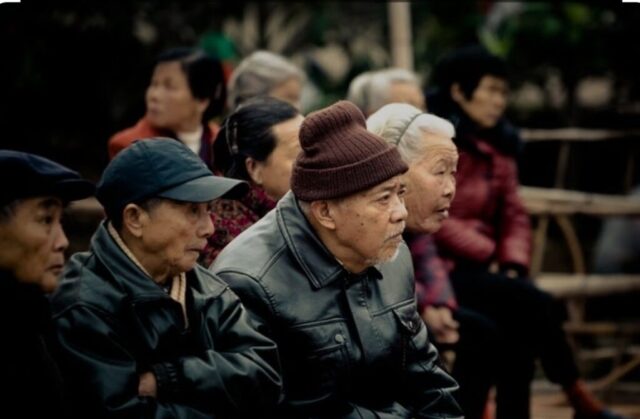
By Leqing Huang To tackle the population aging and improve the sustainability of the pension system, the Chinese government proposes to postpone the statutory retirement age gradually. However, when implementing this policy in China, age discrimination in the job market and grandchild care culture are two potential concerns. Therefore, this paper builds a multi-period OLG model with these two crucial factors to provide a quantitative evaluation of the potential policy impacts on population growth, labor supply, and pension funds. The...

Women, self-employed most vulnerable to pension shortfalls: Eiopa

Europe’s pension system is becoming increasingly unsustainable, Eiopa chair Petra Hielkema warned. She highlighted that women, self-employed workers and people with limited financial literacy are the most vulnerable, stressing the need for structural reforms to ensure long-term retirement security. The European Union's pension system is “no longer sustainable” in its current form and must undergo urgent reform to prevent millions of retirees from falling into poverty, Petra Hielkema, chairperson of the European Insurance and Occupational Pensions Authority (Eiopa), stated in...

March 2025

Nigeria. Companies Must Promote Policies that Support Gender Equality to Sustain Growth

Associate Director, Access ARM Pensions, Adaora Ude speaks on gender equality, advising on the structures companies should put in place to maximise female potential for growth sustenance. She also speaks on the pension industry and how her firm is prioritising customer-centric solutions that help contributors plan for a secure and comfortable retirement. Nume Ekeghe brings the excerpts. As a senior executive in a traditionally male-dominated space, what challenges have you faced, and how have you navigated them? One of the biggest...

Minimum Wage Policy and the Gender Wage Gap

By Hang Anh Nguyen, Martin O'Brien & Alfredo Paloyo Minimum wage policies have become a nearly universal feature of modern labour markets, with over 90% of countries implementing statutory wage floors since 2012 (Del Carpio & Pabon, 2014). Yet, despite their widespread adoption, the economic effects of minimum wages remain highly contested. Advocates argue that they boost earnings for lowwage workers, reduce income inequality, and mitigate poverty, while critics contend that they suppress productivity, distort wage structures, and incentivise firms...

Germany. Gender discrimination in company pension schemes: Need for action and cost risks

As is well known, the Pay Transparency Directive imposes a need for action on companies. Employee comparison groups must be established to identify potential gender pay gaps. Employees are granted extensive and highly detailed rights to information, which must also be actively communicated. Even during the recruitment process, companies must be able to provide information about their remuneration systems. Comprehensive reporting obligations apply for companies with 100 or more employees, requiring the disclosure of remuneration structures. The greater involvement...

How and Why the Gender Pension Gap in Urban China Decreased between 1988 and 2018

By Björn Gustafsson, Peng Zhan & Hanrui Jia In urban China, gender gaps in employment and earnings have steadily increased since the 1990s. Such gender gaps are important because pension rights and amounts are based on labor force participation and wages. However, as this study demonstrates, despite the rise in gender differences in the urban labor market, the average gender pension gap decreased between 1988 and 2018. In this paper, we describe the evolution of the fragmented pension system in...

Gender pension gaps in a private retirement accounts system: A dynamic model of household labor supply and savings

By Clement Joubert & Petra E. Todd  This paper develops and estimates a dynamic model of individuals’ and couples’ labor supply, savings, and retirement decisions to analyze how the design of Chile’s privatized pension system and a reform undertaken in 2008 affect gender pension gaps and old-age poverty. Chile has one of the longest-running private retirements accounts systems in the world, which has served as a model for many countries. The paper estimates the dynamic model using pre-reform data...

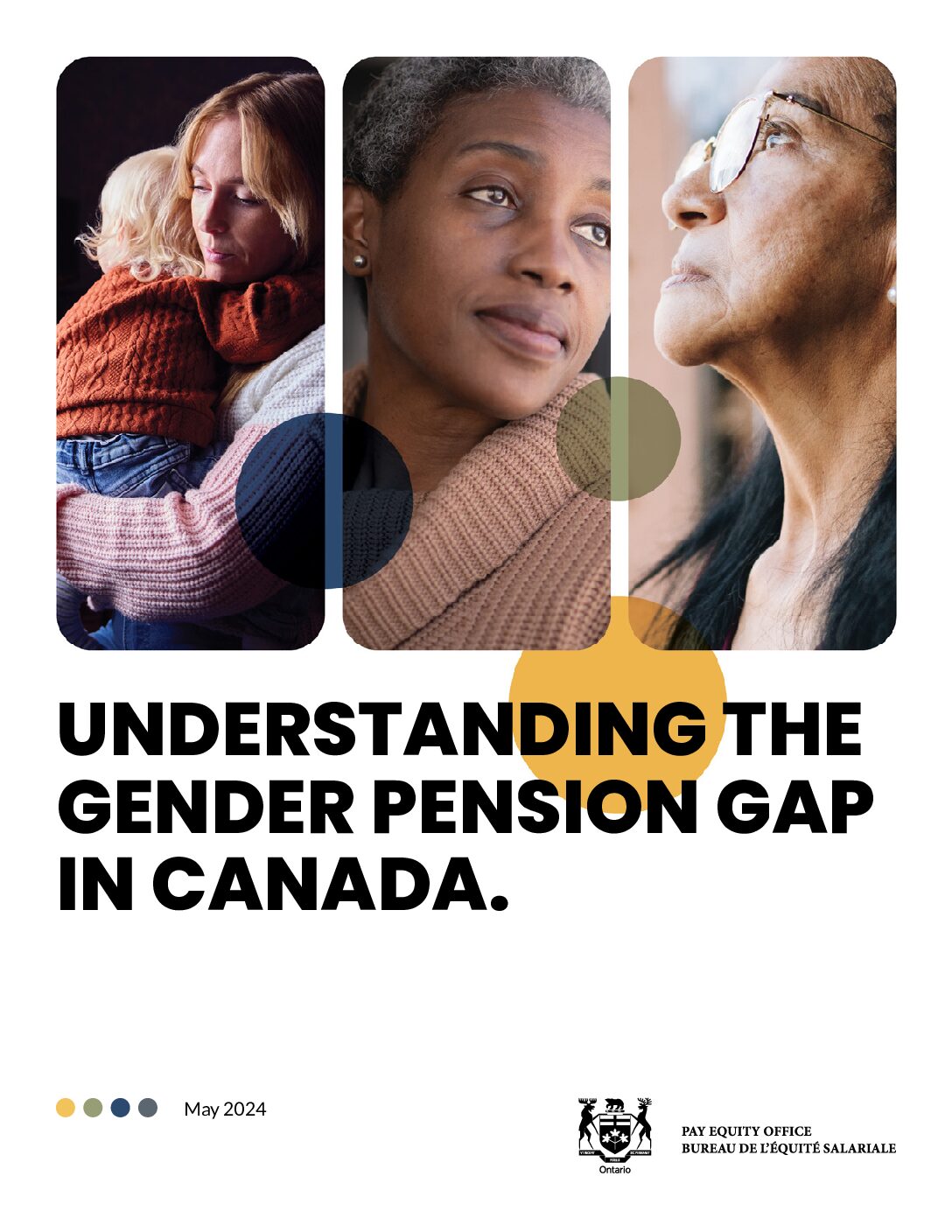
Understanding the Gender Pension Gap in Canada

By Elizabeth Shilton The gender pension gap in Canada measures the gender difference in combined income from Canada’s 3-pillar system of retirement income instruments: Old Age Security/Guaranteed Income Supplement, Canada Pension Plan/ Quebec Pension Plan and private pensions (including RRSP/RRIF income). In 1976 - the first year for which we have meaningful statistics – that gap stood at 15%, and it has stubbornly refused to close despite substantial increases in overall retirement income and massive advances in women’s labour market engagement...

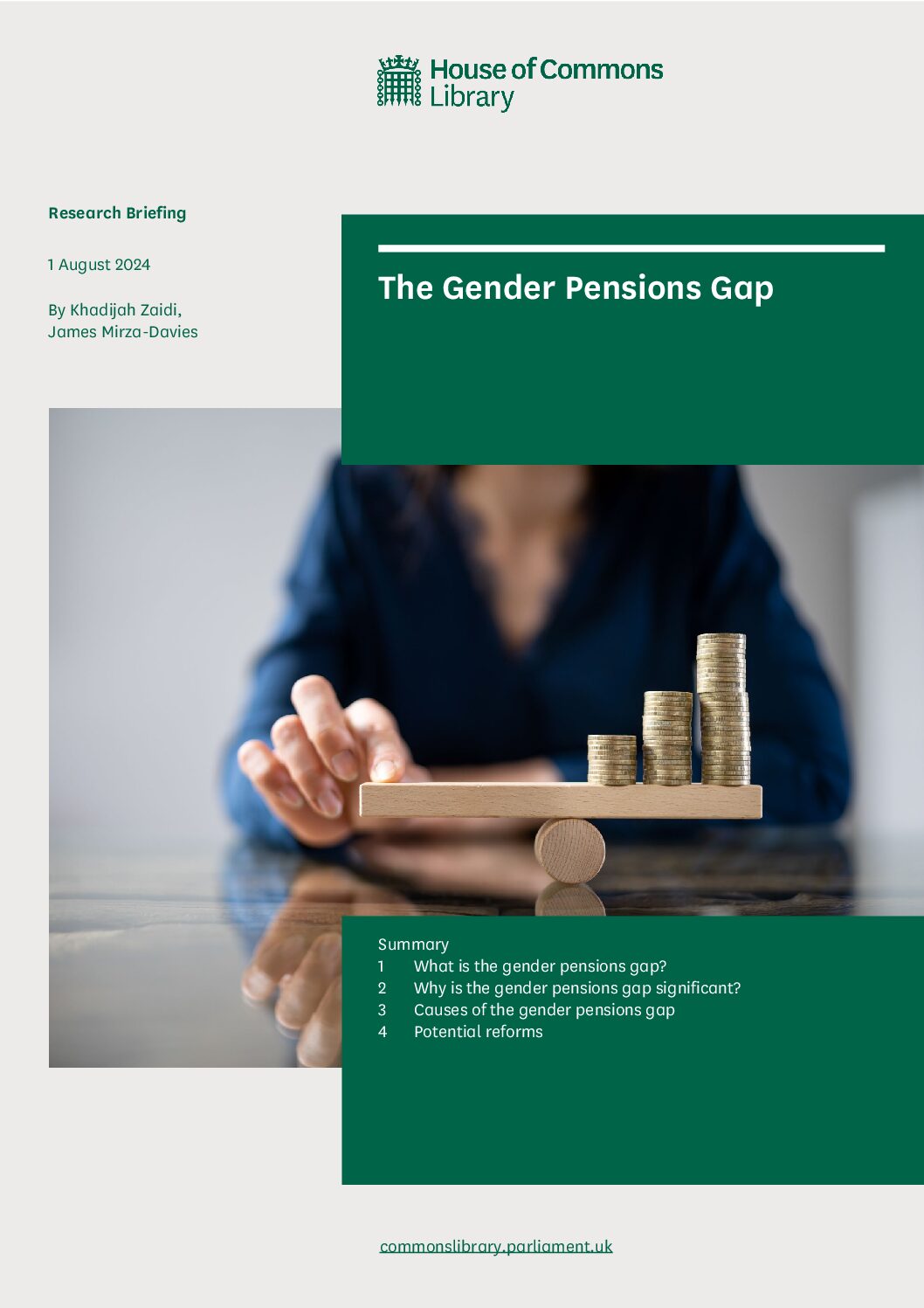
The Gender Pensions Gap

By Khadijah Zaidi & James Mirza-Davies The gender pensions gap refers to differences in retirement income or retirement wealth for men and women, and it can be measured in different ways. The gender pensions gap is mainly caused by the gender pay gap. There are however additional causal factors relating specifically to pensions, such as historic state pension rules, the impact of auto-enrolment rules on different types of workers, and how divorce settlements treat pensions. The Work and Pensions Committee...