
January 2026

Aging populations are redefining the value of a healthy life year

Efficient, evidence-based resource allocation using quality-adjusted life years (QALY) is essential, especially as global life expectancy rises. A recent study published in Scientific Reports examines how considering age and country-specific demographic factors in QALY estimates can improve healthcare policy decisions and resource allocation. Concerns over increased healthcare costs due to the aging population Advances in medical technology and public health have led to rapidly aging populations worldwide, which contributes to rising healthcare costs and social burdens. By 2040, healthcare spending in Japan is...

December 2025

Aging in Ghana: Challenges, Realities, and Struggles

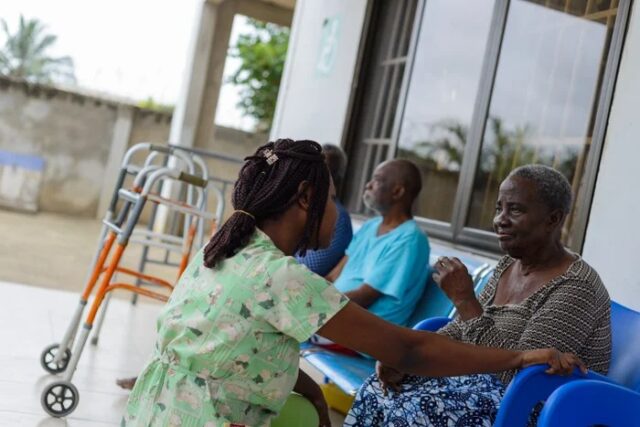
In Ghana, like many countries across Africa and the world, the population of older adults is steadily increasing due to improvements in healthcare and longer life expectancy. However, growing older in Ghana brings a number of social, economic, health, and emotional challenges especially for those without formal jobs, pensions, or family support systems. Demographic and Social Changes Ghana’s elderly population (aged 60 and above) has grown significantly over past decades. Although they make up a relatively small percentage of the total...

Scientists identify 4 key turning points for your brain as you age

It’s no secret that our brains change as we age. The ease with which we form new connections—whether learning a language or picking up a new skill—shifts throughout life. But scientists are now showing just how dramatic and how patterned those shifts really are. A new study from the University of Cambridge has identified five distinct phases of brain development across the human lifespan. The phases are marked by four turning points: ages nine, 32, 66, and 83, where brain rewiring shifts....

November 2025

Aging population drives China’s healthcare demand

The rapid rise in chronic diseases and aging demographics is placing unprecedented strain on China’s healthcare system, according to Lin Xiao, Sales Manager at Xi'an Haoxuan Bio-tech Co., Ltd. Speaking on the sidelines of API China 2025, Lin said, “I think one of the most pressing changes is raising demand for high quality healthcare service driven by an ageing population and increasing chronic disease. They put significant pressure on the system to deliver efficient and the invitation solution, particularly in...

October 2025

Personal and General Views on Aging, Non-Communicable Diseases, and Their Interaction as Cross-Sectional Correlates of Vigorous Physical Activity in UK Individuals Aged 50+

By Fabrizio Mezza, Daniela Lemmo, Maria Francesca Freda, Victoria Tischler, Blossom C. M. Stephan, Maria Mataró & Serena Sabatini Having more positive and less negative views on aging may prompt vigorous physical activity engagement. Moreover, positive general views of aging may be particularly important for physical activity among those who have one or more non-communicable diseases. Although we cannot infer causality, promoting positive views on aging and decreasing negative views on aging could help fostering active aging, especially among those...

Europe’s aging burden far less than US or China

Graying Europe has long been considered an outlier in global demographics – but the rising cost to its governments in terms of bills for pensions and health care are more manageable than assumed and less than in rival economies in the United States and China. In a detailed report on the rising cost to the public purse from Europe's aging population, Brussels-based think Breugel this week outlined the trajectory through 2070 using the latest country-by-country data from the European Commission. Familiar...

September 2025

Humanoid Robots Will Cater to China’s Aging Population

Robots will play a growing role in caring for China's elderly, industry insiders say, as robotics firms move to tap into the country's expanding "silver economy." Why It Matters China, like the rest of East Asia, is grappling with a flagging birth rate coupled with a fast-aging workforce. People aged 65 and older already make up about 15 percent of its 1.4 billion citizens, according to United Nations data. Demographers expect China to join Japan and South Korea as a "super-aged" society, where more...

Mortality and the Provision of Retirement Income

By Organisation for Economic Co-operation and Development This report analyses the development of mortality assumptions to build mortality tables to better protect retirement income provision. Mortality assumptions are necessary to ensure the sustainability of lifetime incomes. It explores considerations and traditional approaches for developing mortality tables, as well as provides an international overview of longevity trends and drivers over the last several decades, including the impact of the COVID-19 pandemic. The report also details the standard mortality tables developed across...

As global longevity increases, how do we ensure workers and economies thrive?

Since becoming CEO of Mercer, I’ve travelled to more than 20 countries and met with C-suite executives and policy-makers worldwide. One topic they consistently bring up – and can universally relate to – is increasing longevity. That may surprise most people, but it doesn’t shock me. For years, Mercer has been following statistics on longevity. By 2050, the number of individuals aged 60 and older is projected to reach 2.1 billion – nearly double today’s figure. The rise is driven by significantly longer life...

August 2025

Asia’s elderly risk getting sicker for longer. Hotelier Allen Law wants to ‘bridge the gap’ between lifespan and healthspan

Residents of developed Asian economies, like Singapore, Japan, Hong Kong, and South Korea, consistently top the rankings of places with the world’s longest lifespans. Singapore, for example, boasts an average life expectancy of 86.7 years, putting it at No. 2 behind Monaco, according to the CIA’s world factbook. Yet long lifespans come with a drawback: An extended period of ill-health or disability. Singapore’s average health span—the length of time where someone is deemed to be in good health—is 75 years, as noted...