March 2025

Assessing the Permanent Income Hypothesis in Poor Areas: The Case of Rural Pensions in Brazil

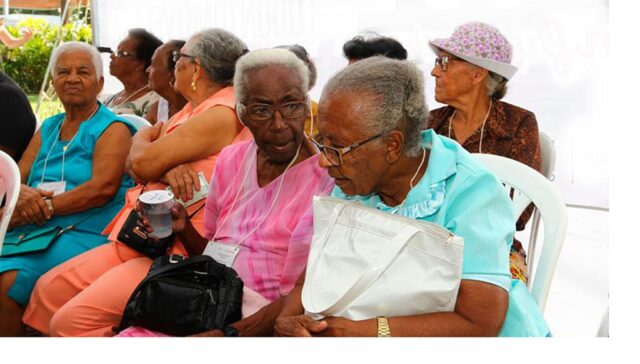
By Bruno Kawaoka Komatsu, Lucas Dias & Naercio Menezes Filho In Brazil, poor women in family agriculture are entitled to a monthly unconditional pension from the government when they turn 55, a large predictable income increase for rural families. In this paper, we use a national family expenditure survey and a fuzzy regression discontinuity design strategy to estimate the impacts of that pension on consumption, finance and labor market indicators. We show that the rural pension increases income by 50%,...

A roadmap to adequate retirement incomes for all

By Phoenix Insights Achieving decent, financially secure retirements for people in the UK is an essential priority for individuals, government and industry alike. Phoenix Group previously called for a holistic review of pensions adequacy, and are pleased to see the new Government’s commitment to do so in the coming months. The long standing question of ‘how much is enough’ for retirement can be complex and wide reaching one. The question will need to be answered through a collaborative approach and followed by an action plan....

Germany. Gender discrimination in company pension schemes: Need for action and cost risks

As is well known, the Pay Transparency Directive imposes a need for action on companies. Employee comparison groups must be established to identify potential gender pay gaps. Employees are granted extensive and highly detailed rights to information, which must also be actively communicated. Even during the recruitment process, companies must be able to provide information about their remuneration systems. Comprehensive reporting obligations apply for companies with 100 or more employees, requiring the disclosure of remuneration structures. The greater involvement...

February 2025

UK. U-turn shows pitfalls of unpicking pensions triple-lock

A pensions timebomb is ticking on the Isle of Man and the self-governing island off the UK's west coast came very close to defusing it last week. Like the UK, the island protects state pensions with the triple lock, which automatically increases the state pension each year by the maximum of three measures: price inflation, average earnings or 2.5%. The Isle of Man's government wanted to scrap the triple lock for some pensioners in its budget last week. But ministers were forced...

Pensions vs earnings across Europe: The highest and lowest comparisons

Pensions in the EU amount to some three-fifths of late-career work income. In many European countries, this rate falls below 50%, making it increasingly challenging for pensioners to maintain a decent standard of living. In many European countries, pension income is significantly lower than pre-retirement earnings from work. This makes it difficult for many older people to maintain their standard of living after retirement. Nearly one in six pensioners are at the risk-of-poverty in the EU, with the rate increasing...

Poverty hits older adults harder in fast-aging society

Kim Young-soon, an office cleaner in her early 70s, says she grapples with high costs of living as her disposable income has been decreasing in recent years. Disposable income refers to the amount of money that is left for personal expenses and savings, after taxes, insurance, interest and other payments. “The employer would not hike my salaries, due to the high vacancy rate of office buildings amid the sluggish economic growth,” Kim said, adding she is financially distressed with high borrowing...

Greece. Pension boost for working retirees

Thousands of Greek retirees who continue working are seeing an increase in their pensions, as the country’s social security fund (EFKA) has started issuing adjusted payments. To prevent these new pensions from facing higher deductions under the Solidarity Contribution for Pensioners (EAS), the Ministry of Labor and Social Security is preparing a legislative amendment that could soon be introduced in Parliament. According to sources, the proposed amendment ensures that if a retiree’s primary pension is already subject to the EAS, the...

Places versus People: The Ins and Outs of Labor Market Adjustment to Globalization

By David Autor, David Dorn, Gordon H. Hanson, Maggie R. Jones & Bradley Setzler This chapter analyzes the distinct adjustment paths of U.S. labor markets (places) and U.S. workers (people) to increased Chinese import competition during the 2000s. Using comprehensive register data for 2000–2019, we document that employment levels more than fully rebound in trade-exposed places after 2010, while employment-to-population ratios remain depressed and manufacturing employment further atrophies. The adjustment of places to trade shocks is generational: affected areas recover primarily by adding workers to...

January 2025

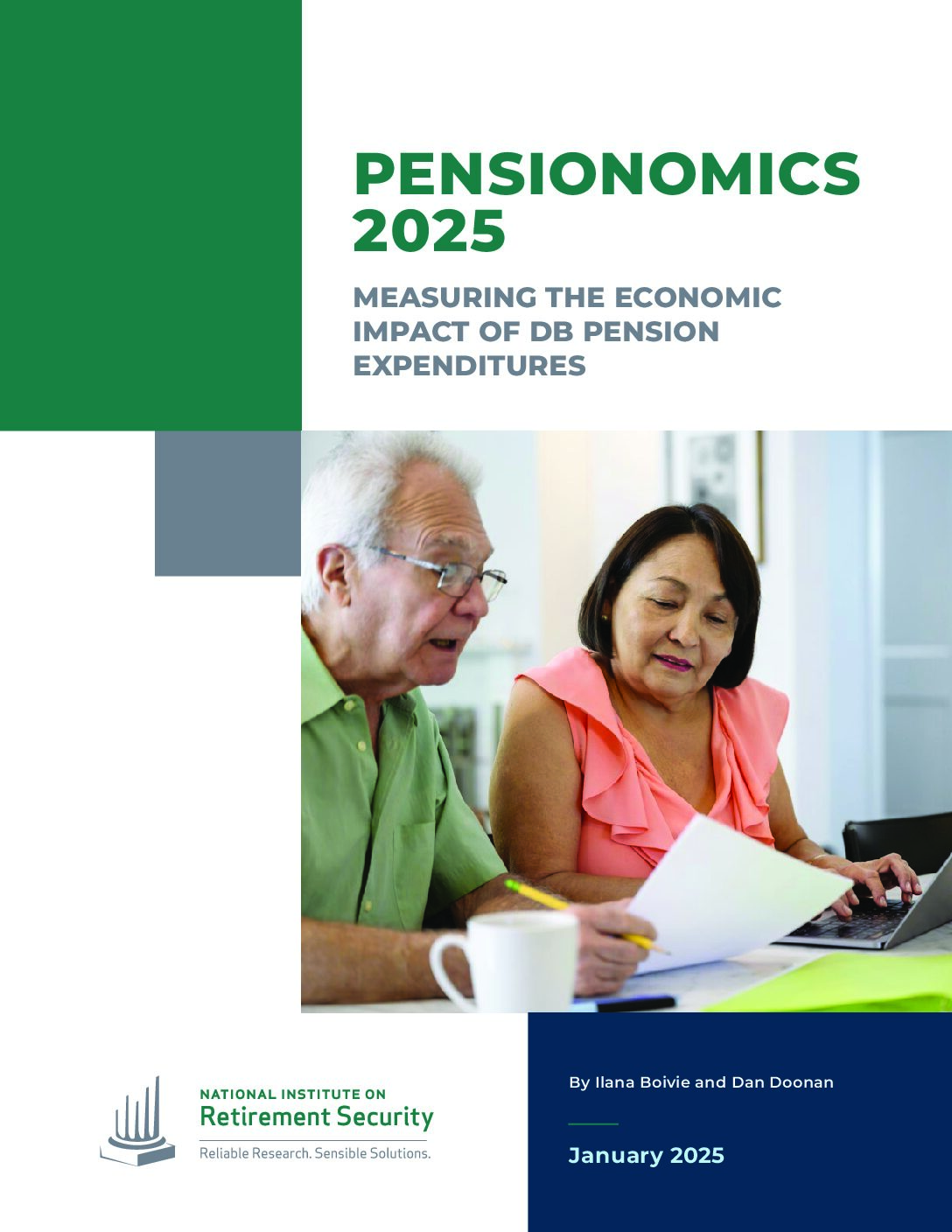
NIRS’ Pensionomics 2025 Report

By Andrew Clark Earlier this month, the National Institute on Retirement Security (NIRS) released its bi-annual Pensionomics report, which details how spending from defined-benefit pensions boosts economies in communities nationwide and continues to be a reliable economic driver for millions of people. The report examines the impact of pensions on local economies nationwide by calculating the benefits paid to retirees and the subsequent spending generated by these benefits. This analysis includes tax revenue and local expenditures, which stimulate the broader economy, leading...

Financial Inclusion Across the United States

By Motohiro Yogo, Andrew Whitten & Natalie Cox We study retirement and bank account participation for the universe of U.S. households with a member aged 50 to 59 in the administrative tax data. ZCTA-level average income, income inequality, and racial composition predict retirement account participation for low-income households, conditional on household income and regional price parities. Income inequality also predicts bank account participation for low-income households. We estimate the causal effect of access to an employer retirement plan on participation. Recent policy proposals...