April 2025

Longevity v interest rates – which poses the biggest risk for schemes?

Rising life expectancy poses a greater risk to UK corporate pension schemes than low interest rates, a report this week has suggested, but some industry experts have challenged the finding. Low interest rates have wreaked havoc on many schemes’ funding levels as liability calculations are revised up. Earlier this month the aggregate deficit of the Pension Protection Fund’s 7800 Index reached £254.2bn, up from £93.2bn a year ago. The cost of not hedging longevity in a low interest rate environment is proportionately greater...


Adequacy of future retirement incomes: new evidence for private sector employees

By Jonathan Cribb, Laurence O'Brien & David Sturrock In this report and the accompanying report on policy recommendations (Cribb et al., 2024a), we focus on the outlook for the adequacy of employees’ retirement incomes and changes to automatic enrolment. We do not here consider reforms that we broadly define as aimed at changing investments, costs and returns (including ‘pot for life’ and collective defined contribution pensions) but will return to consider these later in the Pensions Review. A separate report...

March 2025

Policy certainty and structural reforms required to ‘boost’ pension investment in UK assets

Policy uncertainty and regulatory hurdles are preventing UK pension funds from investing more into UK productive assets, the Local Government Pension Scheme (LGPS) pool Border to Coast Pensions Partnership has warned. Its report called on the government to provide policy certainty, remove structural blockers to investment, and incentivise growth-driving capital allocation to enable increased pensions investment into UK productive assets. Border to Coast Pensions Partnership said there is a “significant” appetite for institutional investment in the UK, demonstrated by the fact that...

India. New Unified Pension Scheme Set to Launch in 2025

The Pension Fund Regulatory and Development Authority (PFRDA) has announced the introduction of the Unified Pension Scheme (UPS), set to take effect on April 1, 2025. This new scheme will provide an alternative for central government employees currently enrolled in the National Pension Scheme (NPS). The UPS aims to streamline pension benefits and enhance financial security for government employees, with specific eligibility criteria and contribution requirements outlined in the recent gazette notification. Who Can Participate in the UPS? The UPS is...

January 2025

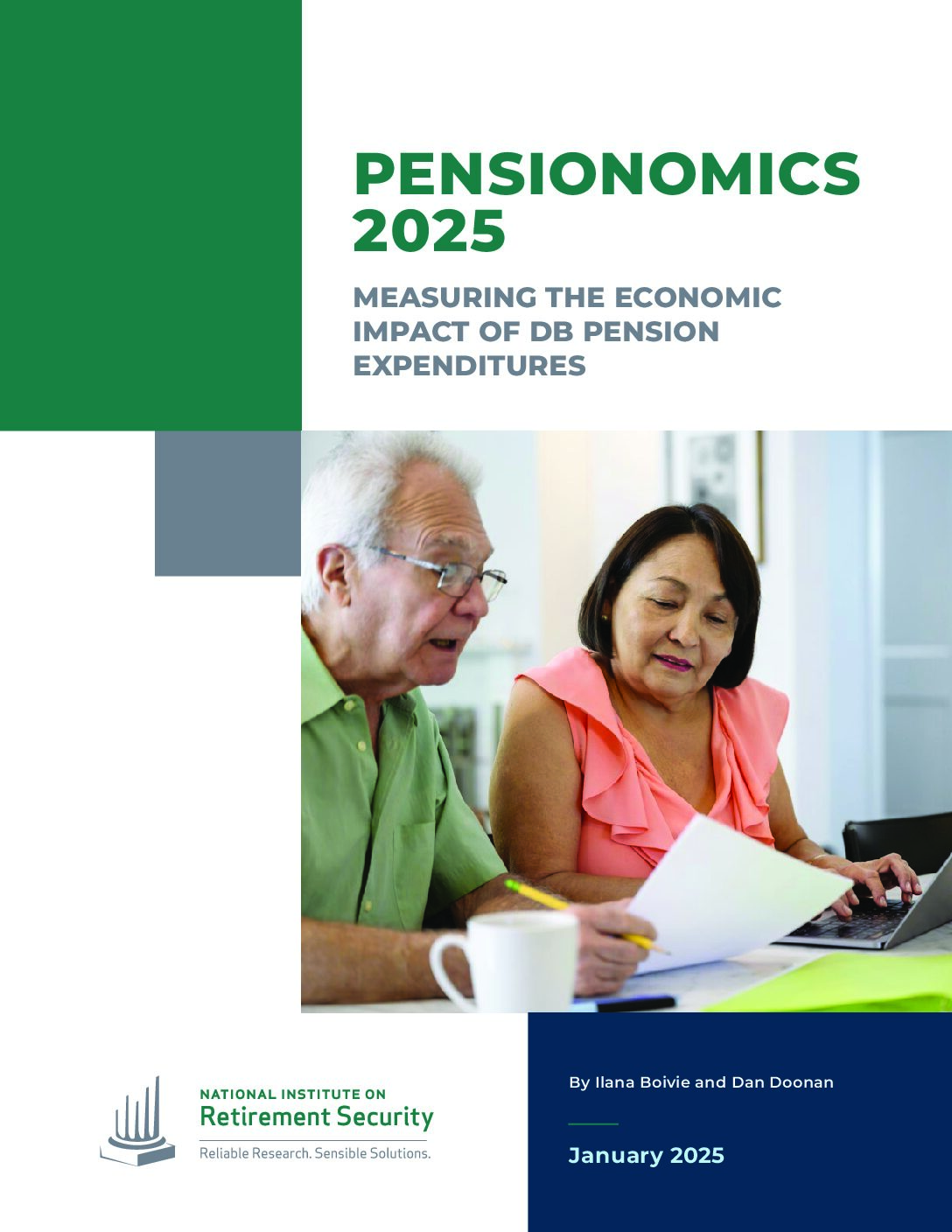
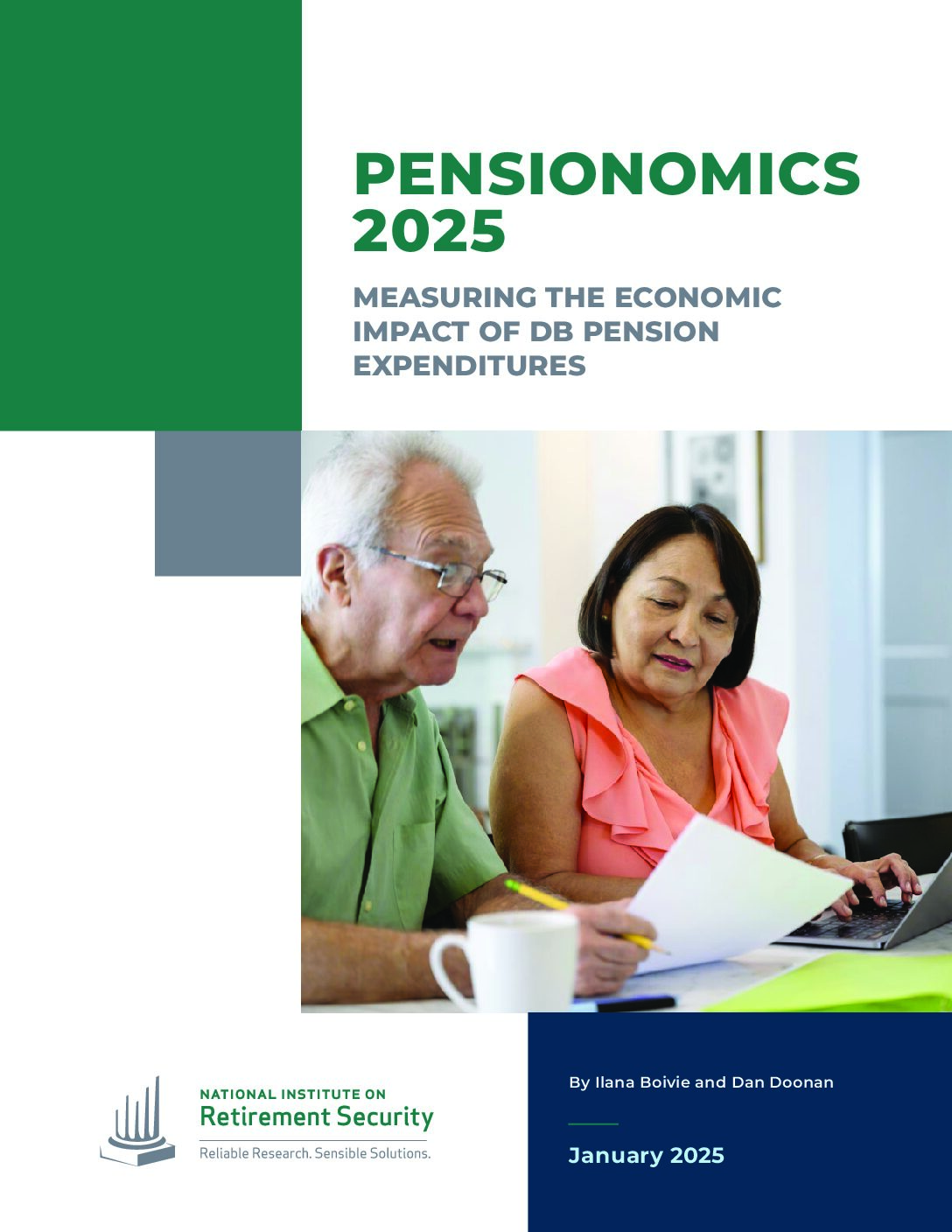
NIRS’ Pensionomics 2025 Report

By Andrew Clark Earlier this month, the National Institute on Retirement Security (NIRS) released its bi-annual Pensionomics report, which details how spending from defined-benefit pensions boosts economies in communities nationwide and continues to be a reliable economic driver for millions of people. The report examines the impact of pensions on local economies nationwide by calculating the benefits paid to retirees and the subsequent spending generated by these benefits. This analysis includes tax revenue and local expenditures, which stimulate the broader economy, leading...

Adequacy of future retirement incomes: new evidence for private sector employees

By Jonathan Cribb, Laurence O'Brien & David Sturrock This report takes a fresh look at the prospects for the future of retirement incomes for employees in the UK. Since the Pensions Commission reported around 20 years ago, much has changed in the economic and pensions policy environment. While the introduction of automatic enrolment has been in many respects a great policy success – and the level and coverage of the flat-rate component of the state pension have increased markedly – lower-than-expected...

Pensionomics 2025: Measuring the Economic Impact of Defined Benefit Pension Expenditures

By Dan Doonan & Iliana Boivie Pensionomics 2025: Measuring the Economic Impact of Defined Benefit Pension Expenditures finds pension spending powered by U.S. private and public sector defined benefit pensions contributed significantly to the economy. In 2022, retiree spending of public and private sector pension benefits generated $1.5 trillion in total economic output, supporting 7.1 million jobs across the nation. In addition to its impact on employment and economic activity, pension spending bolstered public finances in 2022, adding $224.3 billion in...

China. Private pension plan to boost capital markets

The implementation of a private pension program nationwide will serve as an important driver for the increased maturity of Chinese capital markets, but there is still room for it to attract more users with a willingness to open accounts and invest, said experts. According to a notice jointly released by five central government departments, including the Ministry of Human Resources and Social Security, the Ministry of Finance and the State Taxation Administration, the private pension program began to be fully...

Romanian private pension fund assets jump 19% in 2024 on year

Assets held by Romania's seven mandatory private pension funds jumped 19% on the year to 150.85 billion lei ($31.15 billion) in 2024, with the average yield at 5.74%, slightly above the 5.1% annual inflation rate, the industry association said on Tuesday. The European Union member state overhauled its communist-era pension system in 2008, making it compulsory for working Romanians under 35 to contribute to a "second pillar" of private pension schemes as well as their state pension. Roughly 8.3 million Romanians...

December 2024

Belgium. Staggering Pension Gap Revealed: Shocking Differences Between Civil Servants and Workers

The ongoing formation of a new federal government in Belgium, led by Bart De Wever, is facing significant challenges. A key issue at the forefront is the pension reform aimed at achieving substantial savings. As Stijn Baert highlighted on ‘De tafel van Gert’, the disparity between public and private sector pensions raises questions. How can this gap be addressed effectively? Fast Answer: Belgium’s pension reform discussions reveal a stark contrast between public and private sector pensions, with civil servants earning significantly more. This...