January 2026

Cash Transfers and Socioeconomic Behavior among Older Adults:,Evidence from a Regression Discontinuity Design

By Anh Tuyet Nguyen & Hiroyuki Yamada The rapid aging of populations has prompted the introduction of social pension programs aimed at preserving the welfare of the elderly. However, adverse socioeconomic behaviors may dampen the intended policy effects. Using a fuzzy regression discontinuity design, this study examines the impact of social pension receipt on expenditure patterns and material hardship among older adults aged 80 year or older in Vietnam. We find that social pension increases the risk of material hardship...
November 2025

Financial sustainability for the expansion of non-contributory pension systems and the eradication of old-age poverty

By Alberto Arenas de Mesa, Ernesto Espíndola & Juan Ignacio Vila Income protection is a substantive factor and a priority of social protection systems in Latin America and the Caribbean, in particular at either end of the life cycle (i.e. childhood and old age). This is due to the greater vulnerability and lower earning capacity of these population segments compared with other age groups, among other factors (Santos Garcia, Farías and Robles, 2023). In these circumstances, pension systems, in particular...

October 2025

Germany greenlights €2,000 tax-free earnings for pensioners

Germany will introduce an “active pension” from 1 January 2026 that lets people who choose to work past the statutory retirement age earn up to €2,000 per month tax-free. Labour Minister Bärbel Bas framed the Aktivrente as a straightforward incentive intended to keep experienced workers in the labour market. Asked about the centre-right Union’s proposal for a tax-free top-up, Bas said “anyone who voluntarily wants to work longer needs attractive conditions”. She added that the government would lift the ban on prior employment, which...

September 2025

Mortality and the Provision of Retirement Income

By Organisation for Economic Co-operation and Development This report analyses the development of mortality assumptions to build mortality tables to better protect retirement income provision. Mortality assumptions are necessary to ensure the sustainability of lifetime incomes. It explores considerations and traditional approaches for developing mortality tables, as well as provides an international overview of longevity trends and drivers over the last several decades, including the impact of the COVID-19 pandemic. The report also details the standard mortality tables developed across...

August 2025

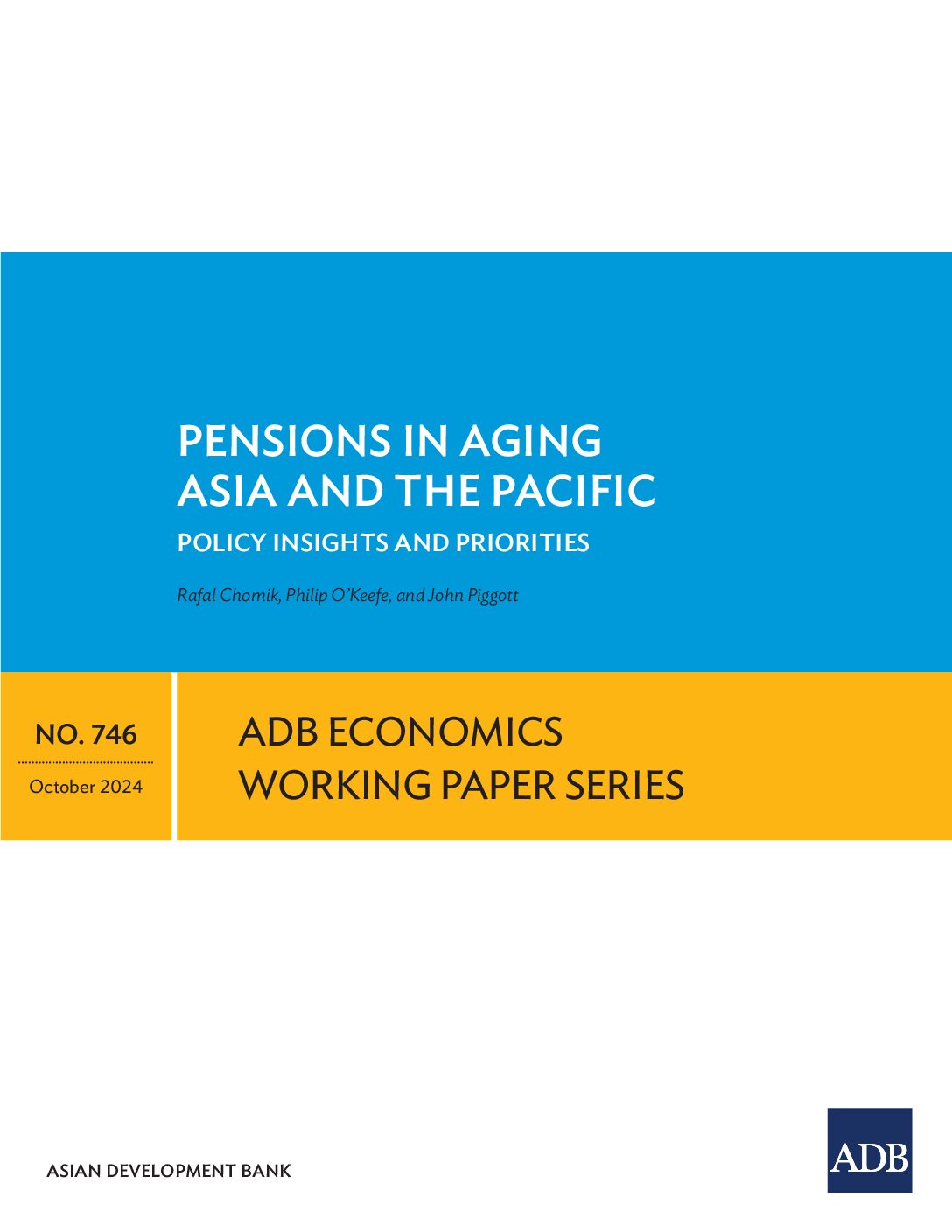
Pensions in Aging Asia and the Pacific: Policy Insights and Priorities

By Rafal Chomik, Philip O’Keefe & John Piggott This paper looks at how pension systems across Asia and the Pacific can overcome common challenges of low contributory coverage, inadequate social pensions, and failure to include the informal sector. Pension systems in the region also exhibit gender inequities, a lack of policy flexibility and attention to labor incentives, and underdeveloped governance. The paper reviews the structure and performance of regional pension systems, and makes proposals for an expanded role for social pensions...

July 2025

US. Pensions for all: New bill guarantees retirement income to 56M workers without a plan

Retirement proposals for workers without an employer-sponsored retirement plan were front and center at a Senate Health, Education, Labor, and Pensions (HELP) Committee meeting last week. Senator Bill Cassidy, (R-LA), chair of the HELP Committee, delivered opening remarks on how to empower gig workers to access portable workplace benefits, like health care and retirement, in his legislation aimed at improving retirement security of freelance and gig workers called the Independent Retirement Fairness Act that he introduced last week in the Senate. “The...

June 2025

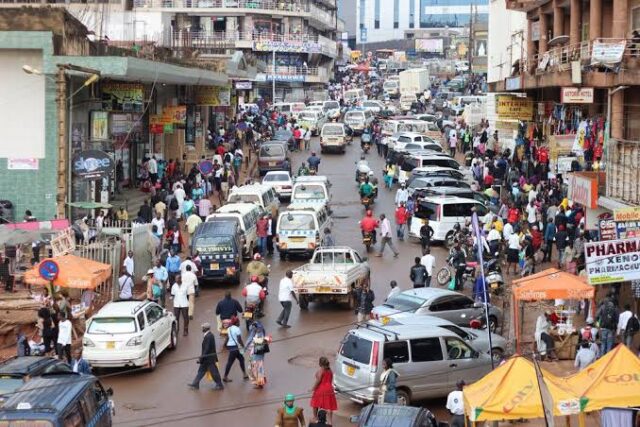
Experts call for universal pension law as majority of Uganda’s elderly remain uncovered

Experts have urged the government to introduce a universal, rights-based pension law to protect the country’s growing elderly population, most of whom currently receive no formal support. The call was made by the Initiative for Social and Economic Rights (ISER) and Research & Action for Income Security (RAISE) during the launch of a new working paper titled “A People’s Pension: The Right to Social Security for Older Persons Comparative Perspectives from Southern and Eastern Africa. According to the paper, Uganda lacks...

April 2025

Awareness of the Government-Introduced Universal Pension Scheme Among the Adult Population in Bangladesh: A Nationwide Cross-Sectional Survey

By Sharmin Rima, Md. Mahir Faysal, Abdullah Al Mamun, Khadija Akter Sonia, Hossna Tasmia Monia, Anika Tahseen Nuva, Ahbab Mohammad Fazle Rabbi, Abdullah-Al-Mamun & Mohammad Hossain The Universal Pension Scheme (UPS) was introduced in Bangladesh in August 2023 to address economic security concerns for its growing older adults. Despite the government's numerous promotional efforts, the response rate to UPS remains modest. This study aimed to investigate awareness of the UPS among the Bangladeshi population. The study's sample size was 1624,...

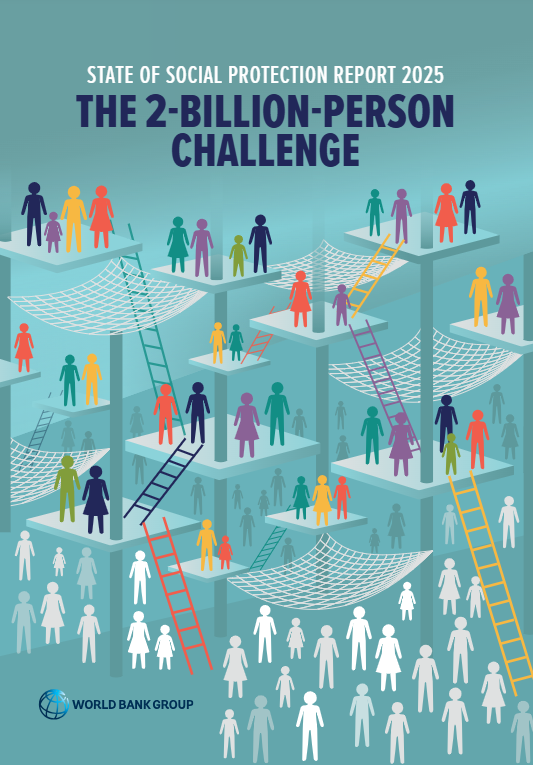
State of Social Protection Report 2025: The 2-Billion-Person Challenge

By The World Bank   Today, more people have access to social protection now than at any point in history. Over the last decade, 4.7 billion people across low- and middle-income countries gained access to social protection. However, critical gaps remain. Two billion people in those countries remain uncovered or inadequately covered by social protection. The State of Social Protection Report 2025: The 2-Billion-Person Challenge documents advances and challenges to strengthening social protection and labor systems across low- and middle-income countries and...

March 2025

The Causal Influence of Pension on the Participation of Older Workers in the Ghanaian Labour Market

By George Domfe, Kwadwo Opoku & Antoinette Tsiboe-Darko Population ageing has stirred up policy discourse on pension coverage in developing economies. While in most of these countries, a smaller proportion of older persons receive pensions in the form of regular payments from the state, a considerable proportion of them engage in active work to maintain their livelihood. These descriptions are typically true of Ghana. However, it remains unclear in the Ghanaian literature whether the absence of a pension is a...