October 2021

Social Security Programs and Retirement around the World: Reforms and Retirement Incentives

By Axel Börsch-Supan & Courtney Coile This ninth phase of the International Social Security project, which studies the experiences of twelve developed countries, examines the effects of public pension reform on employment at older ages. In the last two decades, men’s labor force participation at older ages has increased, reversing a long-term pattern of decline; participation rates for older women have increased dramatically as well. While better health, more education, and changes in labor-supply behavior of married couples may have...


Income Trajectories in Later Life: Longitudinal Evidence from the Health and Retirement Study

By Olivia S. Mitchell, Robert Clark, Annamaria Lusardi We examine respondents in the Health and Retirement Study (HRS) to observe how their financial situations unfolded as they aged. We focus on low-income older adults and follow them over time to identify the factors associated with having low income at baseline and thereafter. We find that (a) real income remained relatively stable as individuals approached and entered retirement, and progressed through their retirement years, and (b) labor force participation declined and...

September 2021

Policy Forum: Tax, Social Security, and Employment Status – Removing the Distortions in the United Kingdom

By Judith Freedman The COVID-19 pandemic has strained tax and social security systems. Cracks that have existed for some time have been opened up further and are unlikely to close without structural repair. New insights into the shifting nature of work, combined with the development of technologies that can provide modern, practical solutions to old problems, offer the opportunity to rethink the way we tax gig workers and other non-standard providers of labour. This article argues that we need to...

August 2021

What is work and how affects retirement?

By Manuel Carvallo In order to properly plan for retirement, we need to have a vision of it. Dreams of our future retirement are never a one size fits all. The retirement vision varies from person to person, and it depends on several factors: personal goals, family situation, and type of work. This last factor will largely determine how one should prepare for retirement. In my previous post I mentioned that retirement plans were originally designed to provide benefits to the long-term employees...

Social Security Wealth, Inequality, and Life-cycle Saving: An Update

By John Sabelhaus, & Alice Henriques Volz Social Security wealth (SSW) is the present value of future benefits an individual will receive less the present value of future taxes they will pay. When an individual enters the labor force, they generally face a lifetime of taxes to pay before they will receive any benefits and, thus, their initial SSW is generally low or negative. As an individual works and pays into the system their SSW grows and generally peaks somewhere...

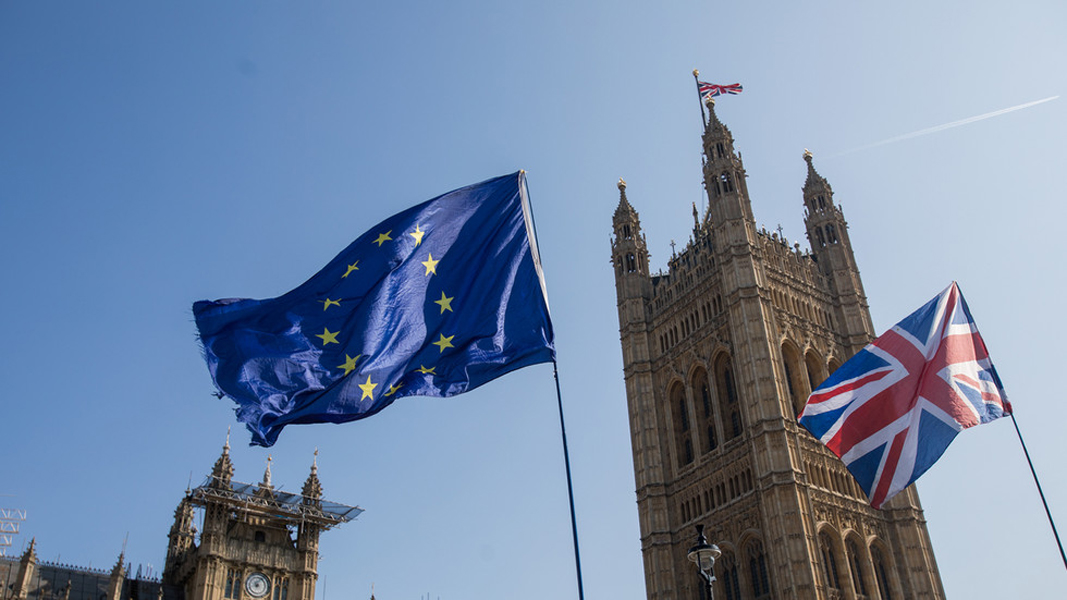
Brexit: Thousands of EU citizens face losing benefits

THOUSANDS of EU citizens living in the UK are set to lose their benefits next month if they haven’t applied for settled status. Campaigners have warned that the UK Government's decision to cut off European nationals could push vulnerable people into destitution. There are fears that many are still unaware that they need to apply for settled status after Brexit. The Independent reports that around 70,000 European nationals who receive benefits had not yet applied to the settlement scheme by the June...

Revisiting Retirement and Social Security Claiming Decisions

By Neha Bairoliya, Kathleen McKiernan Why do individuals retire and claim their Social Security benefits at the age they do? Understanding the key drivers of these decisions has been an important topic of research as it can help guide policy discussions on the impact of potential reforms to the Social Security program. We revisit this crucial question by exploring new sources of heterogeneity in these decisions as well as novel mechanisms governing these trade-offs. Using data from the Health and...

July 2021

US. Public Retirement Benefits Not What They Used to Be

Defined benefit (DB) pension plans are a valuable benefit for employees—offering the option of guaranteed retirement income that is lacking in most defined contribution (DC) plans. Some private-sector employees have been envious of the pension benefits provided to public-sector employees. Over the years some outsiders have even argued that public pensions are too generous, perhaps without understanding that many public employees are required to put a significant percentage of their own pay into the plans. And there has been misunderstanding...

June 2021

Do adverse health shock s induce myopic financial planning?

By Jialu L. Streeter Health and financial planning have both been found to be crucial to long-term financial stability. However, the impact of a health shock on financial plan-ning horizon was not directly tested. This article traces the trajectories of the financial planning horizon before and after the occurrence of work-limitinghealth shocks, using longitudinal panel data from the Health and RetirementStudy. Results show that, during the 10 years following a health shock, individ-uals are 20 to 39% more likely to...

Public Pension Schemes in Seven European Countries: A Micro-Simulation Approach

By Hand Hansen The idea of this book is to provide insight into the composition and structure of public pension and early retirement schemes in seven European countries, Denmark, Sweden, Finland, Great Britain, Germany, the Netherlands and Italy. The component and structural analyses are based on micro simulation models, which, after validation of the models, makes it possible to perform a great number of precise calculations in a very short time and to present the results in graphical form, close...