June 2025

Dignity 2022: The Experience of LGBTQ Older Adults

By Cassandra Cantave Burton There are over 2.4 million LGBT adults over age 50 in the United States — a number expected to double by 2030 to over 5 million, according to Movement Advancement Project (MAP). A vast majority (85%) of older LGBTQ individuals are concerned about discrimination based on sexual orientation. They are also worried about how they will care for themselves and others. Two-thirds believe they will need someone to provide caregiving for them in the future and eight in...

‘Scared of being pushed back into the closet’: Europe’s new LGBT+ retirement communities

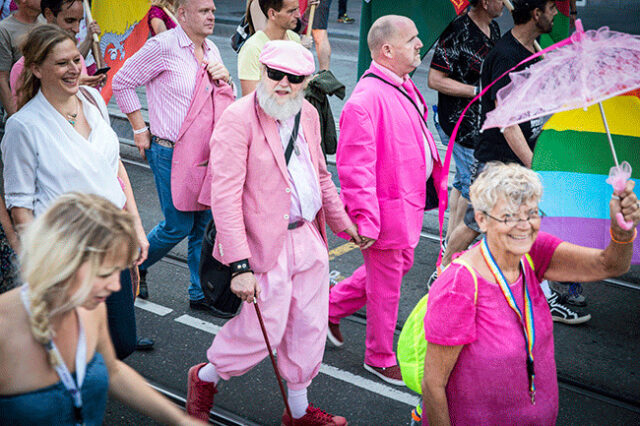
By Estelle Nilsson-Julien For many older LGBTQ+ the prospect of moving into a retirement home is a worrying thought. But in Sweden, Spain and France new retirement communities for LGBTQ+ seniors are proving a hit. "Care home staff don't realise that they have LGBTQ+ residents - but based on population estimates we know they do. It's just that residents don't feel comfortable or safe being identified as LGBTQ+", explains Professor Paul Willis, an expert in social care. Older members of the LGBTQ+ community can "be at higher...

Immigration and Adult Children’s Care for Elderly Parents: Evidence from Western Europe

By Andrea Berlanda, Elisabetta Lodigiani & Lorenzo Rocco In this paper, we use the Survey of Health, Ageing, and Retirement in Europe (SHARE), complemented with register data on the share of the foreign population in the European regions, to examine the effects of migration on the level of informal care provided by children to their senior parents. Our main results show that migration decreases informal care among daughters with a university degree, while it increases the provision of informal care...

May 2025

A Canadian Approach to Rethinking Technology Design for Aging Populations

By Milena Head Older adults are the fastest-growing segment of the population. In Canada, one in five people are 65 or older, and by 2065, this will increase to more than one in four. Yet, despite their growing numbers, older adults often face exclusion and marginalization in technology design. This digital divide has significant consequences, leading to isolation, loneliness, frustration, and poor health outcomes, particularly when we intersect factors like lower socioeconomic status, race, gender, and immigrant status. Source: @SSRN

The Longevity Story: Opportunities and Considerations

By World Governments Summit   This report delves into the concept of longevity, highlighting how advancements in medical technology, sanitation, preventive care, and lifestyle choices have significantly increased human lifespans—from an average of 45 years in the 1950s to over 73 years today. While early efforts to extend life overlooked aging itself, recent focus on understanding and potentially reversing the aging process has fueled the growth of the longevity industry. Organizations like Altos Labs, Hevolution Foundation, and Pure Health are pioneering...

The vision of younger-seniors-based elderly care in rural China: based on population aging predictions from 2020 to 2050

By Haojian Dou, Cheng Wang, Guishan Cheng, Xiaoyan Lei & Shuang Xu  Population aging is an irreversible and challenging global trend. Factors that worsen it in rural areas include the outflow of young adults, lack of medical resources, and uneven economic development. Based on projections of rural population aging trends in China from 2020 to 2050, this article explores the growth trends and spatial heterogeneity of elderly populations in rural areas. The results indicate that from 2020 to 2050, the...

April 2025

Older Workers Face New Risks because of the COVID-19 Recession

By Siavash Radpour, Aida Farmand & Teresa Ghilarducci For the large cohort of older workers, the significant difference between the COVID-19 recession and previous ones is the combined effect of the economic recession and the health risks of the COVID-19 outbreak. Older workers are facing the high health risks of working during a pandemic, on the one hand, as well as the risk of losing their jobs, on the other hand, which can lead to significantly lower wages in the...

Population Aging, Digital Financial Inclusion, Development Strategies and Economic Resilience

By Dongsong Cai, Ling Long, WanHuan Cai & Xin Wang As China enters into a deeply aging society, China's demographic development has come to an unprecedented stage of great transition, which also has an impact on economic resilience. Based on the perspective of new structural economics, the relationship between population aging and economic resilience is explored. Meanwhile, empirical tests using provincial panel data find that, firstly, there is a positive effect of population aging on economic resilience, i.e., population aging...

March 2025

Parental Leave Policies, Fertility, and Labor Supply

By Daisoon Kim & Minchul Yum South Korea has been facing persistently low fertility rates and large gender gaps in labor supply. In response, the government has expanded parental leave benefits to address these challenges. To evaluate the effectiveness of these policies, we develop a quantitative, heterogeneous-household life-cycle model in which couples make joint decisions on careers, labor supply, savings, and child-related choices, including fertility, childcare, and parental leave take-up. The model is calibrated to recent Korean cohorts to replicate...

Future-Proofing the Longevity Economy: Innovations and Key Trends

By World Economic Forum The world is at a pivotal moment in its demographic transition, with more than one in four people now living in countries where the population has peaked. This shift, coupled with increasing life expectancy and declining birth rates, presents both urgent challenges and unprecedented opportunities. Building on the Longevity Economy Principles, this white paper synthesizes five key trends shaping the future of the longevity economy: building resilient public retirement systems; transitioning from savings accumulation to decumulation; enhancing the...