
March 2021

Labour Market and Technological Development in Central Asia

By Roman Mogilevskii This paper discusses the current situation in the labour markets of the economies of Central Asia and considers the options available to use labour market policies to support the technological development of these economies. It analyses contemporary issues in the labour markets of these countries including the labour migration, informality, inequality, and financing of pensions through the taxation of labour. The paper provides recommendations for the modification of labour market policies to promote the economic diversification and...

February 2021

Late-career Unemployment Shocks, Pension Outcomes and Unemployment Insurance

By Samir Elsadek Mahmoudi In response to unemployment shocks, older workers deplete their 401(k)s, particularly after the waiving of the early withdrawal penalty on unemployment-motivated withdrawals at age 55. This paper shows that Unemployment Insurance (UI) keeps older workers from depleting their 401(k) assets following job losses. UI also incentivizes older unemployed workers to delay claiming their Social Security (SS) benefits beyond the earliest age of eligibility, 62. Overall, UI enhances the retirement income of the individuals having a history...

Opportunities for extending social security coverage in Jordan

By ILO The report aims to support Jordanian policymakers in the extension of social security to informal workers. It formulates typologies for informal workers outside the social security system, analyses the main constraints to coverage and outlines a range of policy approaches for the extension of coverage. The Jordanian government has been working to expand social security coverage of its workforce. In the context of the National Social Protection Strategy, the Cabinet has committed to developing an action plan to reduce...

Transition from the informal to the formal economy: Theory of Change

By ILO For enterprises, formalization means bringing them under the regulation with the advantages and obligations that this entails. It includes the extension of the scope of fiscal, labour and social security regulation to all enterprises without exception regarding the size, sector or other criteria, the legal recognition and registration of enterprises and compliance with legal requirements. For independent workers, the fact that their enterprises belong to the formal economy or not determines if they are also in the...

Transition from the informal to the formal economy: Theory of Change

By ILO For enterprises, formalization means bringing them under the regulation with the advantages and obligations that this entails. It includes the extension of the scope of fiscal, labour and social security regulation to all enterprises without exception regarding the size, sector or other criteria, the legal recognition and registration of enterprises and compliance with legal requirements. For independent workers, the fact that their enterprises belong to the formal economy or not determines if they are also in the informal economy...

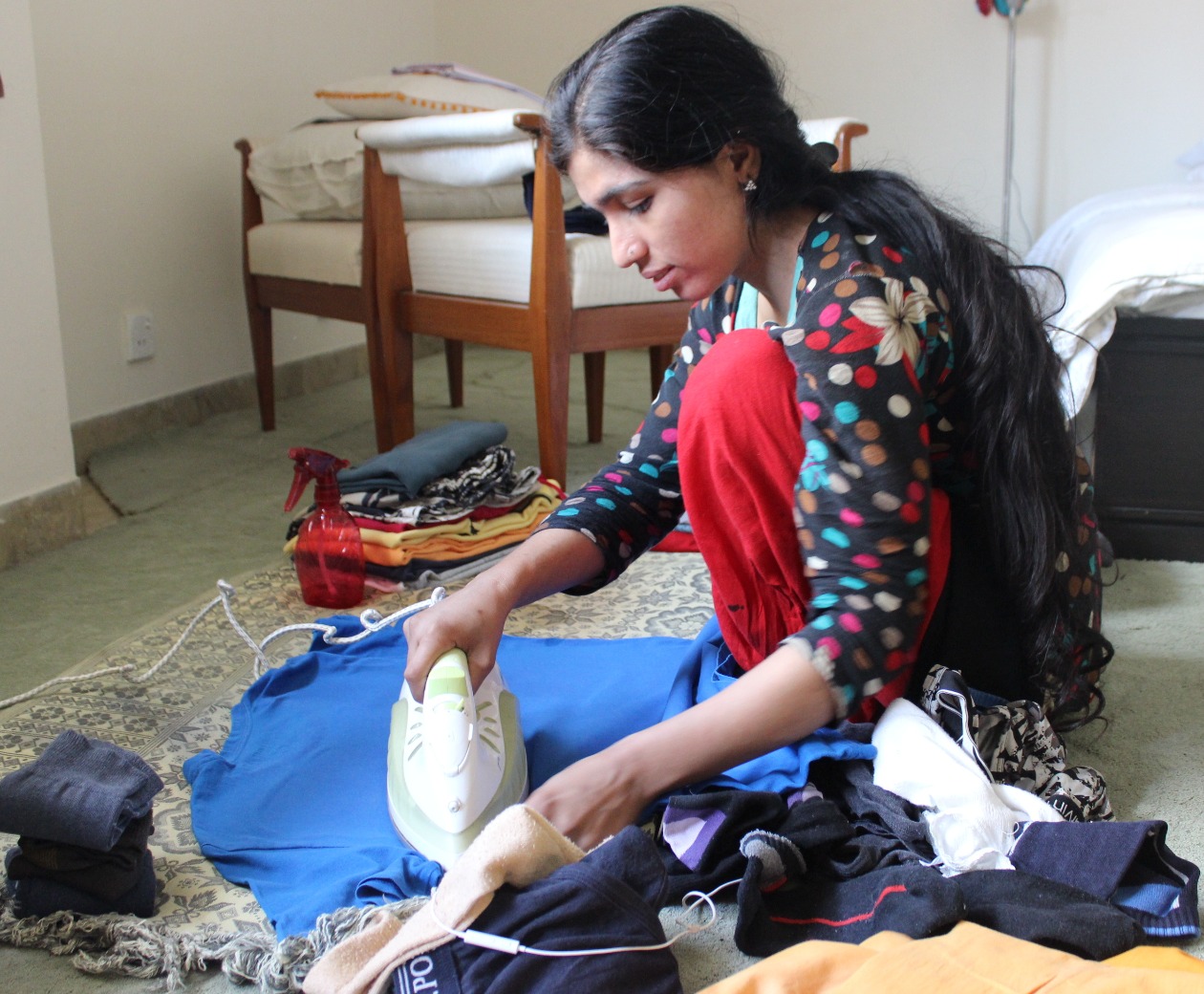
Transition from the informal to the formal economy: Theory of Change

By ILO This umbrella theory of change provides the main pathways for the transition to formality of workers and enterprises. It is a general framework that can inform the development of theories of change focused on a specific sector, occupational groups, forms of informality or policy areas. For enterprises, formalization means bringing them under the regulation with the advantages and obligations that this entails. It includes the extension of the scope of fiscal, labour and social security regulation to...

January 2021

The Early Labor Market Impacts of COVID-19 in Developing Countries Evidence from High-Frequency Phone Surveys

By Melanie Khamis, Daniel Prinz, David Newhouse, Amparo Palacios-Lopez, Utz Pape, Michael Weber The economic crisis caused by the COVID-19 pandemic has sharply reduced mobility and economic activity, disrupting the lives of people around the globe. This paper presents estimates on the early impact of the crisis on labor markets in 39 countries based on high-frequency phone survey data collected between April and July 2020. Workers in these countries experienced severe labor market disruptions following the COVID-19 outbreak. Based...

Robots and Labor in the Service Sector: Evidence from Nursing Homes

By Karen Eggleston, Yong Suk Lee, Toshiaki Iizuka In one of the first studies of service sector robotics using establishment-level data, we study the impact of robots on staffing in Japanese nursing homes, using geographic variation in robot subsidies as an instrumental variable. We find that robot adoption increases employment by augmenting the number of care workers and nurses on flexible employment contracts, and decreases difficulty in staff retention. Robot adoption also reduces the monthly wages of regular nurses,...

Executive Compensation: The Trend Toward One Size Fits All

By Felipe Cabezon This paper reports the prevalence of a “one-size-fits-all” trend in the structure of executive compensation plans. The way firms distribute total compensation across different components of pay –salary, bonus, stock awards, option awards, non-equity incentives, pensions, and perquisites– is becoming more similar since 2006. In particular, 25% of the variation across firms disappeared in the last ten years. Using close votes surrounding Say-on-Pay’s implementation, I find that shareholders’ influence on management decisions causes part of this...

Technology, Labour Market Institutions and Early Retirement: Evidence from Finland

By Naomitsu Yashiro, Tomi Kyyrä, Hyunjeong Hwang, Juha Tuomala There are two major barriers to increasing employment of older workers. First, older workers engaged in codifiable, routine tasks are particularly prone to the risk of being displaced by computers and robots. Second, several countries have in place various labour market institutions that encourage early retirement, such as exceptional entitlements or looser criteria for unemployment and disability benefits applied to older individuals. We present evidence that these two factors reinforce...