
August 2019

The Palgrave Handbook of Unconventional Risk Transfer

By Maurizio Pompella, Nicos A Scordis This handbook examines the latest techniques and strategies that are used to unlock the risk transfer capacity of global financial and capital markets. Taking the financial crisis and global recession into account, it frames and contextualises non-traditional risk transfer tools created over the last 20 years. Featuring contributions from distinguished academics and professionals from around the world, this book covers in detail issues in securitization, financial risk management and innovation, structured finance...
The Disruptive Impact of FinTech on Retirement Systems

By Julie Agnew, Olivia S. Mitchell Many people need help planning for retirement, saving, investing, and decumulating their assets, yet financial advice is often complex, potentially conflicted, and expensive. The advent of computerized financial advice offers huge promise to make accessible a more coherent approach to financial management, one that takes into account not only clients' financial assets but also human capital, home values, and retirement pensions. Robo-advisors, or automated on-line services that use computer algorithms to provide...

The Impact of Governmental Accounting Standards on Public-Sector Pension Funding

By Divya Anantharaman, Elizabeth Chuk The funding policy for defined benefit pension plans covering government employees represents an important decision for government entities sponsoring those plans. In recent years, a number of state and local governments have experienced extreme funding shortfalls (e.g., New Jersey, Illinois, and Detroit), raising concerns about whether government entities are contributing enough to their pensions. Governmental Accounting Standards Board Statements Number 67/68 (hereafter, “GASB 67/68”) fundamentally alter the financial reporting of pension liabilities, by (i)...

The Effects of Increasing the Eligibility Age for Public Pension on Individual Labor Supply: Evidence from Japan

By Nobuhiko Nakazawa This paper investigates the effects of increasing the eligibility age for public pension on workers' retirement decisions, focusing on recent Japanese public pension reforms. In Japan, the pensionable age for Employees' Pension Insurance benefits gradually increased from 60 to 65 for males over the course of a decade. Using individual-level administrative data and a regression discontinuity design, I find that raising the pensionable age for flat-rate benefits by one year increases male employment at the critical...

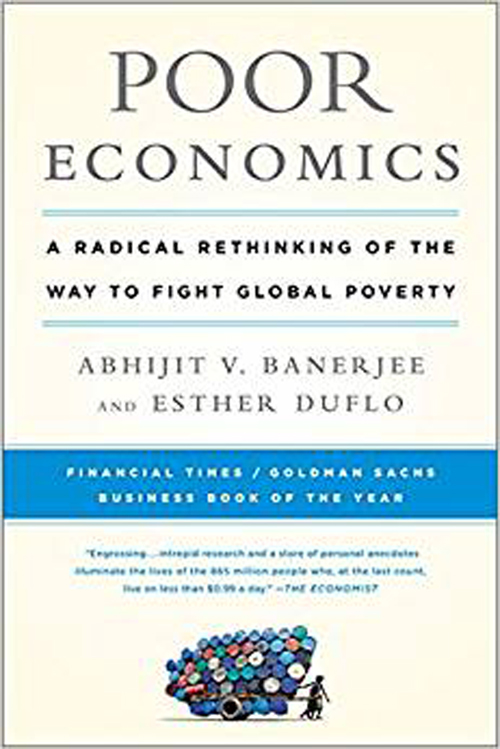
Poor Economics: A Radical Rethinking of the Way to Fight Global Poverty

By Ford Foundation International Professor of Economics and Director Poverty Action Lab Abhijit Banerjee, Esther Duflo Two practical visionaries upend the most common assumptions about how economics works in this gripping and disruptive portrait of how poor people actually live. Why do the poor borrow to save? Why do they miss out on free life-saving immunizations, but pay for unnecessary drugs? In Poor Economics, Abhijit V. Banerjee and Esther Duflo, two award-winning MIT professors, answer these questions based...

Performance and Challenges of the Income Protection System for Older People in Ecuador

By Ignacio Raul Apella The purpose of this work is to analyze the performance of the Ecuadorian pension system, its challenges, and available policy options. Therefore, the study analyzes coverage, financing sufficiency, and sustainability indicators that were created based on information from the Encuesta Nacional de Empleo, Desempleo y Subempleo (National Employment, Unemployment and Underemployment Survey) that was carried out over 2003-16. Likewise, actuarial simulations are made by using the World Bank pension reform options simulation toolkit. The findings...

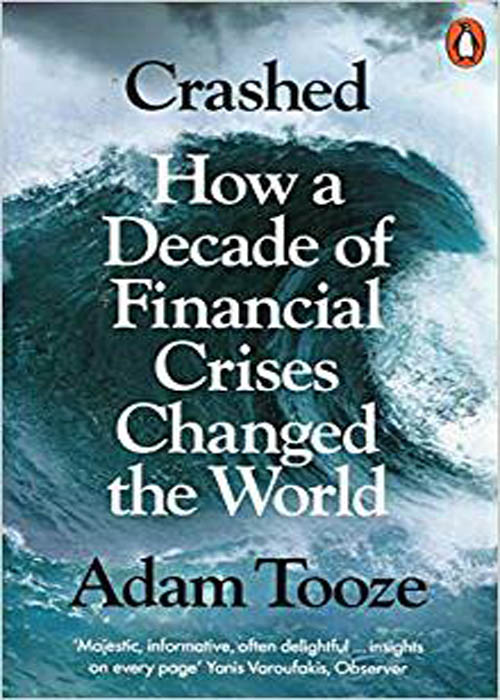
Crashed: How a Decade of Financial Crises Changed the World

By Adam Tooze In September 2008 the Great Financial Crisis, triggered by the collapse of Lehman brothers, shook the world. A decade later its spectre still haunts us. As the appalling scope and scale of the crash was revealed, the financial institutions that had symbolised the West's triumph since the end of the Cold War, seemed - through greed, malice and incompetence - to be about to bring the entire system to its knees. Crashed is a brilliantly original...

The Political Economy of Social Security Reform

By Michael Boskin, Diego Perez, Daniel Bennett We identify which types of Social Security reforms are supported when people vote in their financial self-interest, under alternative economic and demographic projections and voting proclivity assumptions. While 40% of voters have negative lifetime net transfers, less than 10% have negative future transfers under the unsustainable status quo. Framing the problem as a choice between reforms is necessary for any to receive majority support. Delayed reforms are often preferred, but immediate tax...

The Inevitable: Understanding the 12 Technological Forces That Will Shape Our Future

Much of what will happen in the next thirty years is inevitable, driven by technological trends that are already in motion. In this fascinating, provocative new book, Kevin Kelly provides an optimistic road map for the future, showing how the coming changes in our lives--from virtual reality in the home to an on-demand economy to artificial intelligence embedded in everything we manufacture--can be understood as the result of a few long-term, accelerating forces. Kelly both describes these deep trends--interacting,...

Bank 4.0: Banking Everywhere, Never at a Bank

Bank 4.0 explores the radical transformation already taking place in banking, and follows it to its logical conclusion. What will banking look like in 30 years? 50 years? The world's best banks have been forced to adapt to changing consumer behaviors; regulators are rethinking friction, licensing and regulation; Fintech start-ups and tech giants are redefining how banking fits in the daily life of consumers. To survive, banks are having to develop new capabilities, new jobs and new skills. The...