August 2024

Impact of COVID-19 on Healthy Life Expectancy of Older Adults in the Region of the Americas

The Region of the Americas has experienced a significant decline in the health life expectancy (HALE) of older adults at age 60 due to the COVID-19 pandemic. New data from the WHO Global Health Observatory reveals that the HALE at 60 years old was reduced from 16.61 years in 2019 to 15.21 years in 2021 in the region. This dramatic decline underscores the severe impact of the pandemic on older populations, reversing years of advancements in public health and longevity. The...

China plans ‘bigger, stronger’ social security fund to aid ageing society

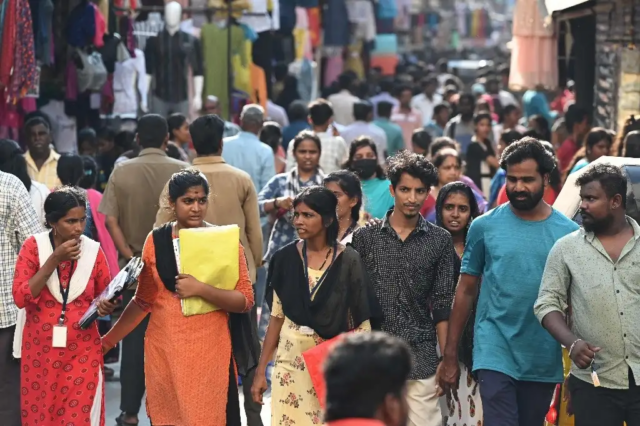
China will beef up its 2.88 trillion yuan ($406 billion) social security fund, making it "bigger and stronger" to help support its rapidly ageing population as the number of new births and younger workforce to support its seniors shrinks. The National Social Security Fund will "effectively" respond to population ageing and "improve the policy mechanism for the development of the elderly care industry," the fund's party secretary Ding Xuedong said in comments made in Communist Party newspaper, the Study Times...

How to solve the crisis of the pension system in the EU?

The demographic time bomb in Europe has been ticking for decades. The countries of the European Union are getting older, and people are living longer. More than a fifth of the population of the European Union is now aged 65 or over. That number is expected to grow to a third by 2050. Last year, the World Health Organization warned that in 2024, the number of people over the age of 65 will exceed the number of people under the...

July 2024

Pension Systems (Un) Sustainability and Fiscal Constraints: A Comparative Analysis

By Michael Wickens, Vito Polito & Burkhard Heer Using an overlapping generations model, two new indicators of public pension system sustainability are proposed: the pension space, which measures the capacity to pay for pension expenditures out of labour taxation, and the pension space exhaustion probability reflecting demographic uncertainties. These measures reveal that the pension spaces of advanced economies are strikingly different. Most nations have little scope to further finance pensions out of labour income  taxation over the next thirty years....

US. AARP reveals proposals for national plan on aging

AARP, the interest group advocating for the wellbeing of older Americans, revealed in a policy paper this month its priorities for a national plan on aging that sufficiently recognizes the changing demographics of the U.S. population, and the trend that will see 20% of all Americans become at least the age of 65 by 2030. “While other countries are responding to these changes by developing and implementing national strategic plans to help them meet the challenges and maximize opportunities to increase...

Ageing societies require holistic approach to fiscal policy making

Several Asia Pacific countries are ageing fast due to falling birth rates and people living longer because of access to better healthcare. This is not unique to the region and is part of a global megatrend. What is unique, however, is the speed at which these Asia Pacific countries are becoming aged societies. As a comparison, while France and Sweden took 115 and 85 years, respectively, to progress from being an ageing society (with 7-14 per cent of the population aged...

China to allow delayed retirement to combat population woes

 China will gradually raise its statutory retirement age, now among the world's lowest, to allow people to work longer, as it struggles to relieve soaring pressure on pension budgets, with many provinces already facing deficits. The reform is urgent, with life expectancy having risen in China to 78 years by 2021 from about 44 years in 1960, outstripping the United States, and is projected to exceed 80 years by 2050.   Sunday's announcement came in a key policy document that also rolled...

World Population Prospects 2024

By United Nations  The 2024 Revision of World Population Prospects is the twenty-eighth edition of official United Nations population estimates and projections that have been prepared by the Population Division of the Department of Economic and Social Affairs of the United Nations Secretariat. It presents population estimates from 1950 to the present for 237 countries or areas, underpinned by analyses of historical demographic trends. This latest assessment considers the results of 1,910 national population censuses conducted between 1950 and 2023, as well as...

The Impacts of Raising the Public Pension Eligibility Age on the Lifestyles of Elderly People: Evidence from Japan

By Shinya Inukai With many countries facing rapid population aging, the sustainability of public pensions has become a pressing issue. I evaluate the impacts, including both employment and time allocation, of public pension reform on the lifestyles of the elderly. In Japan, all residents aged 20 or older are covered by the public pension, with eligibility determined mechanically based on age. I focus on the reform raising men's eligibility age from 60 to 61 in 2001 and estimate its impact...

Demographic crisis looms: UN warns S. Korea’s population to halve by 2089

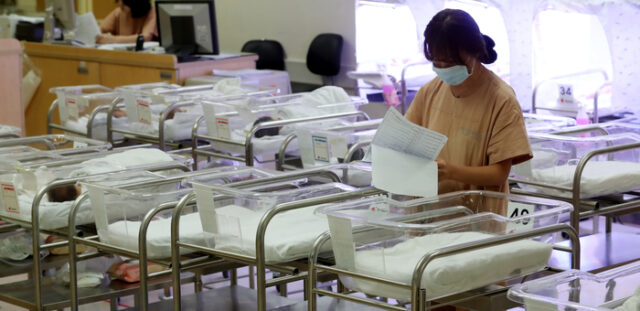
The United Nations predicts South Korea’s population will shrink drastically to 25.85 million in 2089, roughly half its current 51.71 million. According to the UN’s latest population report released on July 17, South Korea’s population, currently at 51.71 million, will decline to 21.85 million by 2100, which is 42% of its present level. The UN forecasts that South Korea’s population will drop to the 40 million range by 2037, the 30 million range by 2060, and the 20 million range by...