
December 2020

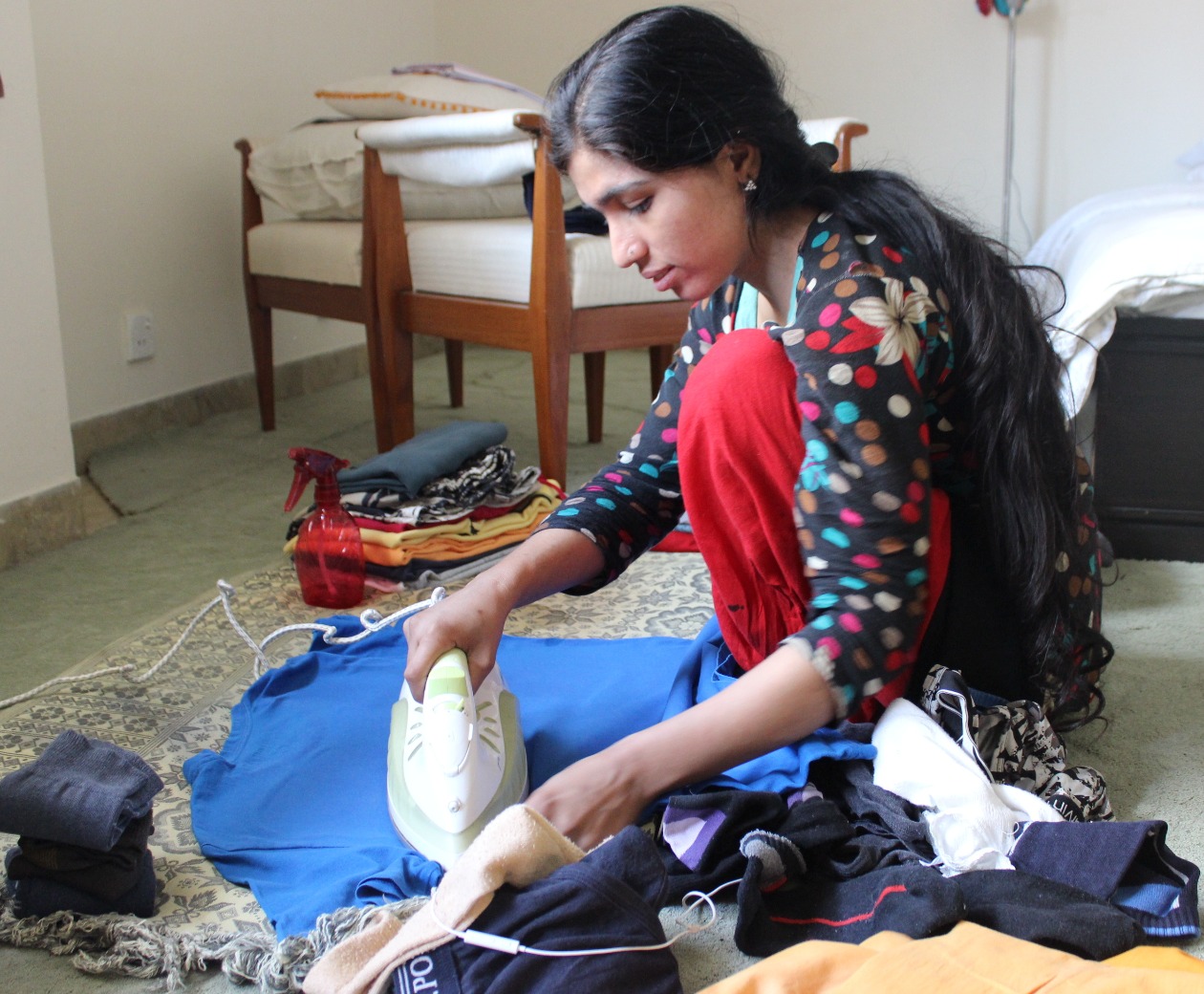
COVID-19 has worsened the woes of South Asia’s informal sector

By Maurizio Bussolo, Siddarth Sharma, Hans Timmer Informal employment, which includes temporary workers, day laborers, service, or domestic workers, has long been associated with underdevelopment. Following the same logic, informality is expected to disappear gradually as countries further develop and prosper. Yet, despite decades of sustained high growth, South Asia's informal sector shows little sign of abating—even increasing in some cases. More than 80 percent of all South Asia's workers engage in informal activities, and more than 90 percent of the...

November 2020

Pension and Health Services Utilization: Evidence from Social Pension Expansion in China

By Shanquan Chen, Xi Chen, Stephen Law, Henry Lucas, Shenlan Tang, Qian Long, Lei Xue and Zheng Wang The proportion of people aged 60 years or over is growing faster than other age groups. The well-being older adults depend heavily on their state of health. This study evaluates the effects of pensions on older adults' health service utilization, and estimates the size of pension required to influence such utilization. Using a nationally representative survey, the China Health and Retirement...

Malaysia is ageing, raise retirement age to 65 gradually, says World Bank

Rapid ageing will be one of the most crucial megatrends affecting Malaysia in the coming decades, raising policy challenges in areas such as employment, income security, health care, and aged care, the World Bank has said. In its report titled “A Silver Lining: Productive and Inclusive Ageing for Malaysia”, it said a gradual increase of the retirement age to 65 was needed as the country’s institutional framework for providing income security for older persons remained largely unchanged in...

Social Insurance, Demographics, and Rural-Urban Migration in China

By Neha Bairoliya, Ray Miller We develop a dynamic general equilibrium model to analyze the impact of social insurance policy and demographic changes on rural-urban migration in China. Quantitative analyses indicate that different social insurance programs not only have differential effects on net migration flows but also on the age and income distribution of migrants. Enrolling migrants in urban pensions discourages rural-urban migration at young ages and reverse migration in old-age. In contrast, urban health insurance incentivizes rural-urban migration...

Pace of outsourced Asia-Pacific assets to slow, report says

Assets outsourced to external money managers by institutional investors in the Asia-Pacific region are set to grow at an annualized rate of 9% over the five years through 2024, down from 12% over the five years through 2019, according to a report by fintech firm Broadridge Financial Solutions. The slowdown is partly in response to the fallout from COVID-19, including moves by some retirement systems in the region to allow members to draw down their retirement savings to get...

Thailand. NSF aims to provide sustainable pensions for all

The National Savings Fund (NSF) targets a 10-year return of at least 3% for long-term investment in order to provide fund members with sustainable pensions. The voluntary retirement savings fund targets informal workers, and currently holds investments totalling 8 billion baht. Since its inauguration in August 2015, the NSF has registered an average return of 3%, with last year's return at 4.4%, said NSF secretary-general Jaruluck Ruengsuwan. Year-to-date return is 1.6% because of the current domestic and international economic...

October 2020

How are Japanese corporate funds adapting to global economic challenges

Since 2016, a Japanese publication for institutional investors, AL-IN, has periodical surveyed Japanese corporate pension funds to determine what products best serve them as they confront structural and market changes. The 2018 edition of the survey found pension funds preparing for a domestic economic downturn. Income gains were already slack and pension funds sought bond-related and low-liquidity assets to cover the shortfall. Since then, investment and financial markets have been defined by the U.S. Federal Reserve’s shift in monetary...

Highlights of China’s elderly care over past five years

China has been running at full tilt to foster a social environment in which senior citizens are respected, cared for and live happily in the span of the 13th Five-Year Plan (2016-2020), given the country's fast-growing aging population. By the end of 2019, China had a population of 254 million aged 60 or above, accounting for 18.1 percent of the national population. The number is expected to exceed 300 million in the next five years, according to the Ministry of...

Asia’s pension systems forced to cut back under COVID pressures

The coronavirus pandemic is weighing on Asia's pension systems, raising concerns about whether some will be up to the task of allowing future retirees to live comfortably. Read also How are Japanese corporate funds adapting to global economic challenges Across the region, employers hit by lockdowns and slower economic activity are struggling to keep pension funds topped up. Governments have responded by scaling back contribution requirements. Read also Highlights of China’s elderly care over past five years "The economic recession caused...

Saudi Arabia pension system shows positive signs in 2020

We show you our most important and recent visitors news details Saudi Arabia pension system shows positive signs in 2020 Global Pension Index in the following article Hind Al Soulia - Riyadh - RIYADH — Mercer released the results of its 2020 Mercer CFA Institute Global Pension Index survey (MCGPI) that benchmarks retirement income systems around the World. According to the survey, Saudi Arabia had an overall index value of 57.5 among the countries analyzed, scoring slightly higher than...