April 2026

Older People Are Hoarding the US’s Potential

Mr. Moyn is the author of the forthcoming “Gerontocracy in America.” “Ageism” identifies an enduring phenomenon: the mistreatment of older people for no reason other than being older. Americans in middle age and beyond are routinely passed over for opportunities because of the irrelevant fact of a number on paper or how they act and look after getting older. In today’s world, the unfair discrimination they cite coexists with a different kind of unfairness: a gerontocratic society in which the old...

2024 Labour Overview of Latin America and the Caribbean

By International Labour Organization Five years after the outbreak of the COVID-19 pandemic, the labour market outlook for Latin America and the Caribbean in 2024 shows relative stability in its main labour market indicators. In line with the moderate pace of economic growth, the employment rate increased slightly in 2024 compared with the previous year. Labour supply, as measured by the participation rate - the percentage of people of working age who are working or looking for a job...

India’s Informal Sector and AI: Jobs, Justice, Policy

India’s informal sector is unlikely to disappear in the age of AI, but without deliberate policy interventions, it may become increasingly precarious, unequal, and exclusionary. The central issue is not whether AI will be adopted, but whether India can shape this transition to safeguard and enhance informal livelihoods rather than passively allowing technology to displace them at scale. India’s growth story still rests on informal work: over 90 percent of workers are employed in the informal sector, mostly in tiny, unregistered...

Immigrants at the Margin: Labor Market Effects of the Minimum Wage

By Mark Borgschulte, Heepyung Cho & Darren Lubotsky We examine the differential effects of minimum wages on immigrant and native workers in the United States. We find that minimum wage increases lead to reduced hours of work among immigrants with no effect on their employment. The effects are concentrated among recently arrived, likely-undocumented workers in high turnover industries. Native workers show no such response, even when examining native subgroups with similar characteristics to the most affected immigrants. We conclude that...

US. Seniors Turning to Gig Work: Why a Growing Number of Retirees Are Unretiring in 2026

Seniors turning to gig work is no longer an outlier trend. It is becoming a defining feature of the 2026 labor market. A growing number of Americans over 50 are returning to the workforce through freelance and contract roles after concluding decades-long careers. The reasons range from insufficient retirement savings to rising living costs, and for many, gig platforms offer the flexibility that traditional employment cannot. If you are self-employed or considering gig work later in life, understanding this...

Informal workers in the rural sector in Colombia: Living conditions and social security

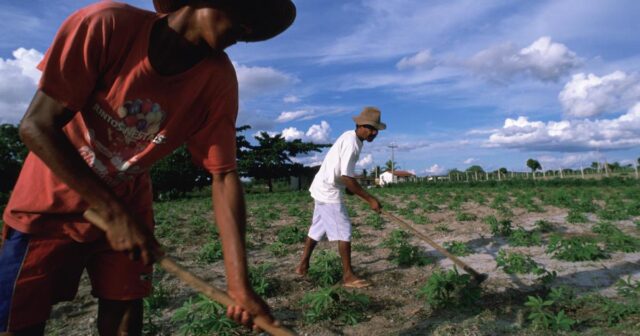
By Oscar Espinosa, Valeria Bejarano, Martha-Liliana Arias & Jorge-Iván González The existence of a high percentage of informal labour has a direct impact on the living conditions of millions of people and their families, especially in rural areas and developing countries. The implications of this problem present a challenge for public policy on employment, social security and business activity. Taking advantage of the wealth of microdata from the Great Integrated Household Survey (of national representation), our research aimed to...

Gig Workers And Labour Law In India: Analysing The Legal Vacuum Under The Code On Social Security 2020

By Anshita Jain The rise of the gig economy in India has transformed traditional employment structures while exposing significant gaps in labour law protections. This paper analyses the legal status of gig and platform workers under the Code on Social Security, 2020, highlighting the challenges of worker classification and limited social security coverage. It argues that despite formal recognition, the absence of enforceable rights and clear accountability mechanisms leaves gig workers vulnerable. The paper concludes by suggesting the need for...

March 2026

The World Is Ageing—What Are the Macroeconomic Implications?

Traditionally, economists and policymakers have focused on a fairly fixed set of determinants of economic growth, such as investment, consumption, unemployment and trade. More recently, however, the powerful, long-term theme of population ageing has steadily moved to the forefront of macroeconomic thought. From Japan to the United States, and from Europe to China, birth rates have fallen below replacement levels while life expectancy has continued to rise, leading countries to experience an expanding share of older citizens relative to...

Challenges of the Power of the New Longevity: Age Discrimination in the Workplace, and More, in Argentina

By Virginia Marturet Life expectancy has significantly increased, reaching an average of 77 years in Argentina. The current challenge is to enhance the quality of those years. Age discrimination is the third leading cause of discrimination worldwide and is prevalent in Argentina, particularly in workplaces, society, and daily life. Our current challenge is to make those years a life with more quality and fullness. What is the power of all that we have gained and how do we take advantage...

Inertia is the real danger for ageing populations: Alexandra Miles

I recently read the book Time Bomb: When Ageing Explodes by Giles Merritt, which lays out why demography is one of Europe’s most underestimated economic threats. The argument is unsettling: ageing is already reshaping economies, politics and social contracts, and its effects will intensify. At the core of the challenge is a shrinking workforce. Merritt highlights how Europe’s post-war prosperity rested on a favourable worker-retiree balance, with five workers to each pensioner. Today, it is below 3:1 in much of Europe...