

August 2019

Why is Inequality Higher Among the Old? Evidence from China

By Katja Hanewald, Ruo Jia, Zining Liu This paper studies income inequality in old age and its development over the life cycle. We develop a theoretical framework and a new empirical method to show that income is more unequally distributed in old age than in working age. We combine the regression-based inequality decomposition method and the three-step mediating effect test to analyze the transmission of income inequality from initial socioeconomic differences to income inequality in old age. Our study...

Delaying Retirement: Progress and Challenges of Active Ageing in Europe, the United States and Japan

Dirk Hofacker, Moritz Hess, Stefanie Konig To a backdrop of ageing societies, pension crises and labour market reforms, this book investigates how the policy shift from early retirement to active ageing has affected individual retirement behaviour. Focusing on eleven European countries, the United States and Japan, it brings together leading international experts to analyze recent changes in pension systems. Their findings demonstrate that there has been a fundamental transition in pension policies and a steep increase in...

Performance and Challenges of the Income Protection System for Older People in Ecuador

By Ignacio Raul Apella The purpose of this work is to analyze the performance of the Ecuadorian pension system, its challenges, and available policy options. Therefore, the study analyzes coverage, financing sufficiency, and sustainability indicators that were created based on information from the Encuesta Nacional de Empleo, Desempleo y Subempleo (National Employment, Unemployment and Underemployment Survey) that was carried out over 2003-16. Likewise, actuarial simulations are made by using the World Bank pension reform options simulation toolkit. The findings...

Income Inequality and Government Transfers in Mexico

 By Frederic Lambert, Hyunmin Park We analyze microdata from Mexico's survey on household income and expenditures (ENIGH) to study the evolution of income inequality in Mexico over 2004-16, identify its sources, and investigate how it was affected by government social policy. We find evidence of only a small decline in inequality over this period. The observed decline may be attributed to government transfers, notably targeted cash transfers (Prospera) and non-contributory pensions. In 2016, those two programs accounted for more...

Behavioral Finance: What Everyone Needs to Know

By H. Kent Baker, Greg Filbeck, John R. Nofsinger People tend to be penny wise and pound foolish and cry over spilt milk, even though we are taught to do neither. Focusing on the present at the expense of the future and basing decisions on lost value are two mistakes common to decision-making that are particularly costly in the world of finance. Behavioral Finance: What Everyone Needs to KnowR provides an overview of common shortcuts and mistakes people make...

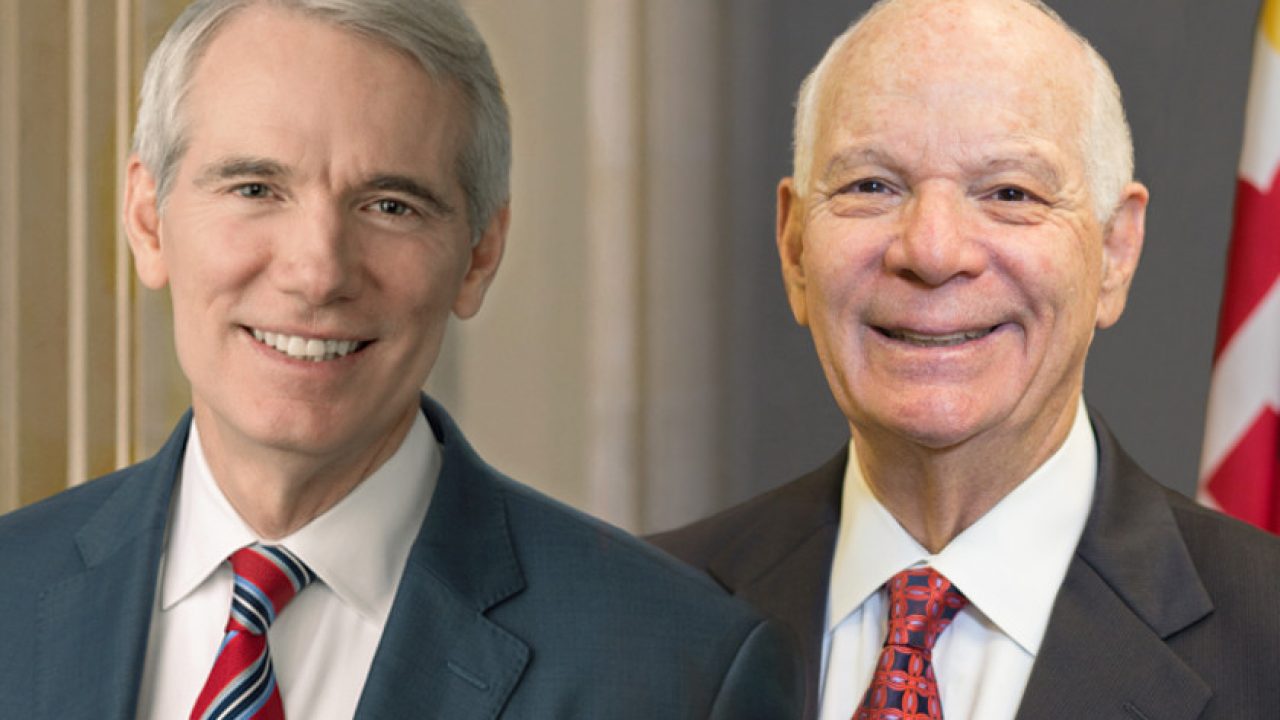
The False Promise of Portman-Cardin Pension Reform

By Michael Doran This article analyzes the pension-reform bill introduced in 2019 by Senator Portman and Senator Cardin. Earlier Portman-Cardin bills, enacted in 1996, 2001, and 2006, substantially increased the amounts that higher-income families can save in tax-qualified retirement plans and IRAs, but they included only modest and mostly ineffective measures to encourage retirement savings by lower- and middle-income families. Despite the tens of billions of dollars in tax subsidies spent under the earlier Portman-Cardin legislation, retirement-account values today...

Multiemployer plans: evaluating a proposal to spread the pain

By Alicia Munnell, Jean- Pierre Aubry, Wenliang, Hou, Anthony Webb The Multiemployer Pension Reform Act (MPRA) allows multiemployer plans facing insolvency to apply for approval from the Treasury to cut accrued benefits of plan members to prolong plan solvency—a departure from the benefit protections of Employee Retirement Income Security Act. To assess the law's impact, this paper models Central States Teamsters – by far the largest – plan to have applied under the new law to reduce benefits. Using...

July 2019

Aging Policy and Politics in the Trump Era: Implications for Older Americans

By Edward Alan Miller, Pamela Nadash, Michael K. Gusmano The surprise election of Donald J. Trump to the presidency of the United States marks a singular turning point in the American republic – not only because of his idiosyncratic approach to the office, but also because the Republican Party now holds the presidency and both houses of Congress, presenting a historic opportunity for change. The role of older Americans has been critical in both shaping and reacting to this...

Aging and Work in the 21st Century

By Kenneth S Shultz (Editor), Gary A Adams Aging and Work in the 21st Century, 2nd edition, reviews, summarizes, and integrates existing literature from various disciplines with regard to aging and work, but with a focus on recent advances in the field. Chapter authors, all leading experts within their respective areas, provide recommendations for future research, practice, and/or public policy. Fully revised and updated, the second edition takes up many of the same critical topics addressed in the...

Reconstructing Retirement: Work and Welfare in the UK and USA

By David Lain In the United Kingdom, retirement programs are being reconstructed to follow the American practice of abolishing mandatory retirement and increasing state pension ages. This timely book compares prospects for work and retirement at age sixty five-plus in both the United States and the United Kingdom. After exploring the shifting logic behind both nations' policies--policies that increase both the need and opportunities to work past age sixty five--David Lain presents an original comparative statistical analysis on the...