April 2025

Unequal Inflationary Effects of Tariffs across Socio-Demographic Groups

By Hakan Yilmazkuday This paper investigates the heterogeneous effects of U.S. tariffs on inflation across socio-demographic groups, utilizing a structural vector autoregression model that controls for oil prices, output growth, policy rates, and exchange rates. The aggregate tariff pass-through to inflation is estimated at 0.51, with tariffs accounting for approximately 17% of overall inflation volatility. Disaggregated analysis reveals significant variation, where tariff pass-through ranges from 0.38 to 0.55 across income percentiles, with higher income groups experiencing greater pass-through and a...
March 2025

A roadmap to adequate retirement incomes for all

By Phoenix Insights Achieving decent, financially secure retirements for people in the UK is an essential priority for individuals, government and industry alike. Phoenix Group previously called for a holistic review of pensions adequacy, and are pleased to see the new Government’s commitment to do so in the coming months. The long standing question of ‘how much is enough’ for retirement can be complex and wide reaching one. The question will need to be answered through a collaborative approach and followed by an action plan....

January 2025

Adequacy of future retirement incomes: new evidence for private sector employees

By Jonathan Cribb, Laurence O'Brien & David Sturrock This report takes a fresh look at the prospects for the future of retirement incomes for employees in the UK. Since the Pensions Commission reported around 20 years ago, much has changed in the economic and pensions policy environment. While the introduction of automatic enrolment has been in many respects a great policy success – and the level and coverage of the flat-rate component of the state pension have increased markedly – lower-than-expected...

July 2024

The Bulgarian Pension System: Caught Between Adequacy And Sustainability

By Jean-Jacques Hallaert During the COVID-19 pandemic, the Bulgarian authorities increased pensions substantially to support pensioners’ living standards and aggregate demand. These increases have become permanent and improved the adequacy of pensions. However, not matched by revenue measures, they have widened the deficit of the pension system. Reforms that increase the incentives to contribute to the pension system and thus revenue would improve the financial sustainability of the pension system and reduce fiscal risks. Source SSRN

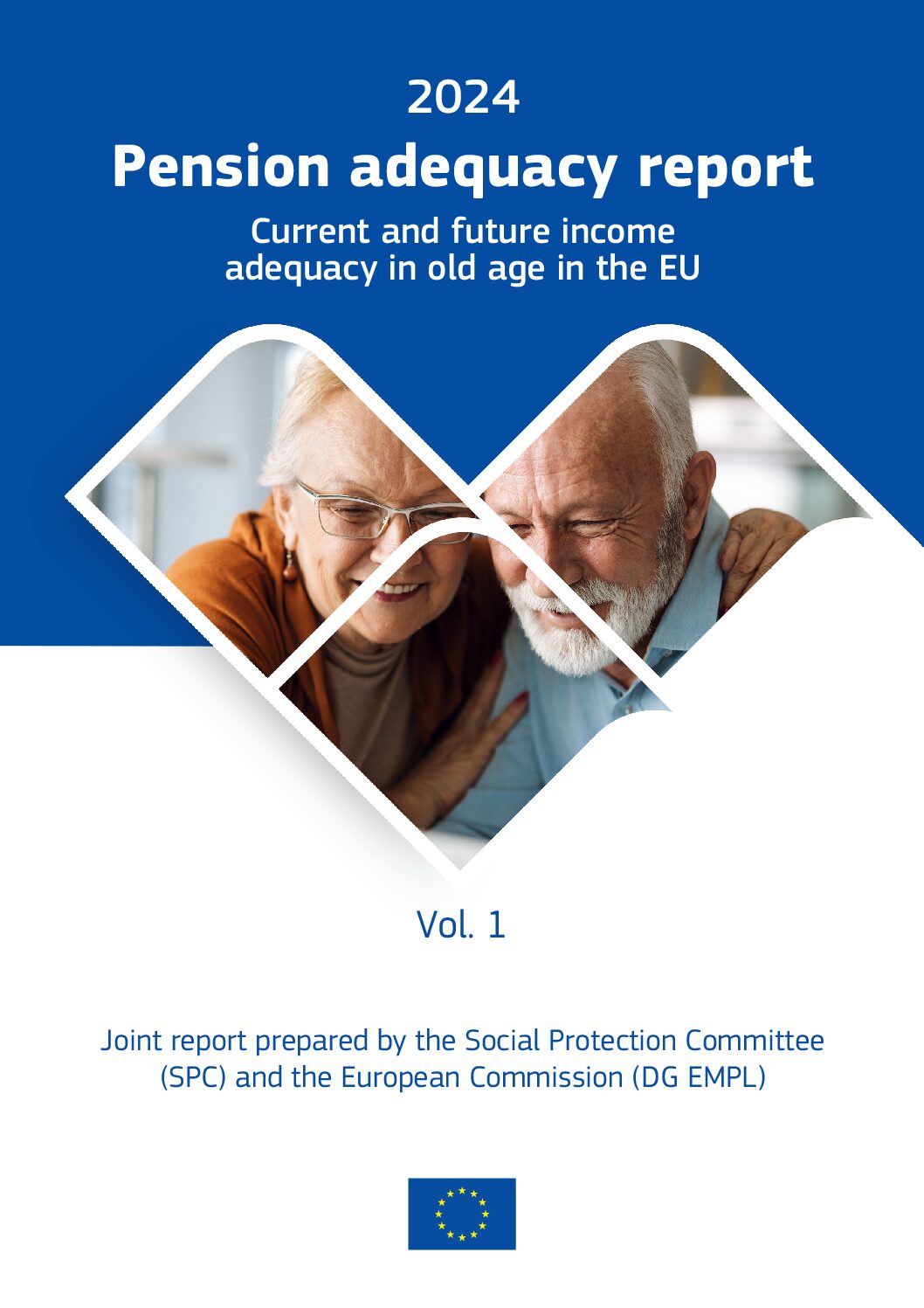
2024 Pension adequacy report: Current and future income adequacy in old age in the EU

By European Union  The report’s main focus is on old-age pension systems. It looks primarily at statutory pensions, incorporating the adequacy contribution of supplementary pensions where relevant. The report also looks at the role of survivors’ pensions in providing adequate old-age income for surviving spouses. In the context of its analysis of income inequalities and redistribution mechanisms, the report also considers minimum income provision for older people and how taxation affects income distribution in old age. Given the importance of services...

May 2024

Live Longer and Healthier: Impact of Pension Income for Low-Income Retirees

By Chiara Malavasi & Han Ye We estimate the effect of additional pension income on mortality outcomes by exploring the eli- gibility criteria of a German program subsidizing the pensions of low-wage workers. Using novel administrative data, we find that eligibility leads to a 2-month delay in age at death (censored at 75). Survey evidence suggests that additional pension income improves both mental and physical health. In addition, individuals feel less financially constrained and are more optimistic about their future....

Middle-aged and Older Adult Employment and the Perceived Risk of Running Out of Money during COVID-19: A Dynamic Panel Data Analysis

By Andy Sharma  The coronavirus disease of 2019 (COVID-19) adversely impacted the health of middle-aged and older adults and altered their economic outlook. Several national polls revealed older adults felt stress about money and many reported difficulties in paying expenses during 2021. While such descriptive reports have raised awareness, peer-reviewed studies utilizing panel data can offer additional insight. As such, the purpose of this study was to contribute to this growing literature by examining the demographic, economic, and health factors...

April 2024

The Race/Ethnicity Gap in Retirement Plan Participation: More than Just Demographics

By David Blanchett American companies have been actively shifting away from defined benefit (DB) plans towards defined contribution (DC) plans for decades. This shift places more burden on workers to make decisions like whether to participate in the retirement plan, how much to save, and how to invest those savings. This analysis explores how participation in a workforce retirement plan varies by race and ethnicity leveraging data from the Annual Social and Economic Supplement (ASEC) to the 2023 Current Population...

October 2023

Replacement Rates and the Retirement Crisis

By Andrew G. Biggs  In 2014, the annual Social Security Trustees Report removed measures of Social Security replacement rates, which represent Social Security retirement benefits as a percentage of pre-retirement earnings. The Trustees expressed concerns that the Social Security Administration’s (SSA) actuaries’ methodology produced results that differed meaningfully from other common approaches. In 2023, the Social Security Trustees returned replacement rates to the report, without changes to the SSA methodology or discussion of their decision. The SSA replacement rate methodology produces...

April 2023

Aging, Inadequacy, and Fiscal Constraint: The Case of Thailand

By Phitawat Poonpolkul, Ponpoje Porapakkarm & Nada Wasi We use an overlapping generations model to study the challenge in developing countries with a large informal sector and aging populations. We use Thailand as a case study and incorporate its labor market structure and its public pension system into the calibrated model. Unlike developed countries, workers in developing countries commonly transit from the formal sector to the informal sector, which can be in the early stage of their working life. This...