September 2021

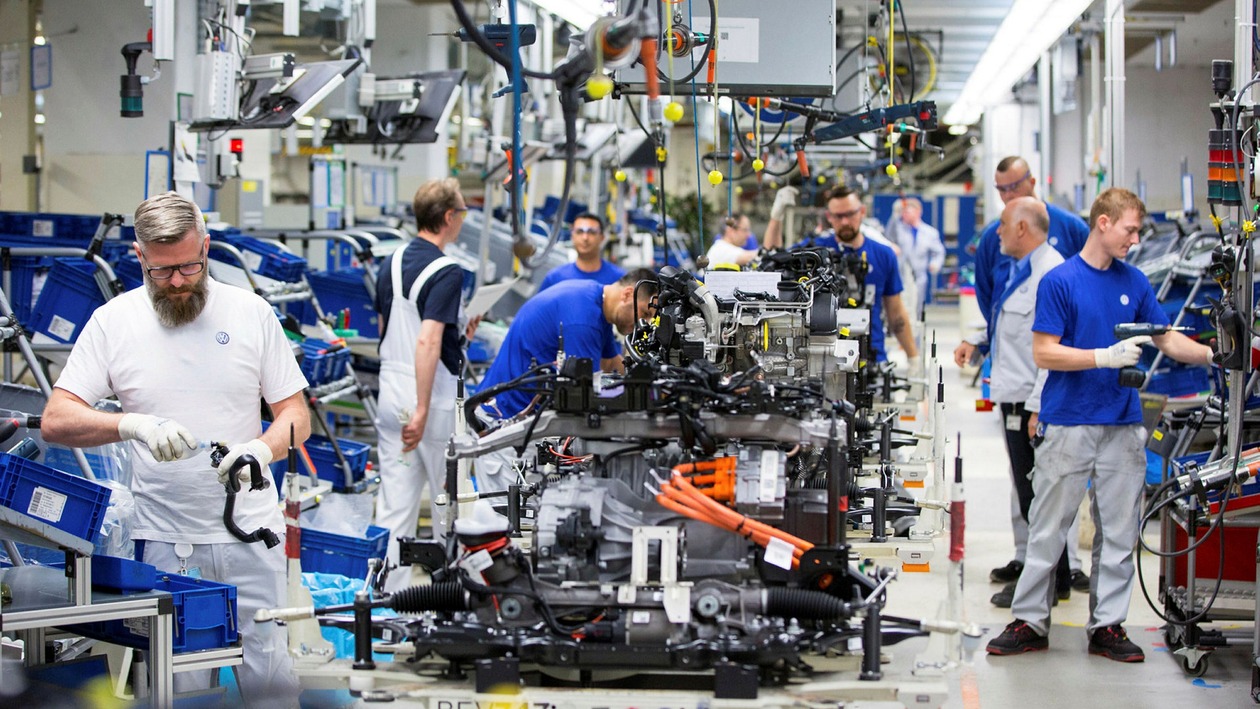
Demographics and Automation

By Daron Acemoglu & Pascual Restrepo We argue theoretically and document empirically that aging leads to greater (industrial) automation, because it creates a shortage of middle-aged workers specializing in manual production tasks. We show that demographic change is associated with greater adoption of robots and other automation technologies across countries and with more robotics-related activities across U.S. commuting zones. We also document more automation innovation in countries undergoing faster aging. Our directed technological change model predicts that the response of...

Driving Value for Money in defined contribution pensions

By The Pensions Regulator & Financial Conduct Authority This discussion paper was published jointly by the UK’s Financial Conduct Authority and The Pensions Regulator. A focus on Value for Money (VFM) is a key part of ensuring defined contribution (DC) pensions maximise the income savers have at retirement. In this discussion paper, we invite views on developing a holistic framework and related metrics to assess VFM in all FCA and TPR regulated DC pension schemes (workplace and non-workplace). At this stage, we...

The Surprising Ingredients of Swedish Success – Free Markets and Social Cohesion

By Nima Sanandaji Sweden did not become wealthy through social democracy, big government and a large welfare state. It developed economically by adopting free-market policies in the late 19th century and early 20th century. It also benefited from positive cultural norms, including a strong work ethic and high levels of trust. As late as 1950, Swedish tax revenues were still only around 21 per cent of GDP. The policy shift towards a big state and higher taxes occurred mainly during the...

The Government Debt Iceberg

By Jagadeesh Gokhale Europe and the United States will soon begin to encounter fiscal constraints the like of which we have never seen before. Federal debt as a percentage of GDP more than doubled between 2000 and 2012. According to the US Congressional Budget Office, total national debt is expected to remain close to 100 per cent of GDP during the next decade and begin to increase thereafter as the baby-boomers fully enter retirement. · Debt levels in European Union countries...

Horizon Effect on Optimal Retirement Decision

By Junkee Jeon, Minsuk Kwak & Kyunghyun Park We study an optimal consumption, investment, life insurance, and retirement decision of an economic agent who has an option to retire early any time before the mandatory retirement date. We conduct a thorough theoretical analysis for the optimal retirement problem with general utility function in the presence of mandatory retirement date, which leads to the optimal stopping problem in finite horizon. Furthermore, different marginal utility of consumption before and after retirement is...

Policy Forum: Tax, Social Security, and Employment Status – Removing the Distortions in the United Kingdom

By Judith Freedman The COVID-19 pandemic has strained tax and social security systems. Cracks that have existed for some time have been opened up further and are unlikely to close without structural repair. New insights into the shifting nature of work, combined with the development of technologies that can provide modern, practical solutions to old problems, offer the opportunity to rethink the way we tax gig workers and other non-standard providers of labour. This article argues that we need to...

Do Trade Unions Promote Age Diversity and Intergenerational Solidarity in the Workplace? A View from Canada and Israel

By Pnina Alon-Shenker, Lilach Lurie In this Article, the authors explore – through a survey of collective agreements, case law, unions’ constitutions and websites – how trade unions in Canada and Israel balance and effectively support the interests of older and young workers. While unions in both countries promote age diversity to some extent (Canadian unions more than Israeli unions), they do not take sufficient action to promote intergenerational solidarity and sometimes even inhibit solidarity between generations. The authors conclude...

Global Pensions and ESG: Is There A Better Way?

By Luba Nikulina The influence of ESG factors has been growing exponentially in the last five years. This paper explores whether purpose with multiple stakeholders, responsibility for the impact of investments, and system level engagement apply to global pension funds. Aside from government spending, global pension assets represent the largest pool of capital on the planet with the longest time horizon and multiple stakeholders across different generations. The power of influence of this capital is enormous. Many international challenges can...

August 2021

The New Income Projection Rules for Defined Contribution Plans

By Richard L. Kaplan & Barry Federici The SECURE Act enacted at the end of 2019 requires that defined contribution retirement plans provide plan participants will projections of how much monthly income their accumulated balances will generate upon their retirement. This article analyzes the new Labor Department regulations that go into effect on September 18, 2021 and suggests various revisions, including an explanation of likely tax consequences. Source: SSRN 616 views

Retirement and Voluntary Work Provision: Evidence from the Australian Age Pension Reform

By Rong Zhu This paper examines the empirical link between retirement and the supply of volunteer labor, using panel data from the Household, Income and Labour Dynamics in Australia (HILDA) Survey. To identify the causal impact, we exploit a major reform of the Australian Age Pension which has significantly changed the retirement incentives of older people. We find positive and significant effects of retirement status on the voluntary work provision of older men and women. Longer time spent in retirement...