
July 2020

Relabeling, Retirement and Regret

By Jonathan Gruber, Ohto Kanninen, Terhi Ravaska Focal retirement ages are a central feature of Social Security programs around the world, and provide a potentially powerful tool for policy makers who are interested in reforming retirement systems to address the growing funding shortfalls. But these tools often come hand in hand with significant changes in the financial structure of Social Security that can have independent, and potentially deleterious, impacts on retirees. In this paper, we use a major reformulation...

Ticking Time Bomb: The Hidden Pension Deficit’ – Critical Study of Post Crisis Reforms and Financial Viability of Current Pension System

By Bhanu Laur Management of pension schemes has always been a difficult task for governments and the challenges that governments are facing today are growing faster than many countries anticipated. Pension plans have evolved overtime as public and private sector schemes slowly switching to PAYG system of funding and the uncertainty over current contributors’ future is growing. However, the recent financial crisis turned attention towards this hidden deficit of the countries where pension funds around the world lost significant...

Does the actuarial adjustment for pension delay affect retirement and claiming decisions?

By Devon Gorry, Kyung Min Lee, Sita Slavov We investigate the impact of more generous terms for delaying state pensions on claiming and labor supply in the United Kingdom using a 2005 policy change. First, we find that the more generous delay terms reduced the fraction of males receiving pensions at the earliest eligibility age and shortly after. While there are also post-policy changes in women’s claiming behavior, further investigation reveals that these changes do not coincide with the...

Supporting Seniors: How Low-Income Elderly Individuals Respond to a Retirement Support Program

By Sumit Agarwal, Wenlan Qian, Tianyue Ruan, Bernard Yin Yeung Insufficient savings for retirement expose individuals to financial vulnerability in the post-retirement years and prompt governments to consider support measures. We study a government cash subsidy program for the low-income elderly population in Singapore. Using comprehensive, high-frequency transaction data, we find that elderly individuals increase spending by 0.7 dollars per dollar of subsidy received. We also show that they increase food expenditure and the variety of retail purchases. The...

Exposure to the COVID-19 Stock Market Crash and its Effect on Household Expectations

By Tobin Hanspal, Annika Weber, Johannes Wohlfart We survey a representative sample of US households to study how exposure to the COVID-19 stock market crash affects expectations and planned behavior. Wealth shocks are associated with upward adjustments of expectations about retirement age, desired working hours, and household debt, but have only small effects on expected spending. We provide correlational and experimental evidence that beliefs about the duration of the stock market recovery shape households’ expectations about their own wealth and...

Financial System Requirements for Successful Pension Reform

By David P. Blake This paper examines the financial system prerequisites needed for the successful delivery of funded private pensions. In particular, it examines the financial instruments and investment strategies required during both the accumulation and decumulation stages. It does so within the context of a specific developed economy with a mature pension system, namely the United Kingdom. The lessons learned can help to inform the debate in developing countries that are in the process of undertaking pension reform....

Understanding the Greater Diffusion of Mobile Money Innovations in Africa

By Simplice Asongu, Nicholas Biekpe, Danny Cassimon The present research extends Lashitew, van Tulder and Liasse (2019, RP) in order to understand the greater diffusion of mobile money innovations in Africa. To make this assessment, a comparative analysis is engaged between sampled African countries and the corresponding sampled developing countries. Three main types of predictor groups are used for the study, namely: demand, supply and macro-level factors. The empirical evidence is based on Tobit regressions. The tested hypothesis is...

Environmental Concerns and Financial Performance: Evidence from the EU Regulatory Framework

By Ricardo Correia, Carmen Mendoza, Nuria Suárez We analyze the impact of carbon and greenhouse gas emissions on firms’ accounting and market performance. Over a sample of 115 non-financial firms from 9 European countries during the 2008-2016 period, our results suggest that higher volume of both country-level carbon and greenhouse emissions have, on average, a positive and statistically significant impact on firms’ accounting performance. However, no statistical effect is found in terms of stock market performance. The results are...

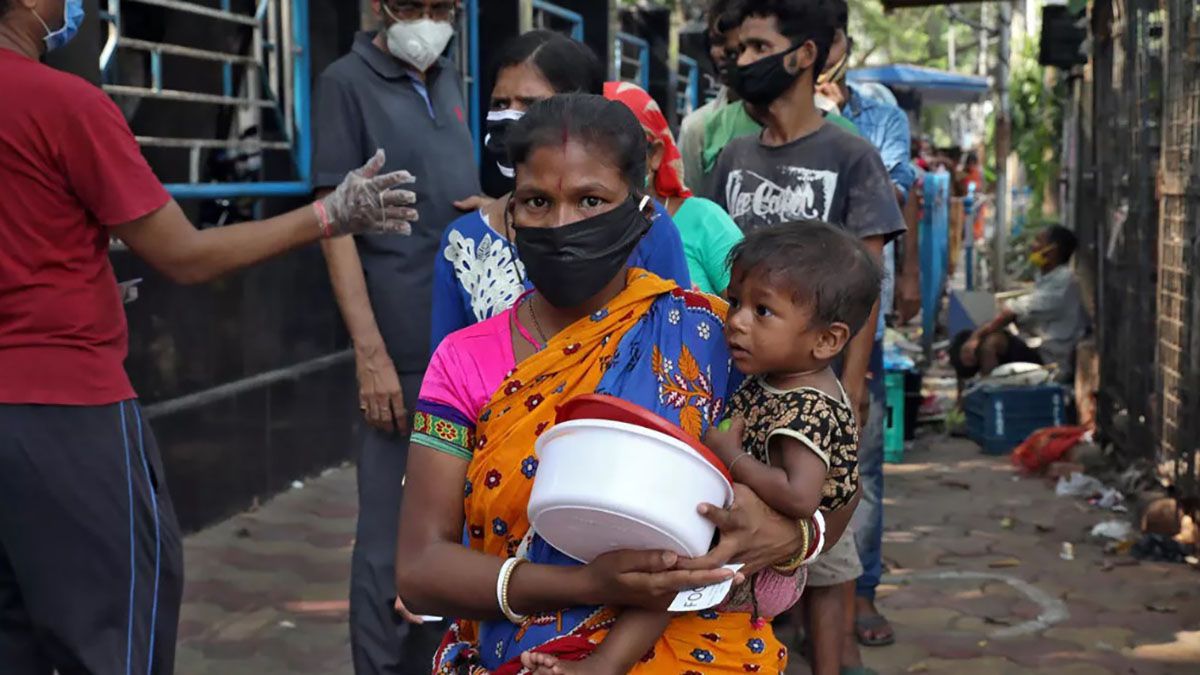
Protecting South Asia’s poor and vulnerable against COVID-19

By Lynne Sherburne Benz, Stefano Paternostro, Zaineb Majoka When India went into lockdown in late March as a result of COVID-19, one of the country’s biggest priorities was to ensure access to food. As millions risked starvation, the government mobilized its existing Public Distribution System (PDS) to give away food rations to over 800 million people, thus averting a catastrophic food crisis. As the coronavirus spreads exponentially across South Asia, food insecurity is just one of the many challenges...

Study on Shock-Responsive Social Protection in Latin America and the Caribbean – Guyana case study

By Sarah Bailey, Francesca Ciardi In the Caribbean and globally, links are being made between social protection and disaster risk management (DRM). Social protection programmes that provide assistance to households, and the systems that underpin these programmes, may have a role to play in preparing for, responding to and mitigating the impacts of shocks such as cyclones, floods, droughts and political and economic crises. This role for social protection goes beyond its core function of addressing the risks and...