March 2022

Class of 2022

By abrdn Our second iteration of the Class of report series paints a picture of what the Class of 2022 have in store for their retirement – from how they plan to spend their time to how prepared they are forwhat is to come. We’ve also spoken to those who retired in 2021 to see how they’ve got on in their first year of retirement and if there’s anything they’d do differently. The Class of series surveys 2,000 UK adults who are...

High Pay Centre briefing: Pension saver views on the social and environmental impact of investments

By Andrew Speke & Luke Hildyard Pension savings make up a significant and growing proportion of individual wealth in the UK. The latest government figures from 2018 show that £2.6 trillion is invested in UK pensions, up from £2.3 trillion in 2015.(1) Pension savings are also one of the most commonly held forms of wealth in the UK. The percentage of adults below the State Pension age actively contributing to a private pension has increased, from 43% in 2012, to 53%...

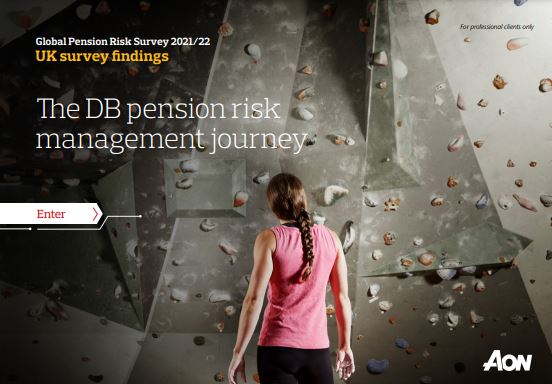
Global Pension Risk Survey 2021/22. UK survey findings. The DB pension risk management journey

By AON We have been carrying out the Global Pension Risk Survey every two years for over a decade and it gives the industry great insight into how the pensions landscape has developed. When the COVID-19 pandemic hit in early 2020, it created many challenges for sponsors, pension schemes and their members. We saw sponsors and trustees reassessing the risks that they faced. While the impact was not negative for all pension schemes, there was a large market crash which had a...

Mainstreaming the Trasition to a Net-Zero Economy

Mainstreaming the Trasition to a Net-Zero Economy

By Group of Thirty The evidence that climate change is posing unprecedented risks to our livelihoods is overwhelming. Atmospheric concentrations of carbon dioxide (CO2) have reached the highest levels in 800,000 years. Over the last three decades, the number of registered severe weather events has tripled. The cost of weather-related insurance losses has increased eightfold over the past decade, to an average of US$60 billion; and average uninsured losses from weather events have increased sevenfold. Still, these effects pale in significance...

Report on the economic impact of coronavirus disease (COVID-19) on Latin America and the Caribbean

Report on the economic impact of coronavirus disease (COVID-19) on Latin America and the Caribbean

By ECLAC On 26 March 2020, the Government of Mexico convened a virtual ministerial meeting on health affairs for response and follow-up to the COVID-19 pandemic in Latin America and the Caribbean, which was attended by foreign ministers and health representatives from 30 countries of the Community of Latin American and Caribbean States (CELAC), as well as regional organizations. As a result of the meeting, CELAC formed a strategic alliance with the Economic Commission for Latin America and the Caribbean (ECLAC)...

War and Social Welfare: Reconstruction after Conflict 2009th Edición

By F. Cocozzelli & Paul S. Chung War and Social Welfare: Reconstruction after Conflict addresses the issues of rebuilding social assistance and pension programs in the wake of war. Arguing that post-conflict reconstruction missions need to pay greater attention to comprehensive social policy formation, the book makes normative and functional claims that social welfare programs articulate the core aspects of citizenship. War and Social Welfare uses the case of Kosovo to examine the interaction of international and local political actors...

A History of Public Sector Pensions in the United States

By Robert L. Clark, Lee A. Craig & Jack W. Wilson Understanding the historical development of pensions is critical to the future of retirement systems around the world. A History of Public Sector Pensions in the United States offers a comprehensive assessment of the political and financial dimensions of public sector pensions from the colonial period until the emergence of modern retirement plans in the twentieth century. The authors emphasize how retirement plans can help achieve human resource objectives, how...

February 2022

Pension Systems and Sustainability: Japan

By United Nations With 297 trillion yen ($2,854 billion) in assets, the Japanese pension system is the third largest in the world.1 Between public and private providers, some 54% of assets are managed by PRI asset owner signatories, a higher proportion than in Australia, the US and the UK. This report builds on ideas set out in the PRI briefing ‘Sustainable Finance Policy in Japan’, published in October 2020, providing an overview of the Japanese system and its key sustainability...

GEPF Annual Report 2020/2021

By GEPF Economic environment The financial year ending 31 March 2021, was a ‘tale of two worlds’, with strong recovery from developed financial markets being contrasted by weak economic growth in most emerging markets. This effect was also mirrored by the divergence in vaccination rates between developed and emerging markets. Locally, the picture has been familiar. There was very strong growth in financial markets, however, this needs to be contrasted by the stark economic climate in South Africa. The impact...

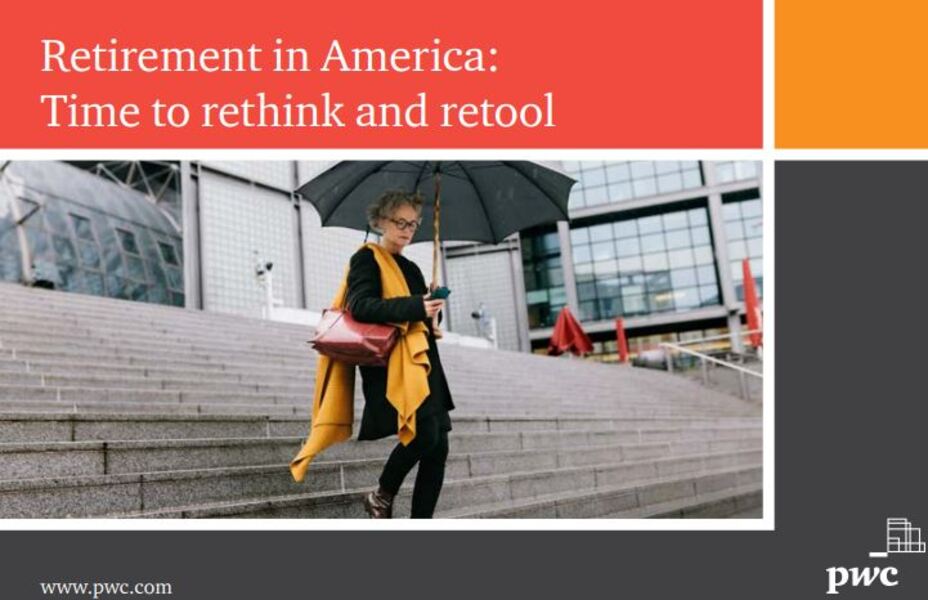
Retirement in America: Time to rethink and retool

By PWC A range of factors have put intensifying pressures on the US retirement system in recent years, leaving the industry facing a decelerating revenue growth outlook. A number of these challenges — fee pressure, underfunded retirement plans, an aging population — are structural and unlikely to ease. Many retirement players have been unable to outrun even one of these factors: fee pressure. Rising industry-wide fee pressure is placing constraints on the profitability of US retirement firms with average 401(k)...