June 2023

Sexual orientation and labor market outcomes

By Nick Drydakis  Currently, being gay or lesbian is illegal in almost 80 countries, meaning that 2.7 billion people live in countries where having a minority sexual orientation is a crime. Additionally, fewer than 20% of countries have adopted employment anti-discrimination laws to protect gay and lesbian employees. On average, Australia, Canada, the US, and the EU have the strongest protection of sexual orientation rights, including workplace anti-discrimination laws and some studies in these countries have examined labor market outcomes...

The Wage Gap Among LGBTQ+ Workers in the United States

By HRC Foundation  In an HRC Foundation analysis of nearly 7,000 full-time LGBTQ+ workers, median earnings were about $900 weekly, about 90% of the $1,001 median weekly wage a typical worker earns in the United States, as reported recently by the Bureau of Labor Statistics. Put another way, LGBTQ+ workers earn about 90 cents for every dollar that the typical worker earns. LGBTQ+ people of color, transgender women and men and non-binary individuals earn even less when compared to the...

May 2023

Social Security of Labour in India

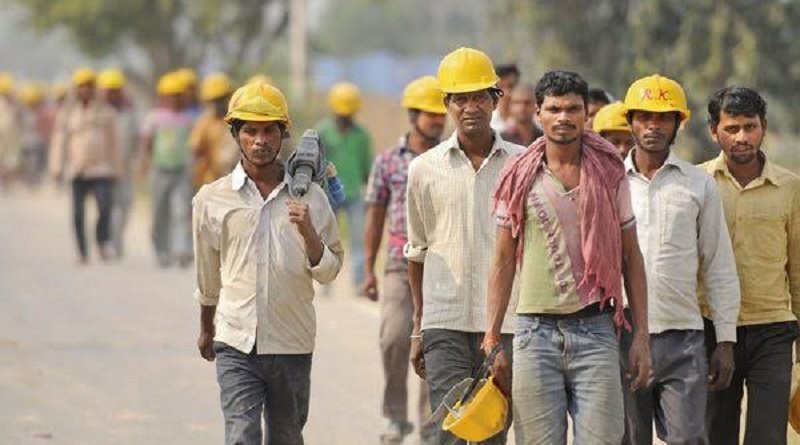
By Ishita Arora The social security of labour in India is a critical issue that needs to be addressed. The country's labour force is massive, and ensuring their protection and well-being is crucial to their quality of life and the country's economic development. This research paper aims to explore the current state of social security for workers in India, including policies and programs aimed at providing protection and support to individuals and families against social and economic risks such as...

“The Great Retirement Boom”: The Pandemic-Era Surge in Retirements and Implications for Future Labor Force Participation

By Joshua Montes, Christopher L. Smith & Juliana Dajon As of October 2022, the retired share of the U.S. population was nearly 1-½ percentage points above its pre-pandemic level (after adjusting for updated population controls to the Current Population Survey), accounting for nearly all of the shortfall in the labor force participation rate. In this paper, we analyze the pandemic-era rise in retirements using a model that accounts for pre-pandemic trends in retirement, the cyclicality of retirement, and other factors....

The Limited Role of Intergenerational Transfers for Understanding Racial Wealth Disparities

By John Sabelhaus & Jeffrey P. Thompson Transfers of wealth between generations—whether through inheritances or inter vivos gifts—are less important in explaining racial disparities in wealth than might be expected. While this factor looms large in the media’s discussions of racial inequality, it explains relatively little of the disparities evident in the data. One reason is that most people, regardless of race, receive no inheritance or other transfer of substantial value. In addition, most recipients of inheritances ultimately consume those...

April 2023

Pension Reforms and Couples’ Labour Supply Decisions

By Hamed Markazi Moghadam, Patrick A. Puhani & Joanna Tyrowicz To determine how wives' and husbands' retirement options affect their spouses' (and their own) labour supply decisions, we exploit (early) retirement cutoffs by way of a regression discontinuity design. Several German pension reforms since the early 1990s have gradually raised women's retirement age from 60 to 65, but also increased ages for several early retirement pathways affecting both sexes. We use German Socio-Economic Panel data for a sample of couples...

March 2023

COVID-19 Private Pension Withdrawals and Unemployment Tenures

By Tristram Sainsbury, Robert V. Breunig & Timothy Watson This is the first study to evaluate the effects of early pension withdrawal policies on tenures on unemployment payments in the COVID-19 context. We use a novel set of linked whole-of-population administrative records to examine more than half-a-million Australians who found themselves newly on an unemployment payment in the initial months of the COVID-19 pandemic. We estimate that receiving a lump sum of up to A$10,000 from superannuation accounts at the...

Legal & General U.S. Gig Economy study

By Sir Nigel Wilson, John Godfrey & Edyta Borowy (Legal & General) The data was collected via online survey fielded to individuals sample sourced from YouGov’s US panel. The survey scripted and hosted on Gryphon, YouGov’s proprietary survey scripting platform and the field work took place between August 19 and 31, 2022. 1,044 surveys of freelancers and self-employed workers between 18 and 60 years old, non-student/non retired drawing 60% or more of their income from gig work were completed. Key...

February 2023

The Portability of Pension Rights: General Principles and the Caribbean Case

By Alvaro Forteza The portability of pension rights is an increasingly important issue in the Caribbean. The large and increasing flows of migrant workers, including both permanent and temporary migrants, the small size of the domestic economies and the process of regional integration and economic openness call for effective means to make pensions portable. This document presents a select survey of the literature on pension portability and reviews the progress made by the Caribbean countries as well as some remaining...

Recognize unpaid care work in Colombia: a historical debt to women

By Yaneth Vargas Sandoval This socio-legal research article aims to address unpaid care work in Colombia, so the first part will address how women despite the existence of the right to Equality and non-discrimination as a human right, in the reality of this right is not fulfilled, since it is women who must face unequal conditions in access and permanence in the labor market, they will endure salary gaps and it is difficult for them to access the old-age pension. All...