September 2024

Self-Control Preferences and Pension Means Testing

By Daniel Wheadon, Gonzalo Castex, George Kudrna & Alan D. Woodland We investigate the effects of self-control preferences on household life cycle decisions, macroeconomic outcomes, and the roles they play in determining optimal means testing of public old-age pensions. To that end, we develop a stochastic overlapping generations model with heterogeneous households that have Gul-Pesendorfer self-control preferences. First, we show that in economies with higher self-control costs lifetime savings diminish, while labor supply and retirement are postponed to later ages....

The Future of Retirement Security An International Comparison through the Lens of Adequacy, Sustainability, Equity and Plan Design

By Surya Kolluri, Catherine Reilly & David P. Richardson Countries around the world are considering and implementing reforms to their retirement systems for a variety of reasons, including increasing demographic and economic pressures. A key demographic driver is human longevity. For example, the average retiree can expect to spend about two decades in retirement, roughly double the time from 50 years ago. In the United States, life expectancy has risen by 17 years since the Social Security program debuted nearly...

Edad, trabajo y salud ocupacional: retos y oportunidades para los trabajadores y las organizaciones en Iberoamérica

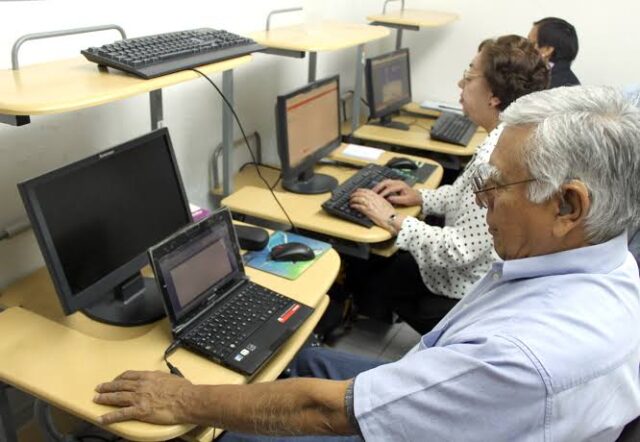
Por Carlos María Alcover de la Hera El envejecimiento de la fuerza de trabajo debido a los cambios sociodemográficos globales plantea un conjunto de retos y de oportunidades cuya gestión es compleja y cuyos resultados pueden traer consigo consecuencias muy diversas para las personas y para las organizaciones. El principal objetivo de este artículo es analizar los más importantes identificados por la investigación internacional aplicados al contexto iberoamericano. Tras una contextualización de esos cambios sociodemográficos y sus impactos en el...

El Sistema Nacional de Pensiones y la política de endeudamiento en el Perú: financiamiento de las reformas paramétricas en crisis pandémica

Por Luis Alberto Quintana García  En el presente trabajo se analiza el problema del financiamiento de las reformas paramétricas realizadas al Sistema Nacional de Pensiones (SNP) del Perú, en el periodo de la pandemia, para lo cual, se inicia con un estudio sobre el estado en el que se encuentra el SNP y cómo llega al contexto de la pandemia; posteriormente, se examina el proceso de implementación delas reformas paramétricas, a través de la revisión crítica del proceso de promulgación...

Net-Zero Asset Owner Alliance unveils milestone emissions cuts

Institutional investors holding a combined $9.5 trillion of assets say they’ve slashed portfolio emissions at a rate that aligns them with the goal of limiting global warming to the critical threshold of 1.5C. The Net-Zero Asset Owner Alliance, whose signatories include Allianz and the $519.9 billion California Public Employees’ Retirement System, Sacramento, said in a statement on Sept. 25 that reduction in greenhouse gas emissions registered by its 88 members was at least 6% on average, annually, since 2018. At...

EU. Who can expect the most healthy life years?

In 2022, the number of healthy life years at birth in the EU was 62.6 years on average, 62.8 years for women and 62.4 years for men. Life expectancy at birth for women in the EU was, on average, 5.4 years longer than that for men (83.3 years compared with 77.9 years). Healthy life years - free from activity limitations - represent 75% and 80% of the total life expectancy for women and men, respectively. Therefore, on average, men tend to spend a greater proportion...

US. 5 Ways a Kamala Harris Presidency Could Impact Retirees

Vice President Kamala Harris wasn’t even a contender for the White House earlier this year, but she is now the Democratic nominee for the presidency and running neck and neck with her Republican opponent, former President Donald Trump. If she wins, she is expected to promote policies that could affect the bottom line of millions of retirees. “There’s been nothing that she’s said that would lead me to believe she’s a negative to retirees,” says Chris Orestis, president of Retirement Genius,...

UK. TPR data shows improvements in DB pension funding

The statistics show that overall, 47% of schemes reported a surplus on the Technical Provision (TP) funding basis in tranche 17 – schemes with effective valuation dates from 22 September 2021 to and inclusive of 21 September 2022 – a significant increase on the 32% in surplus in their previous valuation cycle (tranche 14). The average funding level had increased by 5% (97% in tranche 17 (median: 99%), compared to 92% in tranche 14 (median: 93%)) and recovery plan lengths...

Optimising Bangladesh’s Universal Pension Framework: From Lessons to Actions

By Samiha Chowdhury Social protection for the elderly, in the form of the Old-age Allowance (OAA) Programme, has been operational in Bangladesh since 1998, offering monthly financial support to senior citizens from poor and vulnerable households. As of FY24, the programme has approximately 5.8 million elderly people as beneficiaries, each receiving Tk.600 per month distributed on a quarterly basis. Apart from this, retirement benefits for the government employees and their families can also be considered a social protection programme for...

The Rise of Alternatives

By Juliane Begenau, Pauline Liang & Emil Siriwardane Since the 2000s, U.S. public pensions have shifted their risky investments towards alternative assets like private equity and hedge funds, some more aggressively than others. We explore several explanations for these cross-sectional trends, focusing on those implied by the mean-variance models used by most pensions. Our evidence suggests that the rise of alternatives has been fueled by an increase in their perceived risk-adjusted returns relative to public equities. Pension beliefs are shaped...