April 2025

A Silent Crisis: Rising Occupational Deaths and Diseases in Iran’s Workforce

Recent data from Iran’s Forensic Medicine Organization reveals a troubling surge in workplace fatalities, with at least 1,900 people losing their lives in occupational accidents in the past year. This figure is nearly four times higher than the 455 deaths reported by the Social Security Organization for 2022, exposing a stark discrepancy between official agencies and raising serious concerns about the accuracy of government statistics and the effectiveness of occupational safety monitoring in Iran. The Social Security Organization’s data is based...

Awareness of the Government-Introduced Universal Pension Scheme Among the Adult Population in Bangladesh: A Nationwide Cross-Sectional Survey

By Sharmin Rima, Md. Mahir Faysal, Abdullah Al Mamun, Khadija Akter Sonia, Hossna Tasmia Monia, Anika Tahseen Nuva, Ahbab Mohammad Fazle Rabbi, Abdullah-Al-Mamun & Mohammad Hossain The Universal Pension Scheme (UPS) was introduced in Bangladesh in August 2023 to address economic security concerns for its growing older adults. Despite the government's numerous promotional efforts, the response rate to UPS remains modest. This study aimed to investigate awareness of the UPS among the Bangladeshi population. The study's sample size was 1624,...

Older Workers Face New Risks because of the COVID-19 Recession

By Siavash Radpour, Aida Farmand & Teresa Ghilarducci For the large cohort of older workers, the significant difference between the COVID-19 recession and previous ones is the combined effect of the economic recession and the health risks of the COVID-19 outbreak. Older workers are facing the high health risks of working during a pandemic, on the one hand, as well as the risk of losing their jobs, on the other hand, which can lead to significantly lower wages in the...

Population Aging, Digital Financial Inclusion, Development Strategies and Economic Resilience

By Dongsong Cai, Ling Long, WanHuan Cai & Xin Wang As China enters into a deeply aging society, China's demographic development has come to an unprecedented stage of great transition, which also has an impact on economic resilience. Based on the perspective of new structural economics, the relationship between population aging and economic resilience is explored. Meanwhile, empirical tests using provincial panel data find that, firstly, there is a positive effect of population aging on economic resilience, i.e., population aging...

Italy launches ‘baby bonus’ scheme to combat declining birthrate

Italy's new "baby bonus" initiative was launched on Monday, marking the latest step in the country's ongoing efforts to reverse its declining birthrate. The Italian National Institute for Social Security on Monday unveiled the formal process for families to access a tax-free allowance of 1,000 euros (1,135 US dollars) for each child born or adopted in 2025. The bonus will be granted to Italian citizens as well as citizens of other European Union (EU) member states and non-EU nationals who hold...

Aging Nation: The Alarming Shift in Japan’s Demographic Landscape

Japan faces a demographic shift, with a rapidly aging population and a 14-year trend of population decline. Japan’s total population stands at 123.8 million, a decrease of 550,000 from the previous year. Individuals aged 75 and over now constitute 16.8 percent of the population, while those under 15 years old make up only 11.2 percent. The population decline is contrasted by an increase in foreign residents for the third consecutive year. Migration provides a counterbalance to the declining...

Turkey. Fast aging population in agriculture threatens food security

The aging population in Türkiye’s agriculture is posing a risk to the country’s food security, Union of Turkish Agricultural Chambers (TZOB) President Şemsi Bayraktar has warned, calling for urgent action to lure the young population into the industry. The average age of farmers rose to 59 last year with the average being 58 for men and 61 for women, Bayraktar said. Some 35 percent of them are over 65 years old, and another 35 percent are between the ages of 50 and 64,...

Investments in education can reduce the pension burden

Education investments can ease pressure on pension system: A study by the Max Planck Institute for Demographic Research shows that investing in education can offset the effects of low birth rates on the pension system. Better education, higher productivity: Education increases workforce productivity and helps compensate for a smaller labor force. This reduces the burden on pensions. Investment pays off: Higher investment in education not only extends the number of working years, but also boosts pension income and life expectancy. A recently...

Türkiye takes measures to boost birth rate as demographic crisis looms

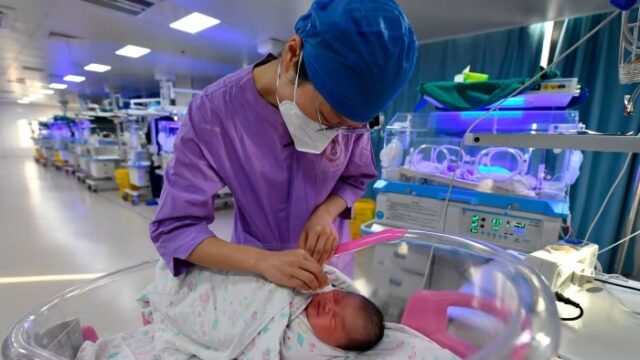
The Turkish government is taking significant steps to counteract a troubling demographic decline, introducing numerous incentives aimed at reversing the falling birth rate. Türkiye has declared 2025 the "Year of the Family," an initiative designed to promote childbirth, while its Ministry of Family and Social Services has unveiled a comprehensive program intended to support working mothers, which includes establishing public nurseries and kindergartens to facilitate childcare. The country's birth rate has steadily declined for years, reaching a low of 958,000 births...

South Korea. Low birth rate’s far-reaching impact: Sustainability of teacher pensions under threat

The impact of South Korea’s demographic crisis is far-reaching, with one lesser-known consequence being the threat to the sustainability of the teachers' pension system. As the school-age population shrinks and schools close, teachers are losing their jobs and becoming legally eligible for pension payouts much earlier than expected — sometimes as early as their 30s. According to data released by the National Assembly Budget Office, 410 pension recipients became eligible prematurely due to school closures as of 2024. Among them, individuals...