February 2025

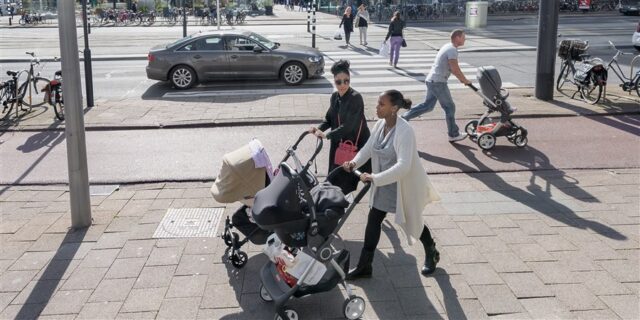
The fertility crash comes down to what men are doing—or not doing—Nobel laureate says

Countries with low fertility exhibit a key difference from those with even lower birth rates, according to Nobel-prize winning economist Claudia Goldin, who pointed to the extra hours women spend on child-rearing and household chores compared with men. While numerous policies and financial incentives have been employed, few have been proven to reliably boost fertility. But a new study from Nobel-prize winning economist Claudia Goldin points to the extra hours women spend on child-rearing and household chores compared with men. She...

Global aging: The (almost) invisible crisis shaping our future

Societies are becoming older, smaller, and lonelier, with shrinking labor forces, stagnant productivity, declining growth, and overstretched health care and social protection systems. The economic and social consequences of global aging are enormous and will affect how the world manages other global challenges. Population aging could reduce GDP growth by 0.5–1.0 percentage points a year, for example—an effect on output that is greater than the impact of climate change. The demographic crisis has a high degree of certainty in the short and medium terms....

Older adults are driving workforce innovation in a digital economy. Here’s how

Businesses and governments must recognize the impact and potential of older adults as the global workforce shifts due to ageing populations. Many older adults want to work, upskill and contribute in a digital-first world, but face structural barriers such as ageism and technological gaps. As global leaders navigate workforce challenges, they must embrace policies that foster lifelong learning, equitable hiring and digital inclusion. As the global workforce shifts due to ageing populations, businesses and governments must recognize the impact...

Living Beyond Age 100: A Possibility With Financial Impact

Living beyond age 100 might sound like the stuff of science fiction, but think about how many once-impossible ideas are now part of everyday life. Air travel, landing on the moon, mobile phones and even the ability to map our DNA were unthinkable not long ago. Now, breakthroughs in medicine and technology are nudging us closer to the possibility of living significantly longer, healthier lives. While immortality isn’t on the table just yet, the idea of living well beyond 100...

Singapore. Rethinking ageing: From caregiving to community and contribution

Caring for an elderly loved one might not be on your radar right now, but it’s a role many of us will take on eventually. “Almost all of us in Singapore will be, or already are, a caregiver,” Mr Dinesh Vasu Dash, CEO of the Agency for Integrated Care (AIC), observed. When his childless, widowed paternal uncle, now in his mid-80s, was hospitalised with a severe bout of influenza A, it was Mr Dinesh’s parents – both in their 70s –...

Poverty hits older adults harder in fast-aging society

Kim Young-soon, an office cleaner in her early 70s, says she grapples with high costs of living as her disposable income has been decreasing in recent years. Disposable income refers to the amount of money that is left for personal expenses and savings, after taxes, insurance, interest and other payments. “The employer would not hike my salaries, due to the high vacancy rate of office buildings amid the sluggish economic growth,” Kim said, adding she is financially distressed with high borrowing...

South Korea. Concerns grow over sustainability of national pension fund amid decreasing subscribers

The number of national pension subscribers continues to decline due mainly to the low birthrate and aging population, data from the National Pension Service (NPS) showed Sunday, raising concerns over its sustainability. In contrast, the number of recipients is increasing, pushing the current national pension system toward a risk of fund depletion. But discussions on ways to make the pension system more sustainable have been delayed. According to the NPS, the total number of national pension subscribers stood approximately at 21.81...

Study reveals health and economic impact of air pollution in aging societies

Air pollution is a growing health issue worldwide, and its impacts are often underestimated in aging societies like Japan. A new study led by researchers from the University of Tokyo highlights how fine particulate pollution, or PM2.5, not only worsens health outcomes, but also creates significant socioeconomic challenges in regions with aging populations and limited medical resources. The researchers hope these findings motivate policymakers to tackle the interrelated issues behind this problem. PM2.5 refers to microscopic particles of pollution small...

Aging Well in Asia: Asian Development Policy Report

By Asian Development Bank The report explores four linked dimensions of well-being: health, productive work, economic security, and social engagement. It highlights the need for lifelong investment in human capital, a life-cycle approach to intervention for age-specific needs, and population-wide outreach to people of all ages. It provides concrete recommendations in the policy domains of health, employment and retirement, pensions, long-term care, and community-level support. Get the report here 

Challenges and concerns surrounding China’s retirement age reform

By China Labour Bulletin China is currently grappling with a pressing demographic challenge, marked by record-low birth rates and low retirement ages, leading to a continuous decline in the working-age population. According to the National Bureau of Statistics, the working-age population dropped to 61.3% in 2023, down from 62% the previous year. The shrinking workforce and ageing population are increasingly straining China’s pension system. Current projections indicate that, without intervention, the social security system’s resources will be depleted by 2035. In response to...