January 2026

UK. Pensions and financial inclusion: Time to join forces

Towards the end of last year, the government published its Financial Inclusion Strategy. This rightly focuses on building resilience through a range of measures, including banking access, savings, insurance, credit and debt support. These are bolstered by proposals for compulsory financial education in primary schools. However, pensions are noticeably absent from the core framework. This is despite the fact that pensions form the cornerstone of long-term financial security. On the one hand, this separation makes sense, as the revived Pensions Commission and...

June 2025

India needs to design an inclusive pension system

Pensions are essential for maintaining economic stability and dignity after retirement. Retirees often face financial instability due to reduced earning capacity, rising health-care costs, and inflation, necessitating a safety net in the form of pensions. The Economic Survey 2025-26 reports that Indian pension assets amount to just 17% of GDP, compared with up to 80% in many advanced economies. Currently, only around 12% of India’s workforce is covered by formal pension schemes. The coverage is also disproportionate, with public sector...

The Future of Financial Inclusion: Fintech, Microfinance, and Alternative Banking Models

By Selina Zhan Financial literacy refers to the ability to make informed financial decisions through acquiring relevant knowledge and skills such as investing, budgeting, and asset management. Individual financial literacy is crucial as many governments around the world are unreliable when it comes to providing adequate and stable financial support to their civilians. Additionally, as institutions become more and more exclusive with their increasingly complex products, the need for financial literacy grows, especially as the cost of retirement rises each...

May 2025

Jobs in MENA: How transforming pension systems can boost inclusion, equity, and prosperity

Pension systems globally have faced challenges in fulfilling their commitment to providing adequate financial security for individuals in their old age. In developing countries, pension coverage is often low, and benefits frequently fall below the poverty line. The design of the pensions systems, among other factors, tend to exacerbate informality, with only a fraction of formal workers receiving pensions. The low coverage and the little redistribution leads low wage workers to end up subsidizing high wage workers. The way...

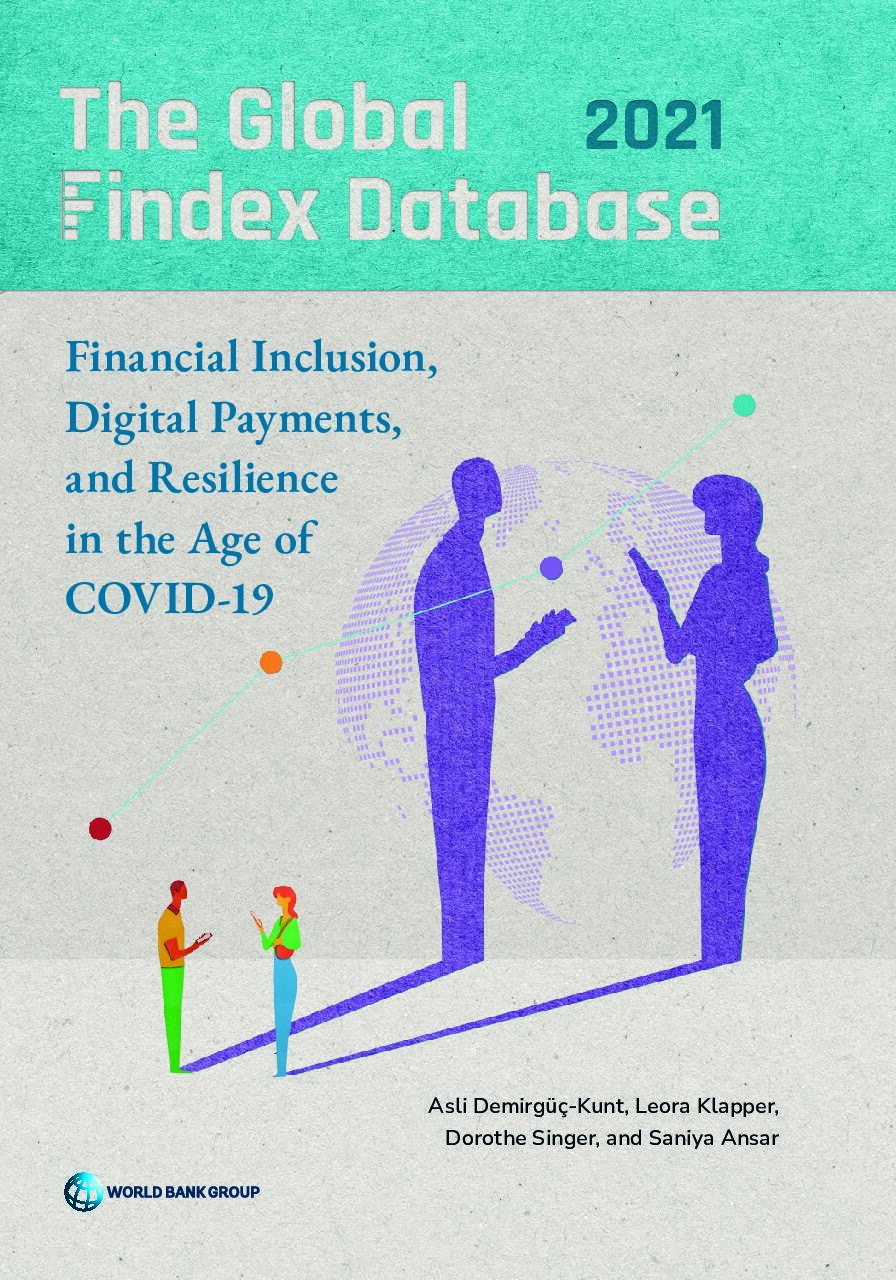
The Global Findex Database 2021: Financial Inclusion, Digital Payments, and Resilience in the Age of COVID-19

By World Bank Group  Financial inclusion is a cornerstone of development, and since 2011, the Global Findex Database has been the definitive source of data on global access to financial services from payments to savings and borrowing. The 2021 edition, based on nationally representative surveys of about 128,000 adults in 123 economies during the COVID-19 pandemic, contains updated indicators on access to and use of formal and informal financial services and digital payments, and offers insights into the behaviors that...

April 2025

Population Aging, Digital Financial Inclusion, Development Strategies and Economic Resilience

By Dongsong Cai, Ling Long, WanHuan Cai & Xin Wang As China enters into a deeply aging society, China's demographic development has come to an unprecedented stage of great transition, which also has an impact on economic resilience. Based on the perspective of new structural economics, the relationship between population aging and economic resilience is explored. Meanwhile, empirical tests using provincial panel data find that, firstly, there is a positive effect of population aging on economic resilience, i.e., population aging...

January 2025

Financial Inclusion Across the United States

By Motohiro Yogo, Andrew Whitten & Natalie Cox We study retirement and bank account participation for the universe of U.S. households with a member aged 50 to 59 in the administrative tax data. ZCTA-level average income, income inequality, and racial composition predict retirement account participation for low-income households, conditional on household income and regional price parities. Income inequality also predicts bank account participation for low-income households. We estimate the causal effect of access to an employer retirement plan on participation. Recent policy proposals...

December 2024

Fintech, Visual Attention, and Financial Inclusion: A Field Experiment on Migrant Remittances

By Eduardo Nakasone, Máximo Torero & Angelino Viceisza Migrant remittances are significant but remain relatively costly to send. Policymakers have argued that fintech, specifically, comparison websites like kayak.com but for sending money, can boost financial inclusion and reduce remittance prices. Yet, little is known about how migrants with limited education and trust in digital methods interact with fintech. We conduct a field experiment on a comparison website and vary remittance-company attributes shown to migrants, specifically, the time for delivery and...

November 2024

Financial Inclusion and the Informal Sector

By Noha Emara, Freddy Cama & Mohamed Trabelsi This paper explores the relationship between the informal sector and financial inclusion for a sample of 186 countries across the period 2004-2018 and using various methods of estimations—ordinary least squares, instrumental variables, fixed effects, and general method of moments. The results show financial inclusion significantly reduces the size of the shadow economy with all indicators of access and usage of financial services. The result is also robust when considering the income level,...

Financial Inclusion and Wellbeing

By Abigail Hiller The researchers then use their index to analyze the extent of financial exclusion across the US as well as its effects on households. They find that households in areas with greater financial inclusion tend to have higher incomes and are more likely to own homes and possess real estate wealth. Greater financial inclusion is associated with a higher probability of creating an estate, building intergenerational wealth, and breaking the poverty cycle among married individuals and those with...