June 2022

Today’s Pensions Just Don’t Favor Millennials and Gen Z

Even in 2022, pensions still command an aura of reverence. A benefit where you work for one company for 30 years and then retire with a livable wage? And you don’t have to fret about picking investments? What’s not to like? Although pensions are increasingly rare in the U.S., they’re not obsolete. About 38% of the private workforce had access to a defined benefit plan in 1980. By 2008, that had fallen to 20%. In spring of 2020, it was...


25% of Americans are delaying retirement due to inflation, survey finds

Americans’ finances are being squeezed as inflation pushes up prices on things such as rent, groceries and gasoline. As a result, one-quarter of Americans will have to delay their retirement, according to the BMO Real Financial Progress Index, a quarterly survey conducted between March 30 and April 25. Putting off retirement plans is mostly due to disrupted savings from increased prices, the survey found. Thirty-six percent of survey respondents have reduced their savings and 21% are putting away less for retirement...

May 2022

Survey finds 56% of U.S. employees expecting less than $500K in retirement savings

While U.S. employees say it takes $1.1 million in savings, on average, to retire comfortably, 56 per cent expect to have less than $500,000 saved, according to a new survey by Schroders. It found 36 per cent of respondents expect to save less than $250,000 and only 24 per cent expect to save $1 million ahead of retirement. Among respondents nearing retirement age, more than half (54 per cent) said they’ll have less than $250,000 saved for retirement, while 22...

Does Financial Education in High School Affect Retirement Savings in Adulthood?

By Melody Harvey & Carly Urban Since individuals are increasingly required to manage their own retirement portfolios, policy levers that increase retirement planning and saving have become increasingly important. We use variation in timing and presence of state-required personal finance coursework in high schools to estimate the effect of the financial education coursework on the likelihood of holding and amount in retirement accounts in adulthood (ages 25–40). Our results show no definitive increases in account ownership, non-retirement investment accounts, or...

Serenity Now, Save Later? Evidence on Retirement Savings Puzzles from a 401(K) Field Experiment

Serenity Now, Save Later? Evidence on Retirement Savings Puzzles from a 401(K) Field Experiment

By Saurabh Bhargava & Lynn Conell-Price Economists have advanced several psychological frictions to explain why many 401(k)-eligible employees undersave for retirement despite generous matching incentives. We provide evidence on four of these frictions through a field experiment randomizing undersaving employees to information- and incentive-based treatments linked to a survey assessing each friction’s baseline incidence. We describe four main findings: (1) We corroborate prior work showing pervasive deficits in retirement literacy and their correlation with saving but reject any meaningful increase...

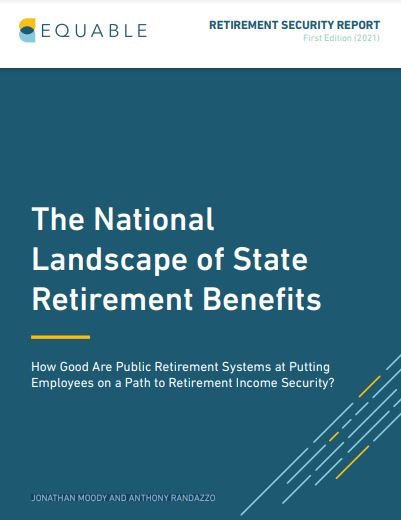
The National Landscape of State Retirement Benefits. How Good Are Public Retirement Systems at Putting Employees on a Path to Retirement Income Security?

By Jonathan Moody & Anthony Randazzo  Retirement security is ultimately about retirement income. Families and individuals want to know that during their retirement years they will have enough weekly, monthly, or annual income to live comfortably and meet their basic needs. Of course, many people aspire to more than just the basics. Ask even a handful of individuals about how they want to live in retirement, and you’ll hear a wide range of preferences. Expenses can vary from family-to-family, too,...

A Comfortable Retirement Appears Out of Reach for Most in the U.S.

American workers say it will take $1.1 million on average to retire comfortably — but less than one in four figure they’ll be able to save that much. Just 22% of people approaching retirement age said they’ll have enough money to maintain a comfortable standard of living, according to the 2022 Schroders US Retirement Survey, down from 26% a year ago. The survey of 1,000 workers was conducted in mid-February, when the S&P 500 Index was higher than it is...

ESG factors increasingly put into hedge funds

Interest and investment in hedge funds that incorporate environmental, social and governance factors are on the rise among U.S. investors, although demand still trails that of European investors. While some hedge fund firms have included one or more ESG factors in their investment strategies for years or have created dedicated ESG funds, others still are evaluating the efficacy and return potential of investment in portfolio companies that meet ESG standards, sources said. "There are two ways to do ESG. You can...

The 2022 Pension Answer Book

By Stephen J. Krass A standard in its field, The 2022 Pension Answer Book discusses in detail the full spectrum of pension topics—from qualification requirements to taxation of distributions, from minimum distribution requirements to 401(k) plans. It covers the most up-to-date and significant legislative, regulatory, and case law developments affecting these plans. As a decision-making tool, combining theory and practice-based guidance, The 2022 Pension Answer Book offers insight and clarification on the critical issues affecting pension administration and compliance. In...

US. DoL Urged to Help Pension Plans Make Climate Impact

US pension plans should be required to disclose sustainable investment policies, according to the US Impact Investing Alliance. The alliance has called for mandatory action by the Department of Labor (DoL) in response to a request for input on potential new climate-related rules. It said providers of 401(k) pension plans should be subject to requirements to address the financial risks and impacts of climate change. In a letter to the DoL, Fran Seegul, president of the US Impact Investing Alliance, cited research...