October 2022

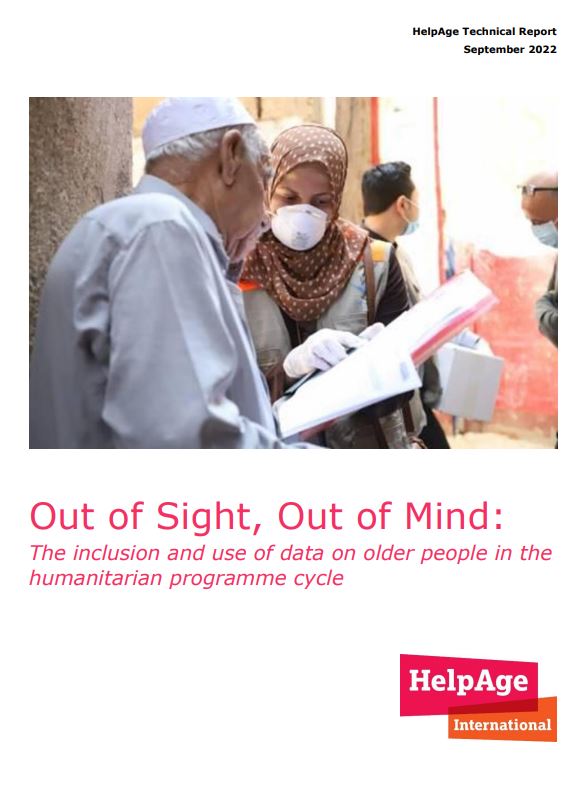
Out of Sight, Out of Mind: The inclusion and use of data on older people in the humanitarian programme cycle

By HelpAge International Humanitarian principles and basic human rights afford everyone the right to safe and dignified access to assistance and protection on an equal basis. Older people are among those most at risk in humanitarian crises, yet older people’s rights are frequently denied, and they receive little targeted attention from governments, donors, or humanitarian agencies. HelpAge International’s 2018 study, ‘If not now, when?’, highlights significant failings in how the humanitarian system includes older people when responding to crises. A...
Older Workers’ Employment and Social Security Spillovers through the Second Year of the COVID-19 Pandemic

By Gopi Shah Goda, Emilie Jackson, Lauren Hersch Nicholas & Sarah Stith The COVID-19 pandemic triggered a large and immediate drop in employment among US workers, along with major expansions of unemployment insurance and work from home. We use Current Population Survey and Social Security application data to study employment among older adults and their participation in disability and retirement insurance programs through the second year of the pandemic. We find ongoing improvements in employment outcomes among older workers in...

September 2022

Depression and Loneliness Among the Elderly Poor

By Abhijit Banerjee, Esther Duflo, Erin Grela, Madeline McKelway, Frank Schilbach, Garima Sharma & Girija Vaidyanathan The mental health of the elderly in low- and middle-income countries (LMICs) is a largely neglected subject, both by policy and research. We combine data from the health and retirement family of surveys in seven LMICs (plus the US) to document that depressive symptoms among those aged 55 and above are more prevalent in those countries and increase sharply with age. Depressive symptoms in...

The Impact of Health on Wealth: Empirical Evidence

By Umesh Ghimire This paper empirically evaluates the impact of health on wealth among adults between the ages of 50 and 100 in the United States. Using the frailty index to measure health status and carefully accounting for the dynamic relationship between frailty and wealth, I find that suffering one more health deficit leads, on average, to approximately 2.23 percent decline in the net worth of American households. The impact is concentrated among individuals over the age of 70, in...

Homeownership and the Perception of Material Security in Old Age

By Claudius Garten, Michal Myck, Monika Oczkowska Homeownership has been shown to be related to various aspects of well-being, although both the causal nature of this relationship and the possible channels behind it have been difficult to identify. We focus on one of the most often quoted mechanisms which could be responsible for the positive effects of homeownership, namely its role in providing material security in old age. Using data from 15 European countries collected in wave 2 of the...

August 2022

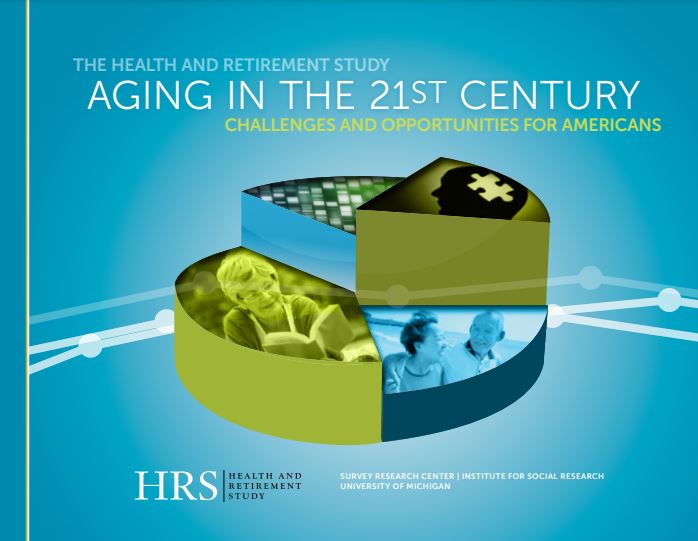
The Health and Retirement Study. Aging in the 21st Century. Challenges and Opportunities for Americans

By Survey Research Center. Institute for Social Research University of Michigan Published in 2006, the first HRS data book sought to introduce the world to the HRS by describing the study’s innovative design and content and providing some early findings within the main content areas of health, work and retirement, income and wealth, and family connections. In the decade since, the HRS has built on its foundation of innovation, pioneering in new directions and increasing the data’s value and relevance. The...

July 2022

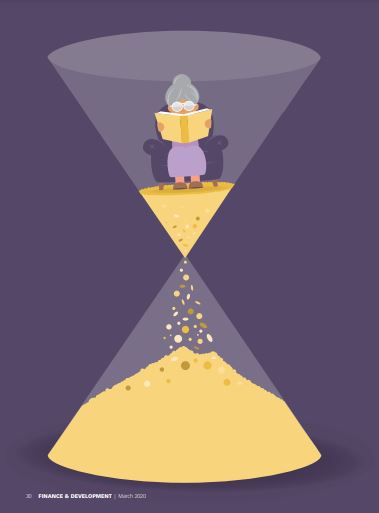
Getting Older But Not Poorer

By David Amaglobeli, Era Dabla-Norris & Vitor Gaspar Unless you live in France, you might not think recent mass strikes over the proposed pension reforms in that country have anything to do with you. But given how fast demographics are changing around the world, that would be a mistake. If you live in Europe and your parents are getting ready to retire at the age of 65 (the statutory retirement age in many countries), you should know that today there are,...

June 2022

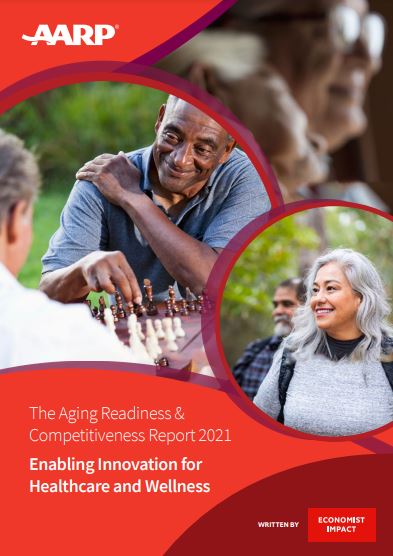
The Aging Readiness & Competitiveness Report 2021. Enabling Innovation for Healthcare and Wellness

By AARP As the world enters the UN’s Decade of Healthy Ageing, amid global covid-19 vaccination efforts, the need to increase support for the wellbeing of older adults has never been so clear. Older people comprise a growing share of the global population. This trend will persist over the coming decades, and not just in high-income countries. By 2050 an estimated 80% of older adults will be living in low- and middle-income countries. Yet disparities for older adults are ubiquitous,...

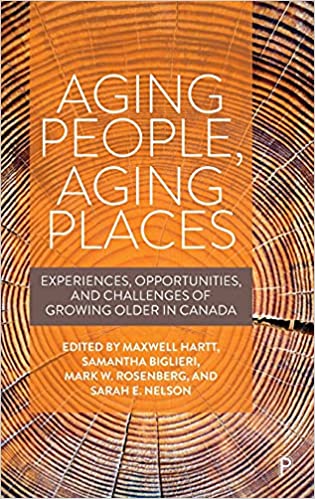
Aging People, Aging Places: Experiences, Opportunities, and Challenges of Growing Older in Canada

By Maxwell Hartt, Samantha Biglieri, Mark W. Rosenberg & Sarah E. Nelson How well do the places where we live support the wellbeing of older adults? The Canadian population is growing older and is reshaping the nation’s economic, social and cultural future. However, the built and social environments of many communities, neighbourhoods and cities have not been designed to help Canadians age well. Bringing together academic research, practitioner reflections and personal narratives from older adults across Canada, this cutting-edge text...

April 2022

The Causal Effects of Place on Health and Longevity

The Causal Effects of Place on Health and Longevity

By Tatyana Deryugina & David Molitor Life expectancy varies substantially across local regions within a country, raising conjectures that place of residence affects health. However, population sorting and other confounders make it difficult to disentangle the effects of place on health from other geographic differences in life expectancy. Recent studies have overcome such challenges to demonstrate that place of residence substantially influences health and mortality. Whether policies that encourage people to move to places that are better for their health...