December 2023

Subjective survival beliefs and social networks

By Seung Jeonga, Iqbal Owadallya, Steven Habermana & Douglas Wright People's perceptions about their chances of survival are known to deviate from the objective survival probabilites derived statistically from mortality data. This is crucial because it may explain why people save too little, why their retirement plans are inadequate, and why they do not buy financial security products such as life insurance and annuities which could protect them and their family in the event of early death or in old...

November 2023

Population Aging and the Generational Economy: A Global Perspective

By Ronald Lee & Andrew Mason Over coming decades, changes in population age structure will have profound implications for the macroeconomy, influencing economic growth, generational equity, human capital, saving and investment, and the sustainability of public and private transfer systems. How the future unfolds will depend on key actors in the generational economy: governments, families, financial institutions, and others. This path-breaking book provides a comprehensive analysis of the macroeconomic effects of changes in population age structure across the globe. The result...

Societal aging and its impact on Singapore

By Cynthia Chen, Julian Lim, Abhijit Visaria & Angelique Chan  Societal aging is arguably one of our most critical demographic challenges (World Bank, 2016). Singapore is aging at a much faster rate compared to other countries. It will take only 27 years to transition from an 'aging society' in 1999 (7% of the population aged 65+) to a 'super-aged society' in 2026 (with 20% of its population aged 65+) (Tan Teck Boon, 2015). Japan, China, Germany, and the United States took, or will take,...

Aging, Healthcare System, and Interest Rates

By Reona Hagiwara Over the past few decades, the Japanese economy has experienced the widening gap between returns on liquid bonds and illiquid capital (i.e., the liquidity premium) due to a secular decline in the real interest rate and a slight increase in the capital return. This paper explores the role of the health or medical expenditure risk in the increase in the premium, using a general equilibrium overlapping generations model with heterogeneous agents that differ in health status and...

The Impact of Population Aging on Financial Services and Economic Development

By Hongyu Fang With the increasing aging population, it has had a profound impact on the financial services industry and economy. This study aims to explore the effect of population aging on the financial service industry and economy and propose corresponding countermeasures and suggestions. The aging population has brought challenges to the financial services industry. The increase in the elderly population has led to a rise in demand for financial products and services. Financial institutions innovate and develop financial products...

October 2023

Preparing for an Aging Africa: Data-Driven Priorities for Economic Research and Policy

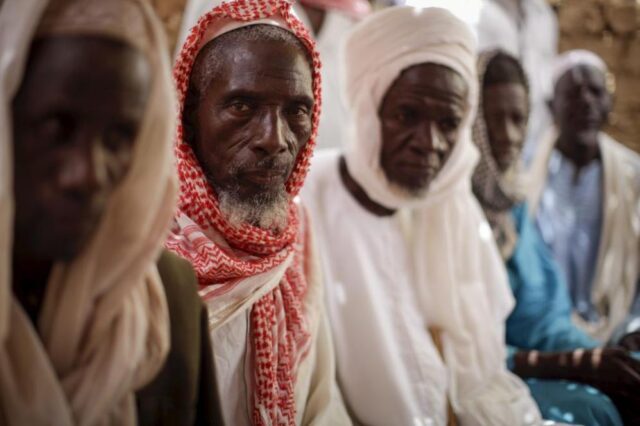
By Madeline E. Duhon, Edward Miguel, Amos Njuguna, Daniela Pinto Veizaga & Michael W. Walker The over-60 population in Sub-Saharan Africa is expected to grow rapidly in the coming decades, tripling between 2020 and 2050. Despite this explosive projected growth, few countries in the region have implemented policies designed to support older populations. Further, little research in economics has specifically examined aging in Sub-Saharan Africa, though many opportunities exist for economists to generate research evidence to inform the design of...

September 2023

Aging in Latin America and the Caribbean: social protection and quality of life of older persons

By Natalia Aranco, Mariano Bosch, Marco Stampini, Oliver Azuara Herrera, Laura Goyeneche, Pablo Ibarrarán, Deborah Oliveira, Maria Torre Retana Reyes, William D. Savedoff & Eric Torres Ramírez  In this report, we analyze older persons quality of life in Latin America and the Caribbean, its relationship with social protection policies, and how these policies must adapt to respond to population aging. We create a measure of quality of life of older persons which combines healthy life expectancy and income security. For...

Population Aging and Economic Growth: From Demographic Dividend to Demographic Drag?

By Rainer Kotschy & David E. Bloom  This paper examines the extent to which changes in working-age shares associated with population aging might slow economic growth in upcoming years. We first analyze the economic effects of changing working-age shares in a standard empirical growth model using country panel data from 1950–2015. We then juxtapose the estimates with predicted shifts in population age structure to project economic growth in 2020–2050. Our results indicate that population aging will slow economic growth throughout...

The Demographic Outlook: 2022 to 2052

By Congressional Budget Office The size of the U.S. population, as well as its age and sex composition, affect the economy and the federal budget. For example, the size of the working-age population affects the number of people employed; likewise, the size of the population age 65 or older affects the number of beneficiaries of Social Security and other federal programs. The Congressional Budget Office projects the population in future years by projecting fertility, net immigration, and mortality. (In this report,...

Family Planning Confronts Delayed Retirement in China: The Retirement Intention of Only-Child Parents

By Xiao Yu, Yingdong Xu, Yue Sun & Luyao Jiao By establishing a labor-retirement model within China’s unique intergenerational support culture and one-child policy, this study provides evidence of the one-child policy’s early effect on individuals’ retirement decisions. This finding highlights a contradiction between the retirement intentions of the 1960s and 1970s generations, who are most affected by the one-child policy, and the delayed retirement policy of Chinese government. Utilizing data from the CHARLS 2011-2018 and employing OLS, IV, and...