January 2023

The Effect of Required Minimum Distributions on Intergenerational Transfers

By: Jonathan M. Leganza How do households use retirement savings accounts in retirement? The answer to this question is important for tax policy pertaining to retirement savings. I shed light on this question by studying how households respond to Required Minimum Distribution (RMD) regulations, which mandate withdrawals from retirement accounts upon reaching a specified age. Using data from the Health and Retirement Study and a regression discontinuity design, I estimate the causal effects of aging into RMD regulations. First, I...


December 2022

Spending Trajectories after Age 65: Variation by Initial Wealth

Spending Trajectories after Age 65: Variation by Initial Wealth

By: M Hurd & Susann Rohwedder   There has been extensive research on the importance of saving for retirement and on tools to support the accumulation of retirement wealth. Much less attention has been paid to the decumulation phase, that is, the spending down of wealth following retirement. Understanding the decumulation phase requires information about the spending patterns of older households and how those patterns evolve with age. This study uses comprehensive longitudinal data on total household spending from a survey...

November 2022

Average Retirement Savings: How Do You Compare?

By Amelia Josephson If you’re wondering what’s a normal amount of retirement savings, you’re probably one of the 60% of Americans who either don’t think their savings are on track or aren’t sure, according to the Federal Reserve’s “Report on the Economic Well-Being of U.S. Households in 2019.” Among all adults, median retirement savings are $65,000, according to the Federal Reserve’s most recent data. The Federal Reserve also estimated that by retirement, that number would grow to an average...

Risk Pooling and Precautionary Saving in Village Economies

By Marcel Fafchamps & Aditya Shrinivas We propose a new method to test for efficient risk pooling that allows for intertemporal smoothing, non-homothetic consumption, and heterogeneous risk and time preferences. The method is composed of three steps. The first one allows for precautionary savings by the aggregate risk pooling group. The second utilizes the inverse Engel curve to estimate good-specific tests for efficient risk pooling. In the third step, we obtain consistent estimates of households' risk and time preferences using...

October 2022

Optimal Savings and Portfolio Choice with Risky Labor Income and Reference-Dependent Preferences 

By Servaas van Bilsen, Roger J. A. Laeven & Theo Nijman This paper explores the joint impact of reference-dependent preferences and non- tradable risky labor income on optimal savings and portfolio decisions. We develop a non-trivial solution procedure to determine the optimal policies. Our results reveal that the impact of permanent labor income shocks on both the optimal savings rate and the optimal portfolio share is more pronounced under reference- dependent preferences than under CRRA preferences. In particular, we find...

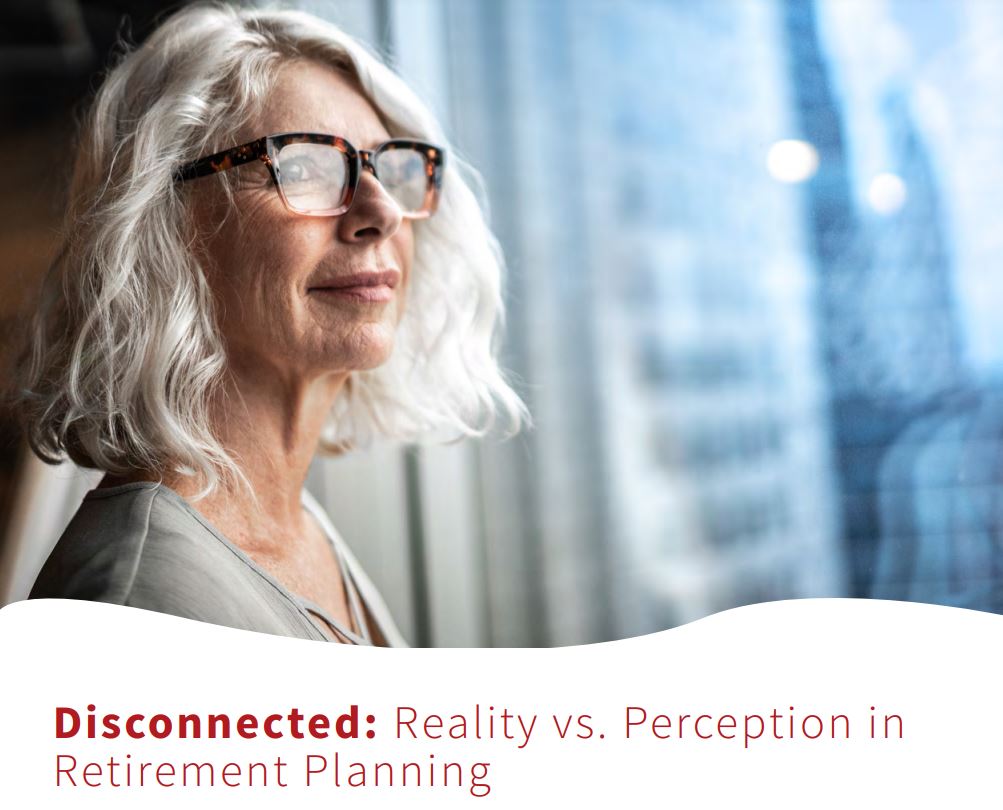
Disconnected: Reality vs. Perception in Retirement Planning

By Martha Deevy & Steve Vernon This report examines potential interventions and messaging that can help pre-retirees and retirees plan ahead regarding important retirement decisions. The widespread lack of forward-looking planning has vexed retirement planners and researchers for many years. Many problems in later years could have been prevented with planning ahead. Too many people put off making important decisions, only to find themselves later in a serious crisis with limited options. Our research identified interventions and messaging that could be used by...

Investors’ Activity in Response to Information About Their Pensions

By Amedeus Malisa This paper uses individual-level data on fund choices in the Swedish Premium Pension to analyze how investors respond to information about their pension savings. The Swedish Pensions Agency mails an annual information letter, the Orange Envelope, to investors to provide them with tailored information about their public pension accounts. This paper examines the effect of pension communication in the Swedish Premium Pension System (PPS) by exploiting the staggered roll-out of these letters across different Swedish counties. Results...

Pension funds in sub-Saharan Africa

By Owen Nyang`oro & Githinji Njenga The population structure the world over is going through a demographic shift, and the elderly proportion is projected to increase with population growth. This change is a matter of concern for sub-Saharan African (SSA) countries, where the majority of the people are young and the rates of both population growth and unemployment are high. A good pension system provides elderly assistance and is a source of savings for long-term investment. The pension systems in...

September 2022

Nudges and Networks: How to Use Behavioural Economics to Improve the Life Cycle Savings-Consumption Balance

By David Blake Many people find it difficult to start and maintain a retirement savings plan. We show how nudges can be used both to encourage people to save enough to provide an acceptable standard of living in retirement and to draw down their accumulated pension fund to maximize retirement spending, without the risk of either running out of money or leaving unintended bequests. Networks can help too, particularly employer-based networks. However, the nudges and networks are more likely to...

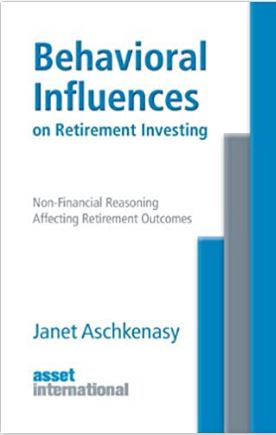
Behavioral Influences on Retirement Planning: Non-Financial Reasoning Affecting Retirement Outcomes

By Janet Aschkenasy The supposed rational logic of the market is no longer understood to exclusively motivate economic decision making. Behavioral economics is now a vital part of university curriculums. Both lay persons and professional retirement investors at times manage money on irrational behavioral factors. Janet Aschkenasy, a veteran business writer, discusses the insights of leading behavioral economics scholars and draws upon current research to describe "decision making" practices among individuals and retirement managers. Often higher investment returns are forfeited to a behavioral...