September 2025

Perseguir futuros más brillantes: IA y planes de jubilación

Por Dr. David Knox, Graham Pearce & Lin Shi La esperanza de vida y el costo de vida van más allá de lo que los sistemas de ingresos para la jubilación se construyeron para apoyar. Cubrir los gastos básicos podría requerir que las personas trabajen más tiempo, ahorren e inviertan de manera más agresiva, o ajusten sus estándares de vida. ¿Cómo podríamos garantizar la comodidad y la dignidad durante la jubilación? En su informe de los Principios de Economía de Longevidad,  el Foro...

El dividendo de la longevidad

Por Andrew Scott & Peter Piot  El argumento de la catástrofe demográfica ya es bien conocido: el descenso de las tasas de natalidad causará una contracción de la población, mientras que la mayor esperanza de vida incrementará el costo de las pensiones y de la atención a las personas mayores. En términos relativos, habrá menos trabajadores para sufragar todos esos gastos. Este relato es parcialmente cierto: en el conjunto del mundo, una de cada diez personas tiene más de 65 años...

Longevidad: la mejor oportunidad en el siglo XXI

Por Sandra Milena Castelblanco-Toro La longevidad es un concepto arraigado en la historia humana y está relacionado con la capacidad de los organismos para permanecer vivos y funcionales durante períodos prolongados. Depende de factores propios del individuo (inmunológicos, genéticos, cardiovasculares y metabólicos), y de factores externos (factores sociales y ambientales) implicados en procesos orgánicos que permiten a un individuo vivir más tiempo y con mejor calidad. El logro de la longevidad ha conducido a la transición demográfica conocida como envejecimiento...

Retirement income market data 2024/25

By Financial Conduct Authority We have collected data on the retirement income market since April 2015. The data helps us monitor developments. For example, it gives us insight into the actions consumers take the first time they access a pension pot. Previously published data up to March 2018 is also included in separate tables. The data for these periods was initially drawn from a representative sample. We started collecting data from all regulated firms that provide retirement income products from 1 April...

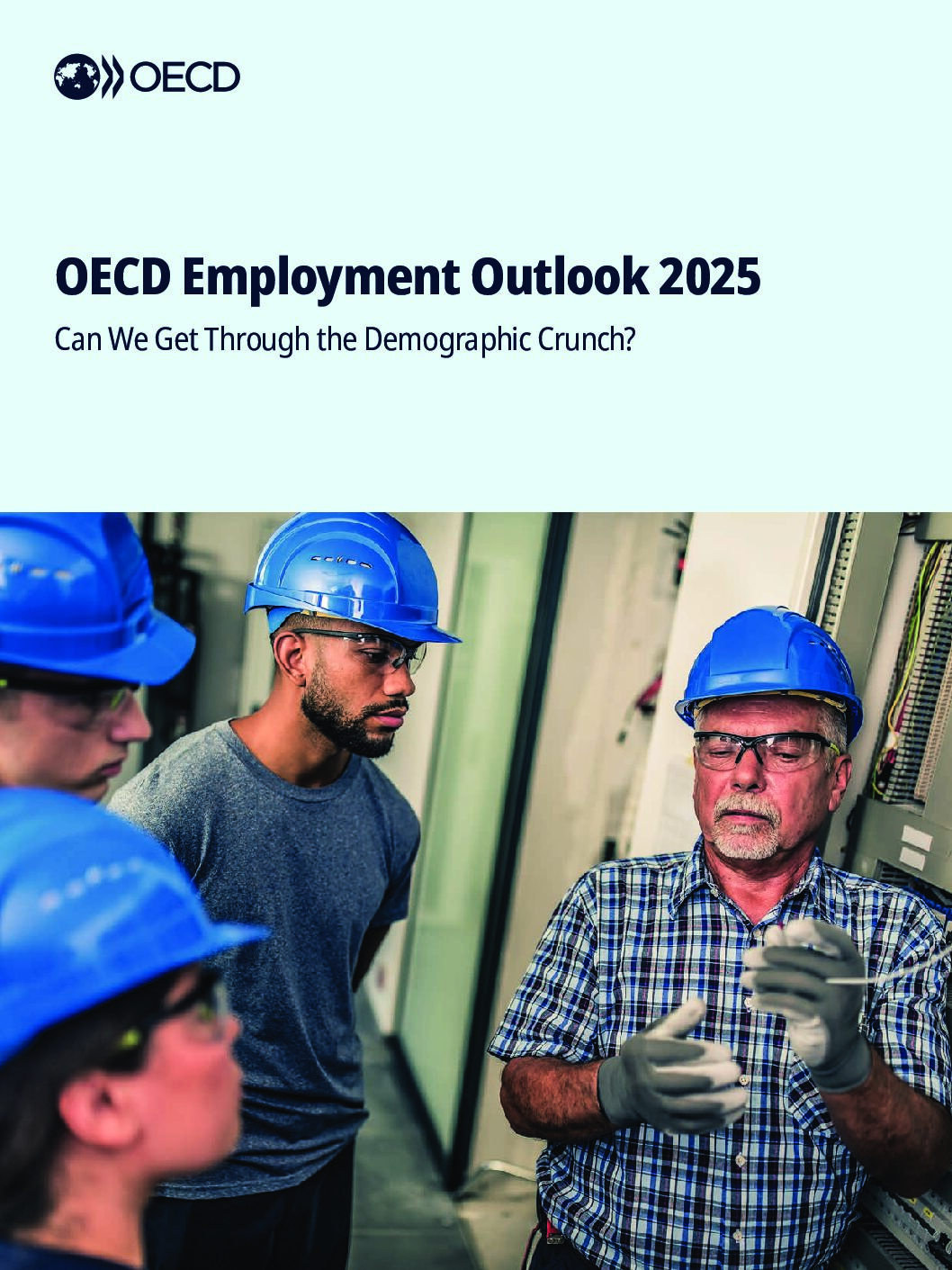
OECD Employment Outlook 2025: Can We Get Through the Demographic Crunch?

By Organisation for Economic Co-operation and Development Over the past two decades, population ageing, increasing statutory retirement ages and rising education levels have led to higher employment rates among workers aged 55 and above in OECD countries. However, progress across countries remain uneven, and employment rates decline rapidly from age 60, such that many workers are leaving employment well before reaching the eligibility age for a pension. To sustain living standards and address structural labour shortages, many countries will need...

The Impact of Job Exposure to Artificial Intelligence on the Korean Labor Market in 2020

By Yeseul Lee & Hyeonjun Hwang This study examines the impact of artificial intelligence exposure on wage and employment outcomes in the Korean labor market in 2020. We propose the Artificial Intelligence Exposure Score (AIES) by integrating 27,921 Korean AI patents from 2011 and 2020 with O*NET task descriptions through Sentence-BERT natural language processing techniques. This approach creates occupation-level exposure measures that reflect Korea-specific innovation patterns. Using data from the Korean Labor and Income Panel Study (KLIPS), we estimate log-linear...

Commuting Time, Flexibility, and Job Security

By Bert van Landeghem, Thomas Dohmen & Arne Risa Hole We analyse workers’ preferences for wages, commute time, working-from-home, flexibility, job security, and social impact using discrete choice experiments from 2022 and 2025 with about 4,000 Flemish employees. Preferences for shorter commutes and flexible schedules remain stable post-pandemic, with substantial willingness-to-pay (WTP) for these attributes. However, WTP for job security declined and the value of socially impactful jobs disappeared by 2025. Latent class analysis identifies distinct groups differing in their...

Boosting Retirement Income through Dynamic Withdrawals

By Ravi Saraogi Dynamic withdrawal strategies, extensively researched internationally, remain underexplored in India. This paper bridges this significant research gap by rigorously evaluating popular dynamic withdrawal methods using Indian data. Employing simulations based on historical equity, debt and inflation data from the Indian market, we compare 10 different adaptive and dynamic withdrawal strategies. The study demonstrates that dynamic strategies can improve withdrawals and sustainability compared to static withdrawal methods. However, this improvement comes at a significant cost of volatility in...

The world’s largest pension funds – 2025

The global top 300 pension funds is an annual study conducted by the Thinking Ahead Institute, in conjunction with Pensions and Investments. The research highlights high-level trends in the pension fund industry and provides information on how the characteristics of these top funds have changed. The world’s top 300 pensions funds now stand at a record US$ 24.4 trillion This surpasses the previous record set in 2021, completing a three year recovery Yet asset growth slowed in 2024, increasing by 7.8% from...

2025 Read on Retirement survey

By BlackRock Workplace savers are feeling more confident about retirement—but plan sponsors aren’t on the same page. As the gap in outlook widens, advisors have a critical role to play. Uncover the insights shaping this divide. Navigating uncertainty and a growing divide Saver confidence is up but fragile. This year’s dip underscores how closely confidence tracks with market volatility. And while savers feel increasingly sure, only 38% of employers believe the majority of their employees are truly on track—a record low. The...