January 2026

Cash Transfers and Socioeconomic Behavior among Older Adults:,Evidence from a Regression Discontinuity Design

By Anh Tuyet Nguyen & Hiroyuki Yamada The rapid aging of populations has prompted the introduction of social pension programs aimed at preserving the welfare of the elderly. However, adverse socioeconomic behaviors may dampen the intended policy effects. Using a fuzzy regression discontinuity design, this study examines the impact of social pension receipt on expenditure patterns and material hardship among older adults aged 80 year or older in Vietnam. We find that social pension increases the risk of material hardship...
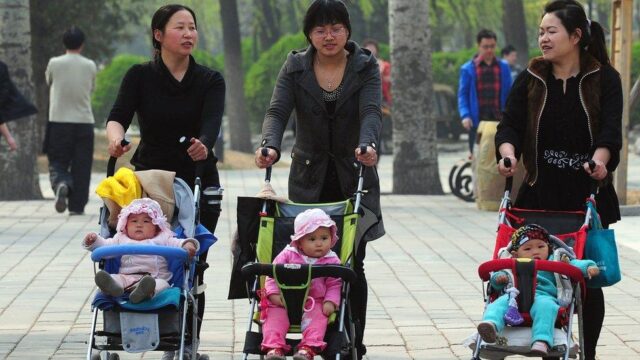

China’s one child policy ended 10 years ago but birth rates remain low

This month marks 10 years since China ended its one-child policy in order to address an aging population and a shrinking workforce. The government eventually removed all limits on how many children couples can have. But cultural and economic changes mean families in China now prefer fewer children, leaving the government to figure out ways to encourage larger families, including a new contraceptive tax that began this month. So where does the country go from here? Cindy Yu is...

Aging populations are redefining the value of a healthy life year

Efficient, evidence-based resource allocation using quality-adjusted life years (QALY) is essential, especially as global life expectancy rises. A recent study published in Scientific Reports examines how considering age and country-specific demographic factors in QALY estimates can improve healthcare policy decisions and resource allocation. Concerns over increased healthcare costs due to the aging population Advances in medical technology and public health have led to rapidly aging populations worldwide, which contributes to rising healthcare costs and social burdens. By 2040, healthcare spending in Japan is...

Access to Pensions, Old-Age Support, and Child Investment in China

By Xiaoyue Shan & Albert Park This work studies how access to public pensions affects old-age support and child investment in traditional societies. Guided by predictions from an overlapping generations model, we analyze the influences of a new pension program in rural China, using a difference-in-differences approach. We find that the program crowds out transfers from working-age adults, especially men, to their elderly parents. Interestingly, the impact on child investment significantly differs by child gender. While adult parents increase educational investment...

The future of public pension provision in the UK: challenges and trade-offs

By Jonathan Cribb , Carl Emmerson & Heidi Karjalainen The UK state pension system faces significant challenges given the country’s ageing population, but at the same time it is crucial for retirement finances: state pensions make up on average almost half of income for recently retired households. Reforms coming into force in 2010 and 2016 have increased universality, and most future pensioners will receive a full (flat rate) state pension. Policy-makers seeking to limit the cost of the system have...

Refining longevity risks for China’s ageing population

Just like every dark cloud has a silver lining, insurers are proficient at managing risks and turning them into opportunities. As an ageing population has become a pressing issue around the globe, the booming demand for insurance and annuities presents considerable potential. China, one of the fastest-ageing countries, is expected to see its personal insurance market expand from four trillion Chinese yuan (US$553 billion) in 2021 to between 6.6 and 12.6 trillion Chinese yuan by 2035, according to the Boston...

December 2025

Charted: U.S. Population Growth by Year (2005-2055)

Key Takeaways In 2025, the U.S. population is forecast to grow 0.2% amid record-low fertility rates and an aging population. Over the next 30 years, population growth is expected to decline to zero. By 2048, population will peak, as net immigration growth and natural population decline (deaths > births) cancel each other out. U.S. population growth is slowing, and is projected to grind to a halt by 2048. Today, historically low fertility means births only marginally exceed deaths. Not only that, within the next...

Social Security Reforms and Inequality among Older Workers in Spain

By Cristina Bellés-Obrero, Manuel Flores, Pilar Garcia-Gomez, Sergi Jimenez-Martin & Judit Vall Castelló This chapter studies social security reforms and trends in inequalities among older workers over the last decades in Spain. Its main goal is to analyze the redistributive impact of the various pension reforms on older income inequality. Compared to the rules in 1985, recent pension reforms have led to an average increase on Social Security Wealth of approximately 18,000€ for men and 15,000€ for women. This represents...

Public pensions and family dynamics: Eldercare, child investment, and son preference in rural China

By Naijia Guo, Wei Huang & Ruixin Wang Using variations in the timing of the New Rural Pension Scheme (NRPS) across rural Chinese counties, we examine its effects on eldercare mode, child investment, and son preference. Our findings are three-fold: (1) After the introduction of NRPS, married sons are less likely to live with and provide care for their parents, while married daughters show no significant change in their caregiving behavior; (2) Parents reduce the brideprice for their sons but not the dowry...

Aging in Ghana: Challenges, Realities, and Struggles

In Ghana, like many countries across Africa and the world, the population of older adults is steadily increasing due to improvements in healthcare and longer life expectancy. However, growing older in Ghana brings a number of social, economic, health, and emotional challenges especially for those without formal jobs, pensions, or family support systems. Demographic and Social Changes Ghana’s elderly population (aged 60 and above) has grown significantly over past decades. Although they make up a relatively small percentage of the total...