August 2023

Investment Option Switching Behaviour and Impact for Pension Fund Members Around the COVID Pandemic

By Adam Butt, Gaurav Khemba, William Lim, Geoff Warren & Shang Wu We study the switching of investment options by defined contribution pension fund members, using a unique dataset provided by a large Australian superannuation fund and spanning the market volatility associated with the COVID-19 pandemic. We find that both the magnitude and direction of switching activity is primarily related to market conditions, but is moderated by member characteristics. Switching activity appears reactive to market movements, with a spike in...


July 2023

COVID-19, Home Equity and Retirement Funding

By Vishaal Baulkaran & Pawan Jain  We investigate the impact of COVID-19 on using home equity to fund retirement income. We show that financial planners believe that COVID-19 positively influenced their clients’ willingness to utilize home equity products to fund retirement income in particular, sell and downsize and HELOC options. For consumers, COVID-19 does not seem to have a major impact on the outlook on residential property, retirement income, retirement plan, or perceived/actual standard of living during retirement. However, there...

May 2023

“The Great Retirement Boom”: The Pandemic-Era Surge in Retirements and Implications for Future Labor Force Participation

By Joshua Montes, Christopher L. Smith & Juliana Dajon As of October 2022, the retired share of the U.S. population was nearly 1-½ percentage points above its pre-pandemic level (after adjusting for updated population controls to the Current Population Survey), accounting for nearly all of the shortfall in the labor force participation rate. In this paper, we analyze the pandemic-era rise in retirements using a model that accounts for pre-pandemic trends in retirement, the cyclicality of retirement, and other factors....

February 2023

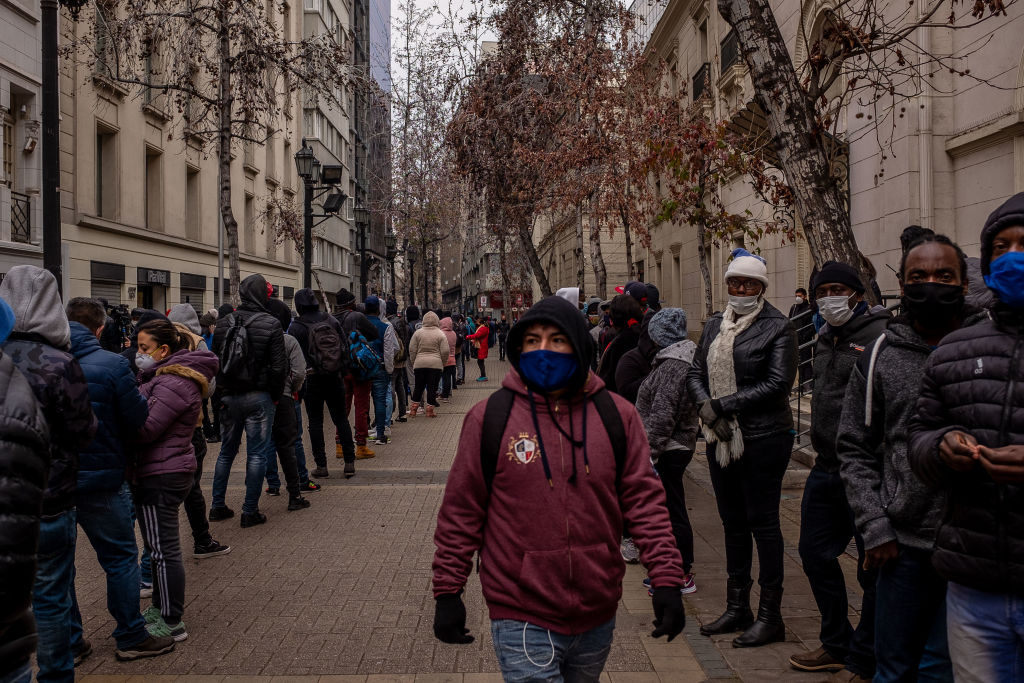
Pension Withdrawals Drain Savings in Chile and Peru

By Richard Francis, Kelli Bissett-Tom & Christopher Dychala Peru, Chile and Bolivia have allowed early withdrawals from their funds as a source of relief for households and to support recoveries during the pandemic and the global price shock. But these have had negative financial and confidence ramifications, contributing to downgrades of Peru in 2021 and Chile in 2020. Longstanding private pension funds have been important supports for sovereign creditworthiness where they exist in Latin America. Pension fund assets have supported sovereign...

Early Pension Withdrawals in Chile During the Pandemic

By Olga Fuentes, Olivia S. Mitchell & Félix Villatoro Chile, with one of the largest and best funded defined contribution programs in Latin America, held over USD $200 bn in assets at the onset of the Covid-19 crisis, or more than 80% of GDP. Reacting to populist pressures during the pandemic, however, the government gave non-retired participants three separate opportunities to tap into their retirement accounts, leaving some 4.2 million participants with zero retirement savings and draining around $50 bn...

September 2020

UK:Workers ‘more at risk’ as they want to work past retirement date

A global retirement survey conducted in 15 countries by Aegon has revealed that workers in Britain could be exposed to lifestyle-changing financial risk later in life as a result of the COVID-19 pandemic. According to the survey, workers in the UK are less likely to want to retire earlier than planned but almost a third of them have no back-up plan in case they are unable to do so due to ill health. Only about 30% have a...