July 2026

México cómo vamos. Informalidad Laboral

Por México ¿Cómo vamos? Proporción de la población ocupada que son laboralmente vulnerables por la naturaleza de la unidad económica para la que trabajan, así como aquellas personas ocupadas cuyo vínculo laboral no es reconocido por su fuente de trabajo. Un empleo informal, además de carecer de seguridad social, como el acceso a los servicios de salud tan necesarios en una pandemia, está asociado también a una menor percepción de ingresos, es decir, tienen mayor probabilidad de encontrarse en situación...


El mercado de inversión de impacto en México: evolución, tamaño y tendencias

Por ANDE Este estudio ofrece una radiografía integral del ecosistema de inversión de impacto en México. Con un mercado estimado entre USD $1.7 y $2.2 mil millones en activos bajo gestión, el reporte analiza 11 dimensiones fundamentales: desde la caracterización de los 130 actores identificados y sus mecanismos de inversión, hasta la distribución sectorial y geográfica del capital, las prácticas de medición de impacto, y las oportunidades estratégicas para el crecimiento del sector. Una herramienta esencial para inversionistas, emprendedores, formuladores de...

Fondos generacionales en el nuevo sistema de pensiones: Recomendaciones de regulación

Por Daniel Mantilla García, Oscar Reinaldo Becerra Camargo, Manuel García Huitrón & Marc Hofstetter Gascón La reforma pensional aprobada el año pasado es de profundo calado y se encuentra en pleno proceso de reglamentación contrarreloj. Uno de los aspectos a reglamentar es la nueva estructura de “fondos generacionales”, así como los mecanismos que garantizarán que estos fondos cumplan el objetivo de optimizar la mesada pensional, como lo manda la ley que se aprobó. Explicamos en qué consisten estos fondos y...

Ciudad cuidadora para la vejez: condiciones urbanas de los recursos de cuidados de larga duración

Por Blanca Valdivia & Sara Moreno Colom Este artículo aborda un análisis de las residencias para personas mayores desde una perspectiva urbana y arquitectónica, a partir del estudio de 4 casos en 3 municipios del Área Metropolitana de Barcelona. Los espacios urbanos se han planificado para satisfacer las necesidades de las actividades productivas (Col·lectiu Punt 6, 2019; Durán, 1998), y han pasado por alto las condiciones materiales para cuidar, obviando que la vulnerabilidad es una condición innata de la vida...

Retirement in America: an Analysis of Retirement Preparedness Among Working-Age Americans

By Joelle Saad-Lessler & Tyler Bond This research examines the retirement preparedness of working-age Americans. The research answers key questions relating to retirement savings, access to retirement plans, and how saving for retirement interacts with other financial commitments, such as repaying student loan debt and owning a home. It also offers a broad examination of how different groups of workers are faring in their preparation for retirement and a consideration of where workers are falling short. The report key findings are...

Regulatory Priorities: Pensions

By Financial Conduct Authority The Regulatory Priorities report for the pensions sector includes the following priorities: Ensuring well-run schemes that provide value for money to savers: The FCA explains that it expects the proposed workplace pensions Value for Money framework and the Government’s wider Pension Schemes Bill to help drive positive change and that it wants firms to engage in the development of these changes and prepare to implement and embed them in a way that best supports savers. Encouraging effective...

How Americans Are Thinking About Aging: For older adults, income largely shapes the aging experience

By Luona Lin & Juliana Menasce Horowitz The U.S. population is aging rapidly. From 2004 to 2024, the share of Americans ages 65 and older increased from 12.4% to 18.0%, according to the U.S. Census Bureau. This is due in part to the country’s declining birth rate and increased life expectancy, but also because Baby Boomers – whose generation is defined by the increase of births in the U.S. following World War II – are now well into their 60s and 70s. This research is part of...

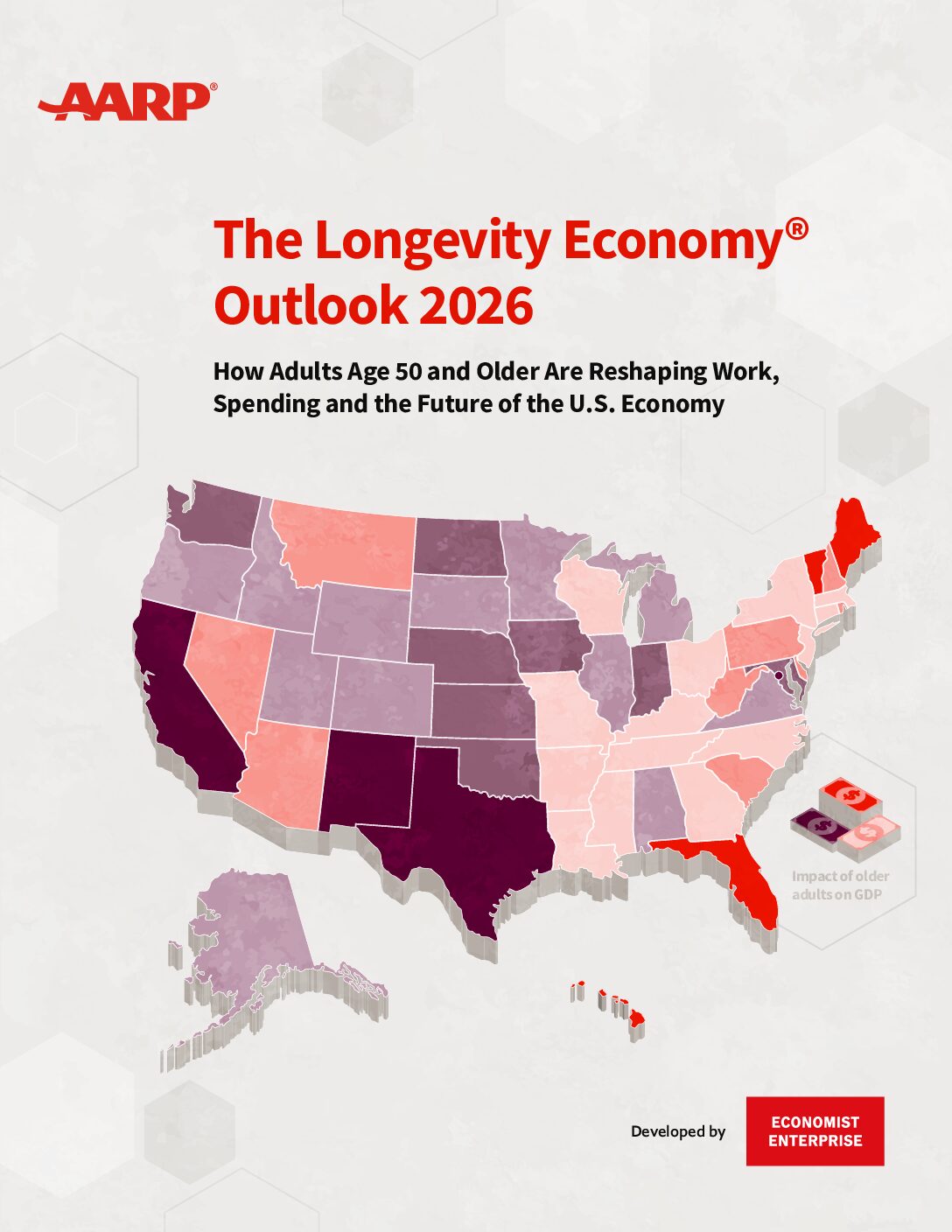
The Longevity Economy Outlook 2026: How adults age 50 and older are reshaping work, spending and the future of the U.S. economy

By AARP The AARP Longevity Economy Outlook 2026, developed by Economist Enterprise, explores the wide-ranging impacts of the 50-plus population in the U.S., measuring the size and scope of their economic activities and societal contributions. As people live longer and healthier lives, they are contributing to communities and fueling economic growth well past the traditional retirement age. The contributions of people 50-plus generate trillions of dollars of U.S. GDP, account for a major share of consumer spending, support tens of millions...

How Rational Is AI Investment Advice? Risk-Return Relevance in Artificial Intelligence (AI) Investments

By Nanying Lin, Oscar Gilbert & Tianxiang Chu Textbook finance theories indicate that investors demand risk premia from risky assets as compensation for risk and for hedging against future unfavorable economic states. We design a comprehensive study to examine whether investment advice generated by artificial intelligence (AI) reflects a coherent risk–return pattern in investment decision-making. We find that AI advises investors to increase stock investments when return increases and reduce stock allocations when stock volatility increases. However, AI ignores the...

Pension Income and Post-Retirement Labor Supply

By Fabian Kindermann, Carla Krolage, Sebastian Kunz, Manuel Pannier & Karoline Ströhlein This paper provides causal evidence on how pension income affects labor supply after retirement. We exploit the introduction of the German Earned Income Pension Credit (Grundrente), which permanently increased pension income for retirees with long contribution histories and comparatively low lifetime earnings. The reform generates exogenous variation in non-labor income without creating additional labor supply distortions, allowing us to isolate pure income effects. Using administrative data covering the...