February 2025

Politics Before Pensions: How New ESG Rules Expose Public Pension System Vulnerabilities

By Danilo Risteski As some of the largest institutional investors in the United States, public pension funds wield considerable power over investment decisions. A recent trend highlights this extraordinary power: state pension funds have started exploiting their retirees’ pensions to force investment companies to invest in accordance with their respective states’ political priorities. Nowhere is this trend more obvious than in the environmental, social, and governance field. On one hand, states like Maine have passed legislation prohibiting public pension funds...

Place-Based Policies of the European Union: Contrasts and Similarities to the US Experience

By Peter R. Berkowitz, Michael Storper & Max Herbertson The European place-based policy framework was established in the European Treaties and has a current budget of $60-70 billion per year. This paper identifies key features and directions for its future development with respect to three place-based problems: traditionally lagging regions; contemporary distressed (or left-behind regions), including those facing the structural challenges of the energy transition; the challenge of spreading prosperity faced with the uneven geography of technological clusters and routine technology-based manufacturing. We...

The effect of Covid pension withdrawals and the Universal Guaranteed Pension on the income of future retirees in Chile

By Carlos Madeira Chile implemented large pension withdrawals during the Covid pandemic. Afterwards, Chile increased non contributory beneÖts in a quasi-universal scheme. Simulating future pensions, I show that the average loss in contributory pension income is 27.9%, with losses of 23.9% and 31.4% for men and women, respectively. After accounting for public transfers, the average loss in total pension income is just 6.2%, with losses of 7.5% and 5.2% for men and women, respectively. Current retirees lost just 1.1% of...

Demografía y pensiones: Análisis de los efectos redistributivos

Por Enrique Devesa & Rafael Doménech Este artículo analiza la redistribución del sistema público de pensiones de reparto, tanto desde la perspectiva intergeneracional como desde la intratemporal, y cómo el envejecimiento de la población y los cambios demográficos pueden afectar a la redistribución. El aumento previsto de la tasa de dependencia dará lugar a cambios en el esfuerzo tributario o en las tasas de prestación del sistema. También se verá afectada la redistribución intergeneracional por la progresividad del sistema de pensiones,...

Las pensiones en la economía digital. Retos y reformas

Por Rocío Gallego Losada La economía gig de plataformas digitales está transformando el mercado laboral. Los empleos para toda la vida son cada vez más quiméricos y la precariedad prevalece. Esto afecta a la suficiencia y solvencia del sistema público de pensiones en España. La Seguridad Social española llega con síntomas agravados de agotamiento a este reto. Al envejecimiento demográfico se le une un modelo de reparto de corte bismarckiano-mediterráneo, en el que la relación jurídica con la Seguridad Social...

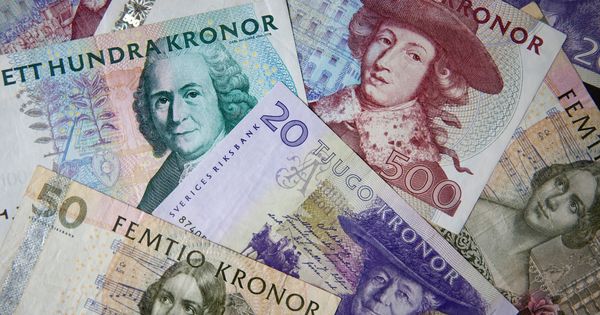
Reformas del sistema de pensiones: La experiencia Internacional. “La Experiencia Sueca”

Por María del Carmen Boado-Penas El proceso de reforma de las pensiones en Suecia tuvo como objetivo principal crear un sistema de pensiones financieramente estable en el largo plazo, mejorar la equidad generacional y proporcionar un marco que promoviera la obligatoriedad del ahorro financiero a través del sistema de pensiones. Para este fin, en 1994 el Parlamento sueco aprobó la sustitución de su sistema tradicional de reparto de pensiones públicas de prestación definida por un sistema mixto que incluye dos...

El futuro del envejecimiento en América Latina y el Caribe: nuevas perspectivas metodológicas

Por Jeroen Spijker Este artículo proporciona una visión general de varios indicadores alternativos al instrumento más tradicional para medir el envejecimiento para el pasado, presente y futuro en los países de América Latina y el Caribe. Los resultados muestran que cuando pensamos en la vejez no tan solo en términos de los años vividos, sino también, en términos de los años que quedan por vivir, casi todas las poblaciones actuales de América Latina y el Caribe están rejuveneciendo en vez de...

2025 Asset Allocation Return & Risk Assumptions

By Wilshire Wilshire’s long-term inflation forecast is 2.35%, which is up 10 basis points from last year’s assumption. Our practice since 2003 has been to derive our inflation forecast by observing the market’s breakeven inflation rate – the spread between the yield on a 10-year Treasury and the real yield on a similar maturity Treasury Inflation Protected Security (TIPS). During periods of market stress, TIPS pricing may be affected by liquidity demands or a high level of inflation uncertainty, as...

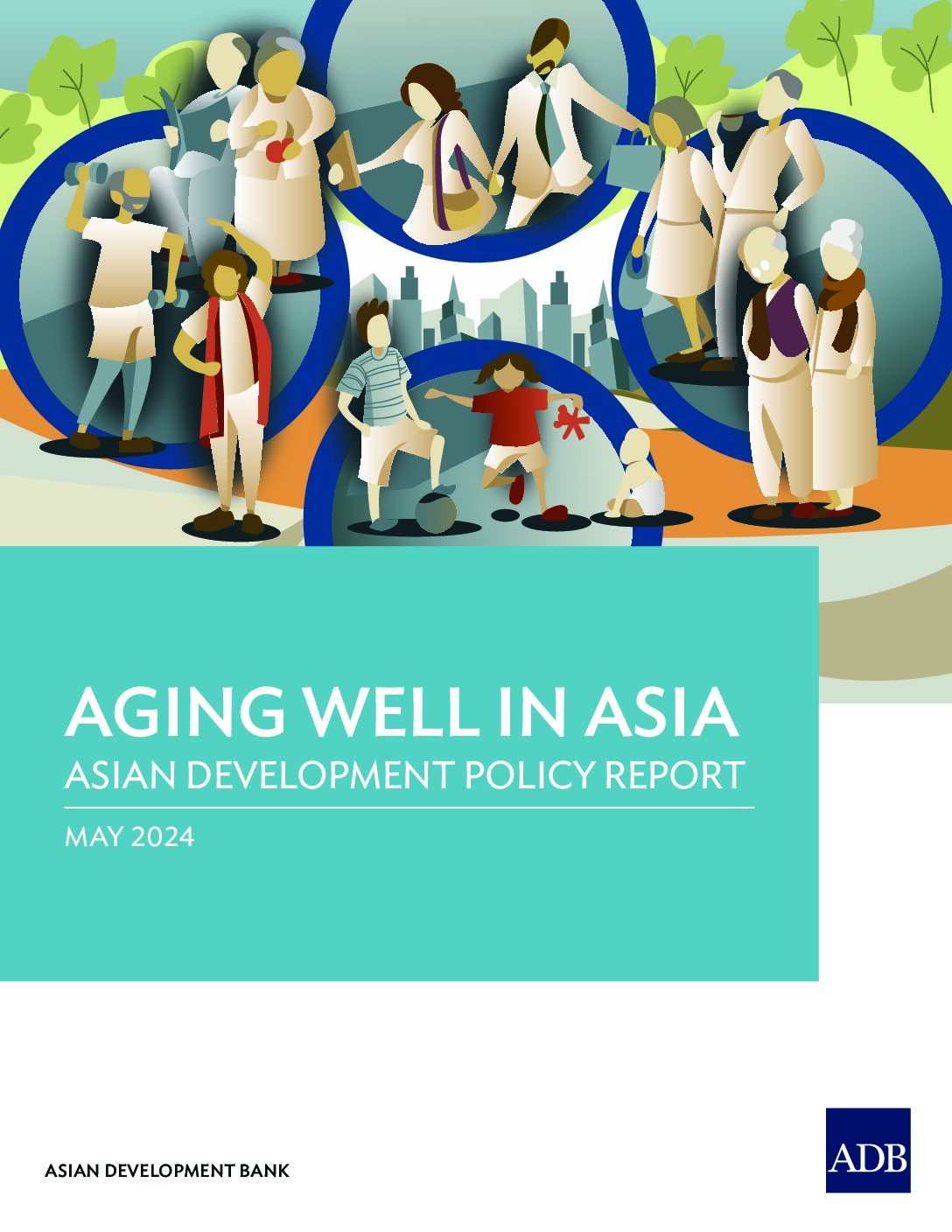
Aging Well in Asia: Asian Development Policy Report

By Asian Development Bank The report explores four linked dimensions of well-being: health, productive work, economic security, and social engagement. It highlights the need for lifelong investment in human capital, a life-cycle approach to intervention for age-specific needs, and population-wide outreach to people of all ages. It provides concrete recommendations in the policy domains of health, employment and retirement, pensions, long-term care, and community-level support. Get the report here 

Places versus People: The Ins and Outs of Labor Market Adjustment to Globalization

By David Autor, David Dorn, Gordon H. Hanson, Maggie R. Jones & Bradley Setzler This chapter analyzes the distinct adjustment paths of U.S. labor markets (places) and U.S. workers (people) to increased Chinese import competition during the 2000s. Using comprehensive register data for 2000–2019, we document that employment levels more than fully rebound in trade-exposed places after 2010, while employment-to-population ratios remain depressed and manufacturing employment further atrophies. The adjustment of places to trade shocks is generational: affected areas recover primarily by adding workers to...