January 2026

Scaling Sustainable Investing in Emerging and Developing Economies: Frictions and Opportunities

By Caroline Flammer, Thomas Giroux & Geoffrey M. Heal Mobilizing private capital at scale is critical for financing sustainable development, particularly in emerging and developing economies (EMDEs), where capital is most needed. We conduct a global survey of senior investment decision-makers across a broad spectrum of capital providers, including asset managers, pension and sovereign wealth funds, development finance institutions, philanthropic investors, and others. The survey provides novel evidence on investors’ risk-return expectations, risk perceptions, and investment practices in EMDEs and...

Pension Schemes, Healthcare Use, and Health: Evidence from China

By Zeen He Using a non-parametric fuzzy regression discontinuity design and leveraging data from the China Health and Retirement Longitudinal Study (CHARLS), this paper explores the impact of public and private pension schemes on health service utilization and health outcomes among urban and rural individuals in China. Our estimates show that receipt of public pensions, particularly the Urban Employee Pension Scheme (UEPS) and Public Employee Pension Scheme (PEPS), significantly improves selfreported health, mental health (CES-D scores), and physical health (ADL...

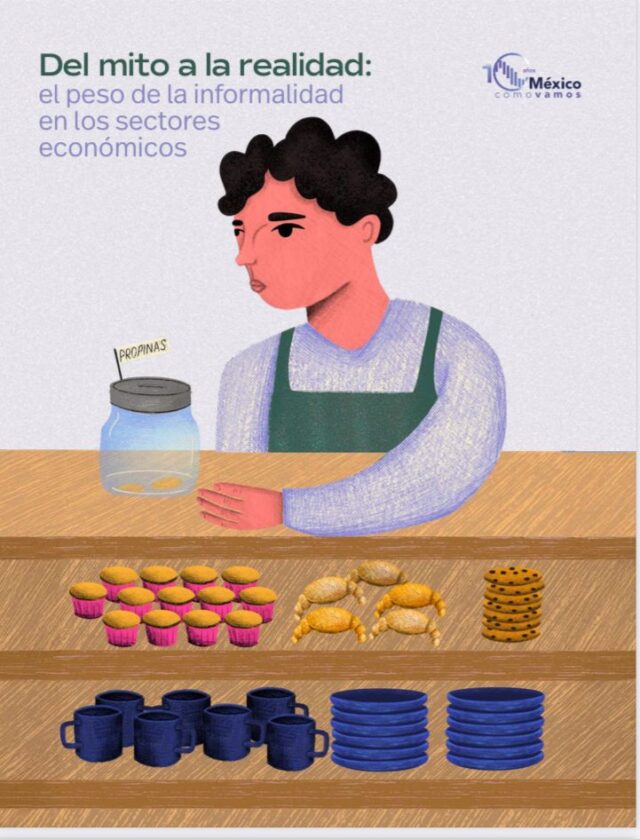
Del mito a la realidad: el peso de la informalidad en los sectores económicos

Por México como vamos Los altos y persistentes niveles de informalidad laboral en nuestro país son una de las principales fallas estructurales de la economía mexicana. Históricamente, las personas con un empleo informal han sido la mayoría de la población ocupada. Esto ha significado que más de la mitad de las personas trabajadoras no cuenten con la seguridad social o protección legal e institucional correspondiente a lo que laboran. Además, se enfrentan a un estigma constante que, en realidad, está...

Rentabilidad de multifondos de las AFP: Implicancias para la pensión autofinanciada, un enfoque actuarial

Por Rafael Romero-Meza & Fabricio Ibañez-Veizaga Este artículo realiza un análisis exhaustivo del sistema de pensiones chileno, centrándose en la rentabilidad histórica de los multifondos administrados por las Administradoras de Fondos de Pensiones (AFP) y su impacto en el monto de las pensiones autofinanciadas. Los autores describen la evolución del sistema desde un modelo de reparto a uno de capitalización individual en 1980, destacando las reformas clave de 2002 (creación de multifondos), 2008 (Pilar Solidario) y 2025 (transición a fondos...

Innovar para incluir: desarrollo de la economía plateada en México

Por Víctor Hugo Guadarrama Atrizco, Elba Mariana Pedraza Amador & Myriam Coronado Meneses Debido al aumento de la esperanza de vida y a la disminución de la de fecundidad, la proporción de personas mayores de 60 años está aumentando más rápidamente que cualquier otro grupo de edad en casi todos los países del mundo (Canudas et al., 2016). El envejecimiento de la población puede considerarse un éxito de las políticas de salud pública y el desarrollo socioeconómico. Pero también constituye...

Diálogos posibles entre renta básica universal y buen vivir

Por Alberto Tena-Camporesi & Gustavo M. de Oliveira Este artículo examina la relación entre la renta básica universal (RBU) y el buen vivir, proponiendo que ambas laboraciones/prácticas pueden combinar ciertos elementos para superar el paradigma del desarrollo. Partiendo de una revisión de la literatura, se sostiene que, aunque sea difícil conciliar el buen vivir y la forma Estado, éste aún aparece como principal vía de implementación de la RBU. Con base en coincidencias posibles, se propone impulsar la rbu desde...

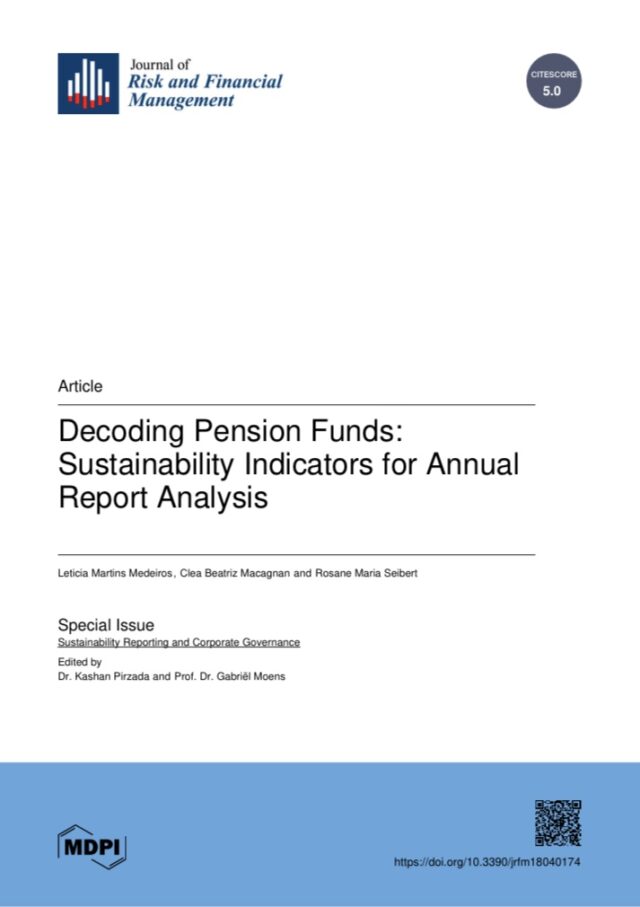
Decoding Pension Funds: Sustainability Indicators for Annual Report Analysis

By Leticia Martins Medeiros, Clea Beatriz Macagnan & Rosane Maria Seibert Pension funds’ growth highlights the need to emphasize fiduciary duty and investment sustainability, considering the current and future participants’ interests (priority stakeholders) and systemic risk reduction (environmental, social, economic, and governance effects). Therefore, this study builds sustainability indicators based on the interests of pension fund stakeholders. The methodology comprised five stages: the first consisted of analyzing Annual Information Reports to create a preliminary list of indicators; the second involved...

Global Pension Assets Study – 2025

By Thinking Ahead Institute The Global Pension Assets Study estimates global pension fund assets across 22 major pension markets (the P22). These geographies now stand at US$58.5 trillion in pension assets and account for 68% of the GDP of these economies. The study, conducted by WTW and the Thinking Ahead Institute since the 1990s, includes an analysis of the seven largest markets (the P7): Australia, Canada, Japan, Netherlands, Switzerland, UK and the US, which comprise 91% of total pension assets. Pension...

Population Aging and Corporate Leverage

By Xingshen Li, Kexin Jiang, Wei Li & Xiaofen Tan This study examines the relationship between corporate leverage and population aging. Based on a panel dataset of global listed firms from 2000 to 2021, we find that population aging at the country level reduces a firm’s leverage. This effect is mediated through mechanisms that influence operational pressures and asset prices. Further analysis reveals that the adverse impact of population aging on corporate leverage is more pronounced among firms with higher financial...

Social Protection for Informal Workers

By Abhijeet U Pai The modern working relationships require the law to recognise non-standard forms of employment and address the lack of traditional employment benefits like social protection for them. Informal employment is seen as a job-based (based on nature of job rather than status of the enterprise) concept that cuts across different sectors of economic activity and thus is defined as ‘informal economy’ rather than ‘informal sector’, in terms of employment relationship and protections associated with the job of the...