May 2025

Sustainability reporting on pension schemes the path forward

In an era marked by growing awareness of environmental, social and governance (ESG) considerations, sustainability reporting has emerged as a crucial aspect for organisations, investors and stakeholders. For pension schemes, particularly, integrating sustainability into their reporting frameworks is more than just a regulatory requirement; it’s an ethical imperative that aligns with the long-term nature of their commitments to retirees and the society. Read the complete book here

European semester thematic factsheet adequacy and sustainability of pensions

Pensions are the main source of income for older people in Europe, coming mostly from 'pay-as-you-go' public schemes. Retired people drawing a pension are a significant and — due to demographic ageing — a growing part of the EU population (about 124 million, or a quarter of the total population1). European pension systems are facing the dual challenge of remaining financially sustainable and being able to provide Europeans with an adequate income in retirement. The key purpose of pension...

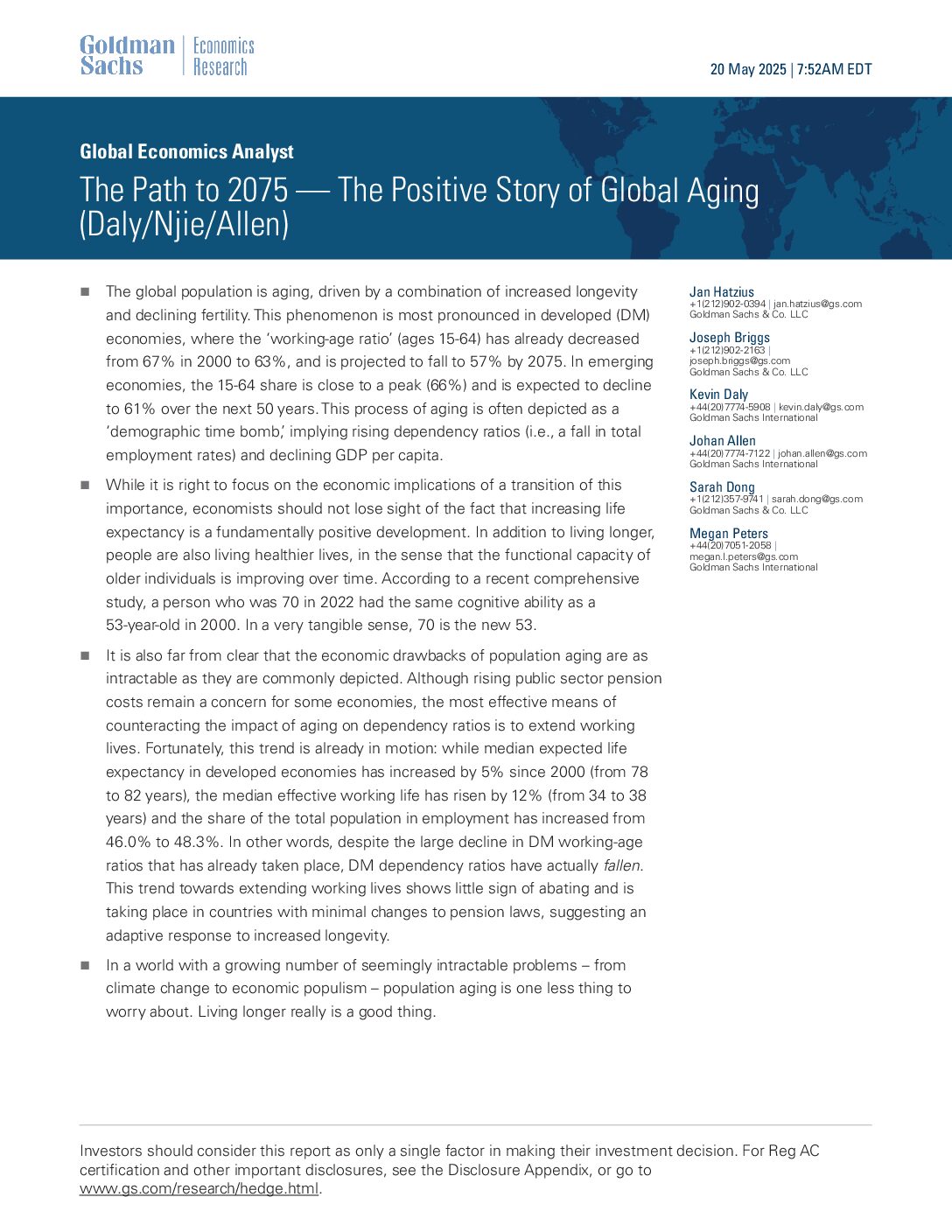
The Longevity Story: Opportunities and Considerations

By World Governments Summit   This report delves into the concept of longevity, highlighting how advancements in medical technology, sanitation, preventive care, and lifestyle choices have significantly increased human lifespans—from an average of 45 years in the 1950s to over 73 years today. While early efforts to extend life overlooked aging itself, recent focus on understanding and potentially reversing the aging process has fueled the growth of the longevity industry. Organizations like Altos Labs, Hevolution Foundation, and Pure Health are pioneering...

The Global Findex Database 2021: Financial Inclusion, Digital Payments, and Resilience in the Age of COVID-19

By World Bank Group  Financial inclusion is a cornerstone of development, and since 2011, the Global Findex Database has been the definitive source of data on global access to financial services from payments to savings and borrowing. The 2021 edition, based on nationally representative surveys of about 128,000 adults in 123 economies during the COVID-19 pandemic, contains updated indicators on access to and use of formal and informal financial services and digital payments, and offers insights into the behaviors that...

The DC Future Book 2024: in association with Columbia Threadneedle Investments

By Pensions Policy Institute This report is the tenth edition of the Pensions Policy Institute’s (PPI) The DC Future Book: in association with Columbia Threadneedle Investments, setting out available data on the Defined Contribution (DC) landscape alongside commentary, analysis and projections of future trends. Demographic and policy changes mean that, compared to previous generations of pensioners, current and future retirees will. These changes increase the risk borne by pension savers and the complexity of decisions they must make at, and during,...

The Purple Book 2024. DB pensions universe risk profile

By Pension Protection Fund The Purple Book, also known as the Pensions Universe Risk Profile, highlights trends in DB scheme funding, demographics and asset allocation. It provides us with an in-depth understanding of the risks we face from the universe of schemes we protect. The 19th edition of the Purple Book shows the strong net funding position of the universe of DB pension schemes has remained largely stable over the past year. For this year’s Purple Book, we’ve used an enhanced roll-forward...

April 2025

The future of pensions and retail investment in the EU

By Maximilian Bierbaum & Sheenam Singhal In the debate on the future of capital markets in Europe, widening retirement saving and widening retail investment are the potential missing link. But there is a danger that by dealing with the two topics in isolation, EU policymakers will miss the bigger picture. We think this needs to change. Neither pensions nor more retail investment can solve this problem on their own. To really move the dial, we need both – and there...

Adequacy of future retirement incomes: new evidence for private sector employees

By Jonathan Cribb, Laurence O'Brien & David Sturrock In this report and the accompanying report on policy recommendations (Cribb et al., 2024a), we focus on the outlook for the adequacy of employees’ retirement incomes and changes to automatic enrolment. We do not here consider reforms that we broadly define as aimed at changing investments, costs and returns (including ‘pot for life’ and collective defined contribution pensions) but will return to consider these later in the Pensions Review. A separate report...

Retirement in the USA: The Outlook of the Workforce 25th Annual Transamerica Retirement Survey

By Transamerica Institute Retirement in the USA: The Outlook of the Workforce, a collaboration between Transamerica Center for Retirement Studies (TCRS) and Transamerica Institute, delves into the retirement prospects of the U.S. workforce including workers who are employed by others, self-employed workers, and workers who are unemployed but looking for work. Based on a survey of more than 6,100 members of the workforce, the report delves into their life priorities and outlook, personal finances, retirement expectations, and how they are saving,...

The Social Security Retirement Age

By Congressional Research Service The Social Security full retirement age (FRA) is the age at which workers can first claim full (i.e., unreduced) Social Security retired-worker benefits.1 Among other factors, the age at which an individual begins receiving Social Security benefits has an impact on the size of the monthly benefits. Claiming benefits before the FRA can substantially reduce monthly benefits, whereas claiming benefits after the FRA can lead to a substantial increase in monthly benefits. Benefit adjustments are made...