December 2025

The working life course of aging LGBTQ workers: An intersectional perspective and a theoretical framework

By Raphael Epper-Hattab & Bryndís D Steindórsdóttir  Aging LGBTQ workers represent a unique and diverse population of workers who have struggled with homophobic and transphobic social constructions and a prolonged invalidation of their identities, stemming from periods when social exclusion and discrimination dominated their lives. These challenges have imposed multifaceted marginalization not only on their life patterns but also on their occupational trajectories and interpersonal relationships at work. Against this backdrop, drawing attention to characteristics of the occupational careers of...

November 2025

The Cost of Waiting for Nationality: Impact on Immigrant’s Labor Market Outcomes in Spain

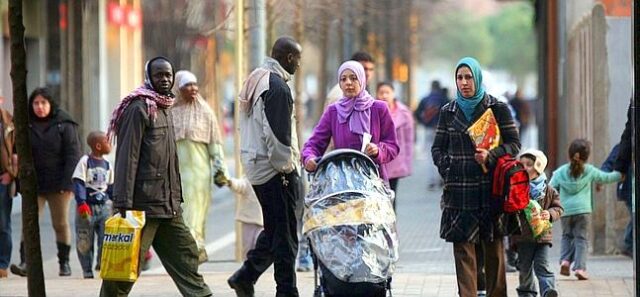
By Yanina Domenella In this paper, I examine the impact of administrative delays in obtaining Spanish nationality on the long-term labor market outcomes of legal immigrants. Using Social Security data from 2006 to 2019 and an instrumental variable strategy, I find that longer delays in nationality acquisition result in significantly lower accumulated earnings over a ten-year period, driven by both lower wages and fewer days worked. Specifically, one additional year of delay reduces accumulated earnings over 10 years by 3.8...

The Aftermath of the Pandemic Retirement Boom

 By Lei Fang, Paul Mohnen & David Lee The labor force participation rate experienced a sharp drop during the pandemic, from which it has yet to fully recover. This shortfall can be attributed to a persistent decline in labor force participation among people aged 55 and older. In this blog post, we show that excess retirements relative to prepandemic and higher population shares of retirement-age individuals have both contributed to the decline in the labor force participation rate of older...

Determinants of financial inclusion among women-owned enterprises: a case study of the informal sector

By Faizan Khan Sherwani, Sanaa Zafar Shaikh, Shilpa Behal & Mohd Shuaib Siddiqui The purpose of this paper is to analyse the determinants of financial inclusion among women-owned informal enterprises in India. The study is based on a primary survey of 321 informal enterprises. The data has been collected through a structured questionnaire. A chi-square test has been used to examine the significant association between the characteristics of informal enterprises and their owners and financial inclusion. A logistic regression model...

October 2025

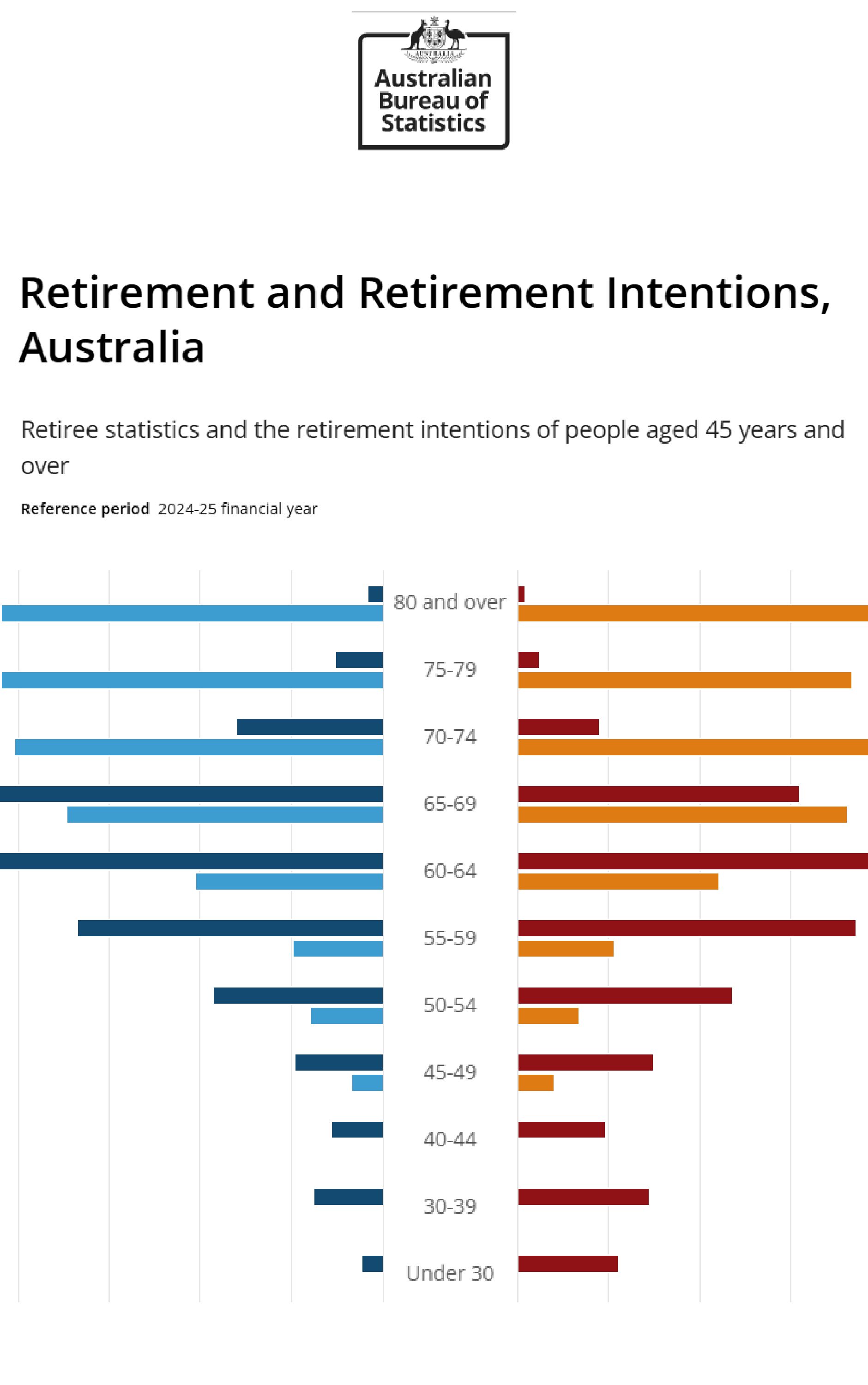
Retirement and Retirement Intentions, Australia: Retiree statistics and the retirement intentions of people aged 45 years and over

By Australian Bureau of Statistics In 2024-25, 156,000 people aged 45 and over retired. Of these, 55% were women. On average, women retire at an earlier age than men. The average age both men and women are retiring is continuing to increase. The average age at retirement for people aged 45 years and over who retired in 2024-25 was 63.8 years. For men, the average age was 64.9 years and for women the average age was 62.7 years. The average age at retirement...

The U.S.-Born labor force will shrink over the next decade

By Josh Bivens It is often underrecognized how much population aging is currently reducing the growth rate of the U.S. labor force and will continue to pull it down in coming decades. The share of the population that is over the age of 65 (when labor force participation tends to take a steep fall on average) is rising rapidly. This share was 12.4% in 2007, 17.9% in 2024, and will hit 21.2% by 2035 (CBO 2025b). A recent EPI report...

Part-Time Penalties and Heterogeneous Retirement Decisions

By Kanta Ogawa Older male workers exhibit diverse retirement behaviors across occupations and respond differently to policy changes, influenced significantly by the part-time penalty—wage reduction faced by part-time workers compared to their full-time counterparts. Many older individuals reduce their working hours, and in occupations with high part-time penalties, they tend to retire earlier, as observed in data from Japan and the United States. This study develops a general equilibrium model that incorporates occupational choices, endogenous labor supply, highlighting that the...

September 2025

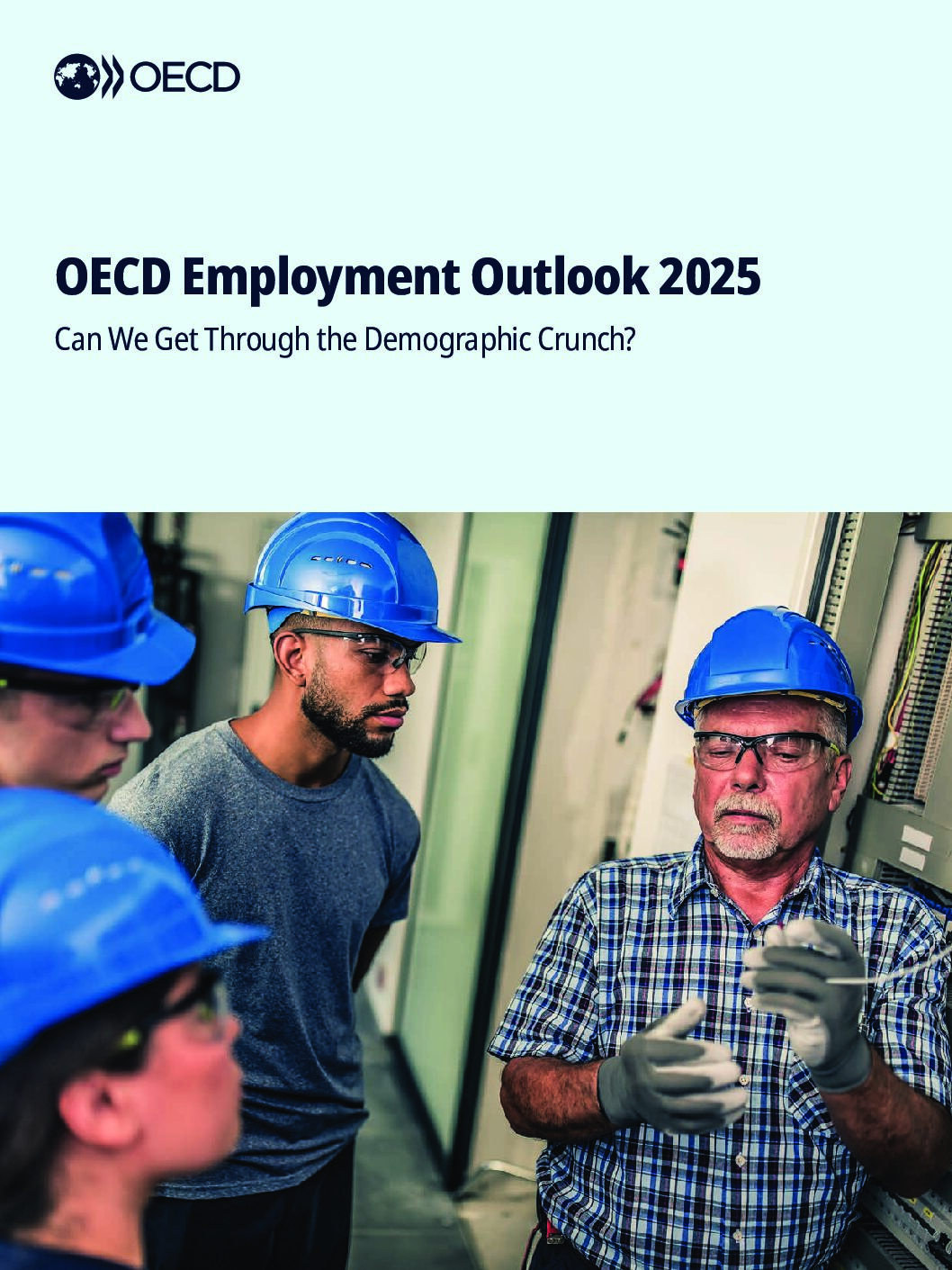
OECD Employment Outlook 2025: Can We Get Through the Demographic Crunch?

By Organisation for Economic Co-operation and Development Over the past two decades, population ageing, increasing statutory retirement ages and rising education levels have led to higher employment rates among workers aged 55 and above in OECD countries. However, progress across countries remain uneven, and employment rates decline rapidly from age 60, such that many workers are leaving employment well before reaching the eligibility age for a pension. To sustain living standards and address structural labour shortages, many countries will need...

The Impact of Job Exposure to Artificial Intelligence on the Korean Labor Market in 2020

By Yeseul Lee & Hyeonjun Hwang This study examines the impact of artificial intelligence exposure on wage and employment outcomes in the Korean labor market in 2020. We propose the Artificial Intelligence Exposure Score (AIES) by integrating 27,921 Korean AI patents from 2011 and 2020 with O*NET task descriptions through Sentence-BERT natural language processing techniques. This approach creates occupation-level exposure measures that reflect Korea-specific innovation patterns. Using data from the Korean Labor and Income Panel Study (KLIPS), we estimate log-linear...

Commuting Time, Flexibility, and Job Security

By Bert van Landeghem, Thomas Dohmen & Arne Risa Hole We analyse workers’ preferences for wages, commute time, working-from-home, flexibility, job security, and social impact using discrete choice experiments from 2022 and 2025 with about 4,000 Flemish employees. Preferences for shorter commutes and flexible schedules remain stable post-pandemic, with substantial willingness-to-pay (WTP) for these attributes. However, WTP for job security declined and the value of socially impactful jobs disappeared by 2025. Latent class analysis identifies distinct groups differing in their...