November 2024

Brazil: Employment & Benefits – 2024 Highlights and 2025 Outlook

By Aline Fidelis This year has brought several significant updates to Brazilian labor law, with key changes focusing on equal pay, digital communication requirements, and debate over the regulation of platform work. These developments highlight the increasing emphasis on gender equality, workplace mental health, and the evolving nature of work in the gig economy. This article outlines the key highlights from 2024 and looks ahead to 2025. Get the report here

Megatrends and the Future of Social Protection

By Organisation for Economic Co-operation and Development Ageing populations, changing labour markets, and climate change are affecting economies and societies across OECD countries. What challenges do these “megatrends” pose for social protection systems? What are the implications of these trends for the coverage, the effectiveness, and – critically – the funding of social protection today and tomorrow? With an eye towards informing future reforms, this report presents a broad stocktaking of population ageing, changing patterns of labour supply, new and emerging...

Pension Liquidity Risk

By Kristy Jansen, Sven Klingler, Angelo Ranaldo & Patty Duijm Pension funds rely on interest rate swaps to hedge the interest rate risk arising from their liabilities. Analyzing unique data on Dutch pension funds, we show that this hedging behavior exposes pension funds to liquidity risk due to margin calls, which can be as large as 15% of their total assets. Our analysis uncovers three key findings: (i) pension funds with tighter regulatory constraints use swaps more aggressively; (ii) in...

Chinese Pension Insurance, Risk Attitudes, and Household Asset Allocation

By Hua Chen, Han Xiao, Yunxiao Guo & Ding Li Optimising household asset allocation is vital for expanding domestic demand in developing countries. This study uses 2017, 2019, and 2021 China Household Finance Survey (CHFS) data to explore pension insurance's effect on asset allocation among Chinese households. Key findings include that higher pension balances encourage investments in riskier assets. Specifically, for every 10% increase in pension account balances, the likelihood of investing in the risk asset market rises by 5%, and...

Estudio para la reducción de las desigualdades de género en el Sistema de Ahorro para el Retiro

Por Comisión Nacional del Sistema de Ahorro para el Retiro A través de un análisis integral de las brechas de género en el Sistema de Ahorro para el Retiro, se diagnosticaron sus principales problemáticas y causas raíz, con el fin de generar políticas públicas para prevenir, corregir y mejorar la situación pensionaria de las mujeres en México. Libro completo aquí

La universalización de la pensión no contributiva en los adultos mayores en México en el sexenio 2018-2024: Un análisis preliminar de sus efectos en la pobreza

Por Katya Rodríguez Gómez  El artículo tiene como objetivo conocer el impacto en la pobreza de los adultos mayores de la universalización de la pensión no contributiva que tuvo lugar durante el sexenio 2018-2024 en México. Igualmente conocer si la implementación de la universalización ha implicado una regresividad en el sistema de pensiones. Se usa como marco de referencia las directrices de la OIT. Se realiza una comparación entre los niveles de pobreza de los adultos mayores por grupos sociales...

Public Pension Funding Index November 2024

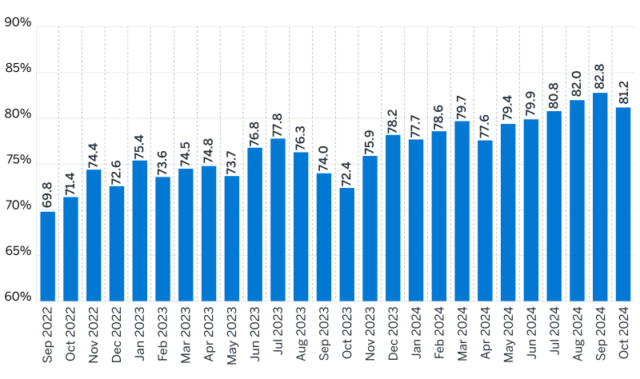
By Rick Gordon & Rebecca A. Sielman October 2024 broke the five-month positive investment return streak for public pensions, prompting a decrease in the estimated funded status of the 100 largest U.S. public pension plans from 82.8% as of September 30, 2024, to 81.2% as of October 31, 2024, as measured by the Milliman 100 Public Pension Funding Index (PPFI). We estimate a calendar year-to-date investment return of 7.6% through the end of October. We have projected the aggregate funded status forward from October...

Global Investor Insights Survey: Pension funds results

By Schroders The Schroders Global Investor Insights Survey analyses the investment perspectives of global financial professionals on a range of topics including macro themes, sustainability and public and private markets. The respondents represent a spectrum of institutions, including pension funds which are the focus of this report.​ The field work was carried out by CoreData Research via an extensive global survey during June–July 2024. The 420 pension fund respondents were split as follows: 28% Corporate DB, 14% Corporate DC, 13% Corporate Hybrid...

Financial Inclusion and Wellbeing

By Abigail Hiller The researchers then use their index to analyze the extent of financial exclusion across the US as well as its effects on households. They find that households in areas with greater financial inclusion tend to have higher incomes and are more likely to own homes and possess real estate wealth. Greater financial inclusion is associated with a higher probability of creating an estate, building intergenerational wealth, and breaking the poverty cycle among married individuals and those with...

Do Pensions Enhance Worker Effort and Selection? Evidence from Public Schools

By Michael Bates & Andrew C. Johnston Why do employers offer pensions? We empirically examine two theoretical rationales, namely that pensions improve worker effort and worker selection. We test these hypotheses using rich administrative measures on effort and output for teachers around the pension-eligibility notch. When workers cross the notch, their effective compensation falls by roughly 50 percent of salary, but we observe no reduction in worker effort or output. This implies that pension payments do not increase effort. As for selection, we find...