December 2025

The working life course of aging LGBTQ workers: An intersectional perspective and a theoretical framework

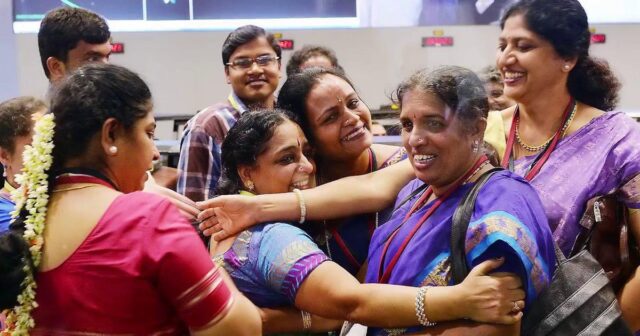
By Raphael Epper-Hattab & Bryndís D Steindórsdóttir  Aging LGBTQ workers represent a unique and diverse population of workers who have struggled with homophobic and transphobic social constructions and a prolonged invalidation of their identities, stemming from periods when social exclusion and discrimination dominated their lives. These challenges have imposed multifaceted marginalization not only on their life patterns but also on their occupational trajectories and interpersonal relationships at work. Against this backdrop, drawing attention to characteristics of the occupational careers of...

Japan’s Aging Workforce: Determinants and Outlook

By Sagiri Kitao & Nozomi Takeda This paper examines recent trends in the Japanese labor market, with a particular focus on the elderly workforce. Japan's elderly employment rates are notably high compared to other OECD countries and have increased significantly over the past two decades. To investigate the factors that affect the employment of old individuals, we develop a structural life-cycle model with consumption-saving decisions and endogenous labor supply in both intensive and extensive margins. The model is calibrated to...

November 2025

The Cost of Waiting for Nationality: Impact on Immigrant’s Labor Market Outcomes in Spain

By Yanina Domenella In this paper, I examine the impact of administrative delays in obtaining Spanish nationality on the long-term labor market outcomes of legal immigrants. Using Social Security data from 2006 to 2019 and an instrumental variable strategy, I find that longer delays in nationality acquisition result in significantly lower accumulated earnings over a ten-year period, driven by both lower wages and fewer days worked. Specifically, one additional year of delay reduces accumulated earnings over 10 years by 3.8...

The Aftermath of the Pandemic Retirement Boom

 By Lei Fang, Paul Mohnen & David Lee The labor force participation rate experienced a sharp drop during the pandemic, from which it has yet to fully recover. This shortfall can be attributed to a persistent decline in labor force participation among people aged 55 and older. In this blog post, we show that excess retirements relative to prepandemic and higher population shares of retirement-age individuals have both contributed to the decline in the labor force participation rate of older...

Precarious, Poorly Paid, and Unprotected: The ILO’s Definition of the Informal Economy

The International Labour Organization (ILO) defines informal employment as work “in small or unregistered businesses and undeclared jobs within registered firms,” under a definition adopted by the 17th International Conference of Labour Statisticians in 2013. While such jobs often provide quick income and greater flexibility, they are usually unstable, poorly paid, and lack basic protections such as health insurance or pensions. The ILO notes that informal employment is not limited to unregistered businesses. It can also occur within formal companies when...

Millennial Small Biz Owners Most Ready to Offer a Retirement Plan

There is a generational gap and gender divide among small business owners when it comes to retirement plan readiness and the perceived importance of offering a plan, according to a new survey. The Capital Group, in partnership with C&C Multicultural, conducted an online survey from April 4–30, 2025, among 1,000 U.S. small business owners (and full-time employees) to gather their views on their outlook and readiness to offer retirement benefits and what they believe are the most important aspects to...

Determinants of financial inclusion among women-owned enterprises: a case study of the informal sector

By Faizan Khan Sherwani, Sanaa Zafar Shaikh, Shilpa Behal & Mohd Shuaib Siddiqui The purpose of this paper is to analyse the determinants of financial inclusion among women-owned informal enterprises in India. The study is based on a primary survey of 321 informal enterprises. The data has been collected through a structured questionnaire. A chi-square test has been used to examine the significant association between the characteristics of informal enterprises and their owners and financial inclusion. A logistic regression model...

October 2025

Rising birth rates no longer tied to economic prosperity

Fertility rates began falling in most of the world starting in the last century. By the 1970s, the U.S. had dipped under the replacement rate of 2.1 children per woman, a trend that has continued on a declining slope. In her new working paper, “The Downside of Fertility,” Claudia Goldin, the Henry Lee Professor of Economics, takes a deeper dive into the cultural changes around gender that are driving down fertility rates. The economic historian and 2023 Nobel laureate introduced a model in a previous...

Kenya’s pension paradox: Growth amid low coverage

The third edition of the East African Pensions Conference and Expo opened in Nairobi on Thursday with a call to widen Kenyan’s pension coverage and curb old age poverty. Hosted by the Nation Media Group (NMG), the annual event has become the region’s platform for policy shifts to increase the number of East Africans saving for a pension and boost the value of payouts at retirement. Official data show more than 80 percent of senior citizens work for basic items, raising...

Over 7,000 Mozambicans working in South Africa will start receiving pensions, social security benefits in Mozambique

The Mozambican Minister of Labour, Ivete Alane, has announced that as of next year over 7,000 Mozambican nationals working in South Africa will start receiving their pensions in the country. According to Alane, who was speaking on Tuesday at the opening ceremony of the National Meeting on Migrant Labour, which is taking place in Macaneta, Marracuene district, southern province of Maputo, the workers will receive their social security benefits in the country, without worrying about resorting to South Africa. “The social...