September 2025

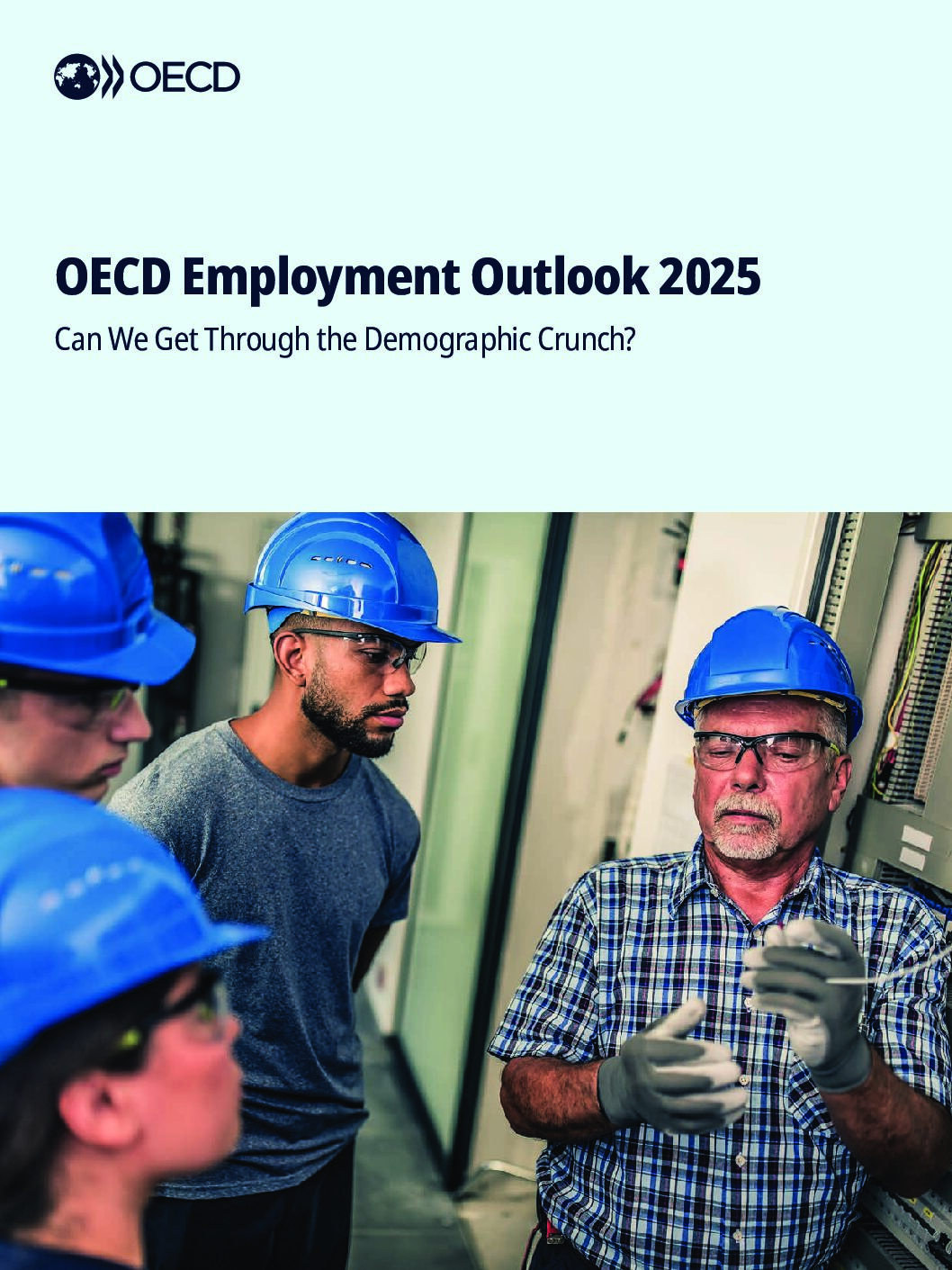
OECD Employment Outlook 2025: Can We Get Through the Demographic Crunch?

By Organisation for Economic Co-operation and Development Over the past two decades, population ageing, increasing statutory retirement ages and rising education levels have led to higher employment rates among workers aged 55 and above in OECD countries. However, progress across countries remain uneven, and employment rates decline rapidly from age 60, such that many workers are leaving employment well before reaching the eligibility age for a pension. To sustain living standards and address structural labour shortages, many countries will need...


The Impact of Job Exposure to Artificial Intelligence on the Korean Labor Market in 2020

By Yeseul Lee & Hyeonjun Hwang This study examines the impact of artificial intelligence exposure on wage and employment outcomes in the Korean labor market in 2020. We propose the Artificial Intelligence Exposure Score (AIES) by integrating 27,921 Korean AI patents from 2011 and 2020 with O*NET task descriptions through Sentence-BERT natural language processing techniques. This approach creates occupation-level exposure measures that reflect Korea-specific innovation patterns. Using data from the Korean Labor and Income Panel Study (KLIPS), we estimate log-linear...

Commuting Time, Flexibility, and Job Security

By Bert van Landeghem, Thomas Dohmen & Arne Risa Hole We analyse workers’ preferences for wages, commute time, working-from-home, flexibility, job security, and social impact using discrete choice experiments from 2022 and 2025 with about 4,000 Flemish employees. Preferences for shorter commutes and flexible schedules remain stable post-pandemic, with substantial willingness-to-pay (WTP) for these attributes. However, WTP for job security declined and the value of socially impactful jobs disappeared by 2025. Latent class analysis identifies distinct groups differing in their...

2025 Read on Retirement survey

By BlackRock Workplace savers are feeling more confident about retirement—but plan sponsors aren’t on the same page. As the gap in outlook widens, advisors have a critical role to play. Uncover the insights shaping this divide. Navigating uncertainty and a growing divide Saver confidence is up but fragile. This year’s dip underscores how closely confidence tracks with market volatility. And while savers feel increasingly sure, only 38% of employers believe the majority of their employees are truly on track—a record low. The...

Social infrastructure law in the UK, EU and US

By Ewan McGaughey What should be the goals of social infrastructure, and the best means to achieve them? Social infrastructure is a new term to describe the welfare state, whose conceptual foundations were laid in Lord Beveridge’s Report, Social Insurance and Allied Services (1942). A good government, said Beveridge, should tackle five evil ‘giants’, namely disease, ignorance, squalor, idleness, and want. These could be overcome with a universal free health service, public education, public housing, full employment, and income insurance...

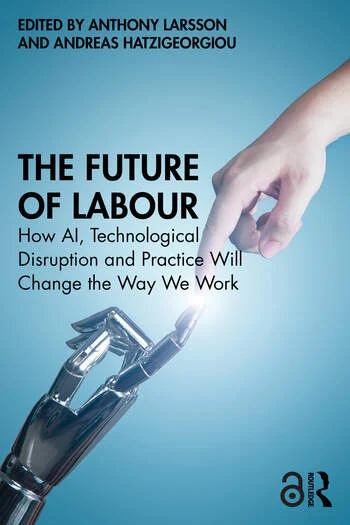
The Future of Labour: How AI, Technological Disruption and Practice Will Change the Way We Work

By Anthony Larsson & Andreas Hatzigeorgiou The Future of Labour: How AI, Technological Disruption and Practice Will Change the Way We Work is an anthology that offers a forward-looking exploration of how artificial intelligence (AI), digitalisation and technological transformation are reshaping the future of work. Through a series of studies conducted by scientists and industry professionals, this volume takes a deep dive into many of the issues related to new policies, AI and the digital transformation’s anticipated impact on the labour market....

As global longevity increases, how do we ensure workers and economies thrive?

Since becoming CEO of Mercer, I’ve travelled to more than 20 countries and met with C-suite executives and policy-makers worldwide. One topic they consistently bring up – and can universally relate to – is increasing longevity. That may surprise most people, but it doesn’t shock me. For years, Mercer has been following statistics on longevity. By 2050, the number of individuals aged 60 and older is projected to reach 2.1 billion – nearly double today’s figure. The rise is driven by significantly longer life...

How Africa is grappling with an impending aging crisis

Across Africa, a stunning success story has quietly taken hold: Decades of progress have begun delivering a wave of longevity that promises to reshape the demographics of the continent. But as lifespans lengthen and villages begin to fill with the old, pensions and social safety nets are minimal, medical care is lacking and routine problems of age are so commonly unaddressed that cataracts turn to blindness and minor infections end in death. Longer lives, time and again, come with more...

US. Big Change To Workplace Investing

Ordinary Americans are about to see the biggest change to retirement investing perhaps since 401(k) plans replaced traditional pension plans. President Trump’s executive order permitting private equity and private credit plans, presumably along with crypto investments, to be included in qualified plans will democratize the investing world—at least in theory. For at least a decade, prominent people like former Blackstone No. 2 executive Hamilton James have made this argument: that since 401(k) investors in their 20s and 30s were locking...

August 2025

EU labour market – quarterly statistics

By European Union In Q1 2025, 197.9 million persons in the EU were employed. The EU seasonally adjusted employment rate for people aged 20-64 years stood at 76.1%, up from 76.0% in Q4 2024 as shown in Figure 1. For the same period, the seasonally adjusted total labour market slack in the EU, which is the unmet need for work, amounted to 23.6 million persons, which represented 10.9% of the extended labour force in Q1 2025, up from 10.8% in Q4 2024. Regarding its main component,...