August 2025

Modeling pension reform: The World Bank’s pension reform options simulation toolkit

By World Bank Group Today's pension policies can affect retirement incomes and the public finances for decades to come. Retirement income systems that are affordable today, will often prove unsustainable in the future, given the twin pressures of demographic aging and the maturing of pension schemes. The World Bank's pension reform options simulation toolkit (PROST) models pension contributions, entitlements, system revenues, and system expenditures over a long time frame. The model is designed to promote informed policymaking, bridging the gap between...


Shocks to Income in a Lifecycle Model: An Undervalued Risk

By Sebastian Gomez-Cardona Lifecycle models are increasingly popular in financial planning. However, they often overlook the significant risk posed by income shocks-such as career disruptions, economic downturns, or technological advancements-that can affect financial plans, including retirement. This paper explores the role these shocks have on shaping saving rates, financial capital accumulation, and asset-allocation decisions, with particular attention to the possible relationship between income shocks and equity returns. By integrating industry-specific income risk into asset allocation decisions, this research provides practical...

Financial Literacy and Educator Behaviour: Insights from a Local Municipality in KwaZulu-Natal, South Africa

By Anrusha Bhana & Nkosinathi Princ Jali There is a substantial lack of financial literacy among educators, especially in emerging economies, which can influence personal and professional financial behavior. This study assessed whether financial literacy challenges influence high school educators' financial decision-making and behavior. An empirical study employing quantitative methodology assessed the lifestyle spending among high school educators and identified specific areas of financial literacy challenges and limitations. Data was collected randomly from a sample size of 246 out of...

El reto generacional en el mercado laboral: envejecimiento, escasez de talento y cualificación.

Por Randstad Research En las próximas dos décadas, los mercados laborales afrontarán un triple desafío que ya empieza a manifestarse. A lo largo del estudio, se verá que no en todos los países la situación de partida es la misma en cuanto a la escasez de talento y al reemplazo generacional. Pero en todos ellos se enfrentarán a la necesidad de cubrir millones de puestos de trabajo (de aquellos trabajadores que se jubilaran en los próximos años) y, de forma simultánea, al reto de incorporar...

Latinoamérica sin hijos: los desafíos de una región que envejece rápido

Por Carlos Cuevas América Latina esta experimentando una transición demográfica caracterizada por un proceso de envejecimiento acelerado,  lo que implica repensar los sistemas de salud y pensión, pero también la necesidad de políticas natalistas y de cuidado acordes a los tiempos que se avecinan. Solo dos países latinoamericanos superan el umbral mínimo necesario para el reemplazo generacional, que es de 2, 1 hijos por mujer, y aseguran la reposición de mujeres en edades reproductivas: Paraguay (2,4) y Bolivia (2,6). La globalización que...

Cuidados de la vejez y oferta laboral femenina en América Latina

Por Elisa Failache Mirza, Noemí Katzkowicz, Fabrizio Méndez Rivero, Cecilia Parada Larre B & Martina Querejeta R. El envejecimiento poblacional se posiciona como un importante cambio demográfico. Este trabajo analiza las características de los adultos mayores en situación de dependencia, las estrategias de cuidado y el perfil de personas cuidadoras para Chile, Colombia, Paraguay, El Salvador y Uruguay. La población en situación de dependencia funcional es mayoritariamente femenina y mayor de 75 años. Entre un 54 % y un 70...

Pensions in Aging Asia and the Pacific: Policy Insights and Priorities

By Rafal Chomik, Philip O’Keefe & John Piggott This paper looks at how pension systems across Asia and the Pacific can overcome common challenges of low contributory coverage, inadequate social pensions, and failure to include the informal sector. Pension systems in the region also exhibit gender inequities, a lack of policy flexibility and attention to labor incentives, and underdeveloped governance. The paper reviews the structure and performance of regional pension systems, and makes proposals for an expanded role for social pensions...

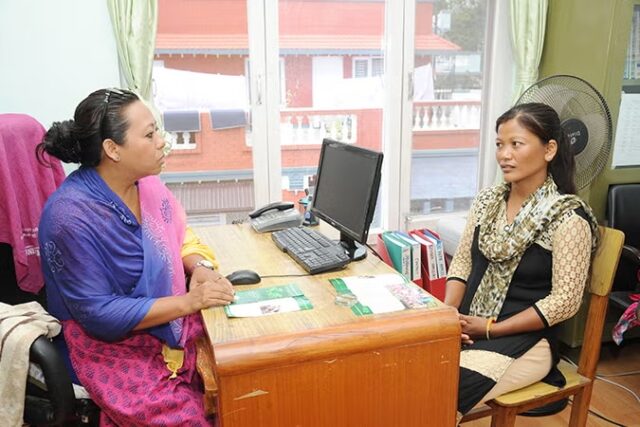
Reforming the Pension System in Nepal: Sustainability, Adequacy, and Coverage

By Dilip Raj Paudel Pension systems ensure financial security during retirement, especially in developing countries like Nepal. The sustainability, adequacy, and coverage of pension systems are critical for ensuring social security after retirement, particularly in developing countries like Nepal. This study provides a comprehensive analysis of Nepal's pension framework, examining contributory and non-contributory schemes to identify their strengths, limitations, and areas for reform. Utilizing a mixed-method approach, primary data from 384 respondents and secondary sources, including reports from international organizations,...

The Causal Influence of Pension on the Participation of Older Workers in the Ghanaian Labour Market

By George Domfe, Kwadwo Opoku & Antoinette Tsiboe-Darko Population ageing has stirred up policy discourse on pension coverage in developing economies. While in most of these countries, a smaller proportion of older persons receive pensions in the form of regular payments from the state, a considerable proportion of them engage in active work to maintain their livelihood. These descriptions are typically true of Ghana. However, it remains unclear in the Ghanaian literature whether the absence of a pension is a...

Economic and Distributional Effects of Demographic Shifts: Evaluating Pay-as-You-Go and Fully Funded Pension Schemes Based on the Greek Experience

By Zois Gerasimos Katsimigas & Christos Papatheodorou This paper examines economic and distributional consequences of demographic shifts by comparing pay-as-you-go (PAYG) and fully funded (FF) pension schemes in a macroeconomic framework, using Greece as a case study. Facing acute ageing and population decline, Greece provides a unique context to assess the performance of these schemes. We develop a post-Keynesian stock-flow consistent (SFC) model calibrated to the Greek economy to simulate the macroeconomic and distributional outcomes of both schemes under projected...