February 2026

Public Pensions and the Strategic Timing of Formal Employment

  By Diego Vera Cossio, Mariano Bosch, Jonathan M. Leganza, Tatiana Mojica & María Laura Oliveri We study how public pensions impact lifecycle labor supply decisions. Our analysis centers on pension eligibility rules in Ecuador. We first use administrative data to document and unpack retirement spikes at eligibility ages. Next, we use survey data and regression discontinuity to investigate whether eligibility rules influence earlier-inlife decisions about when to work formally versus informally. We find discontinuous increases in transitions to formal employment...

January 2026

US. Congress Racing to Avoid Shutdown: What It Means for Retirement Plans

President Trump and Senate Democrats reportedly reached a funding agreement on Thursday night to avoid a partial government shutdown, but a lot of elements need to fall into place in a very short period to avoid a shutdown. According to Politico, Trump and the Democrats have agreed to separate out the Department of Homeland Security (which includes Immigration and Customs Enforcement) from the larger spending bill moving through Congress, and approve that bill, along with a short-term continuing resolution to...

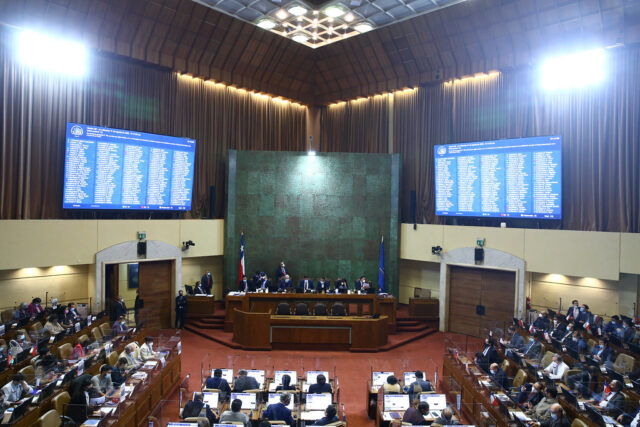
Chile. Senate Advances Bill to Prevent Convicted Individuals from Receiving Survivor Pensions for Femicide and Domestic Violence

The Senate’s Commission on Women and Gender Equity has unanimously approved a project that amends Article 5 bis of Decree Law No. 3,500 of 1980. This change aims to ensure that individuals convicted of crimes such as femicide and domestic violence do not benefit from the survivor pension of their victims. This initiative, currently in its second legislative process, seeks to establish a legal framework for the correct application and full functionality of the law, according to the Senate’s bulletin. The...

December 2025

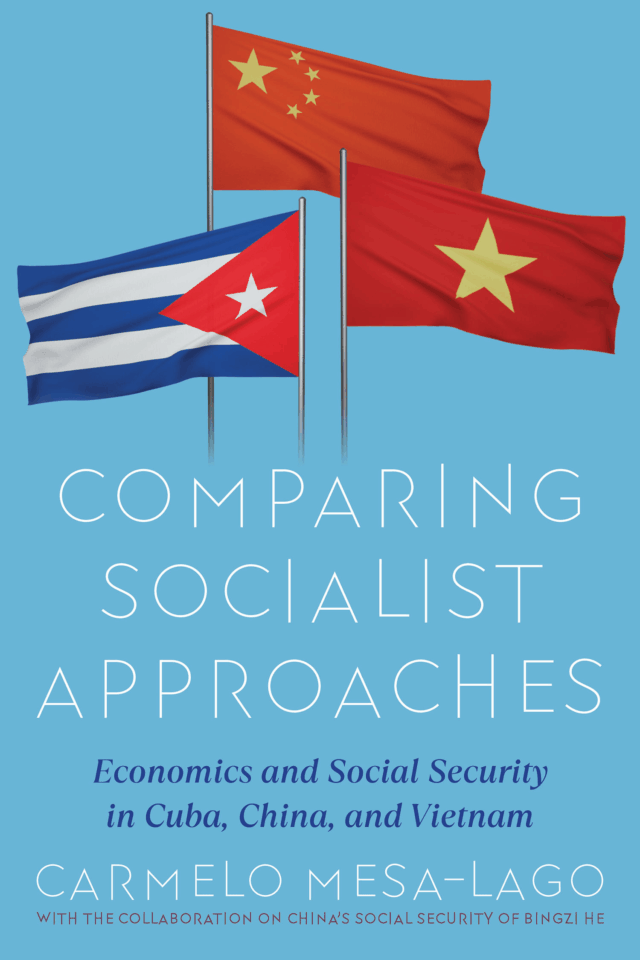
Comparing Socialist Approaches: Economics and Social Security in Cuba, China, and Vietnam

By Carmelo Mesa-Lago In Comparing Socialist Approaches, Carmelo Mesa-Lago examines the two main socialist models across Cuba, China, and Vietnam to compare central planning and socialist markets. Under the Cuban central plan, large state enterprises have been unable to generate economic growth, even with mild structural market reforms and a small controlled private sector. In the Sino-Vietnamese model of a socialist marketplace, dynamic private enterprises of all sizes, together with large state enterprises, operate under a decentralized plan with state regulation and...

Social Security Reforms and Inequality among Older Workers in Spain

By Cristina Bellés-Obrero, Manuel Flores, Pilar Garcia-Gomez, Sergi Jimenez-Martin & Judit Vall Castelló This chapter studies social security reforms and trends in inequalities among older workers over the last decades in Spain. Its main goal is to analyze the redistributive impact of the various pension reforms on older income inequality. Compared to the rules in 1985, recent pension reforms have led to an average increase on Social Security Wealth of approximately 18,000€ for men and 15,000€ for women. This represents...

Labor Supply and Savings Responses to Increasing the Pension Eligibility Age in South Korea

By Janghyeok An, Devon Gorry & Jonathan M. Leganza We study how South Koreans responded to an increase in the full pension eligibility age. Using a regression discontinuity design, we document the causal effects of the change on several potential margins of adjustment. We find clear evidence of delayed benefit claiming, consistent with studies in other settings. However, we find little to no statistical evidence of changes in labor supply, in contrast with previous literature. We also find no changes...

November 2025

How to Understand Pension Systems and Social Security? The ABCs of Pensions in Latin America and the Caribbean

By Waldo Andres Tapia Troncoso & Daniel Gamboa Rinckoar Pension systems are fundamental pillars of both present and future well-being for populations in any society. But what exactly are they, and how do they work in Latin America and the Caribbean? In this article, we break down the "ABCs"—the essential basics you need to understand pension systems in the region. We also provide a guide to their structure, how they function, and the challenges they face in the Latin American and...

September 2025

India’s gig economy expands rapidly, government steps up worker welfare measures

India’s fast-growing gig and platform workforce is reshaping the world of work, creating new opportunities in urban and semi-urban centres while also posing significant challenges around social security and worker protection. With its half-a-billion-strong labour force, the world’s youngest demographic profile, rapid urbanisation, and widespread smartphone penetration, the country is emerging as a global hub for gig-driven transformation, according to official data. The gig economy, broadly defined as a system where individuals earn outside traditional employer–employee relationships, has seen strong growth...

August 2025

China Is Trying to Expand Its Social Safety Net. Yet Many Chinese Are Worried.

As of Sept. 1, all employers in China must contribute to benefits for their employees, to support their pensions, medical care, maternity leave and more. That should come as good news to many ordinary Chinese, given how threadbare China’s social safety net has been. But rather than celebrating, many in China have reacted with worry and frustration. Small business owners have said that their labor costs will skyrocket. Workers have speculated that their bosses will lay them off or lower their...

Financial regret at older ages and longevity awareness

By Abigail Hurwitz & Olivia S. Mitchell To investigate financial regret among older Americans, we conduct a controlled experiment in the Health and Retirement Study. We document that many older people regret not having bought longevity protection or long-term care insurance, as well as having retired and claimed social security benefits too early. This is especially true for women, Black, and less wealthy older individuals. Additionally, we find that informing participants about objective survival probabilities boosts regret by 43% regarding not...