September 2025

Commuting Time, Flexibility, and Job Security

By Bert van Landeghem, Thomas Dohmen & Arne Risa Hole We analyse workers’ preferences for wages, commute time, working-from-home, flexibility, job security, and social impact using discrete choice experiments from 2022 and 2025 with about 4,000 Flemish employees. Preferences for shorter commutes and flexible schedules remain stable post-pandemic, with substantial willingness-to-pay (WTP) for these attributes. However, WTP for job security declined and the value of socially impactful jobs disappeared by 2025. Latent class analysis identifies distinct groups differing in their...

Boosting Retirement Income through Dynamic Withdrawals

By Ravi Saraogi Dynamic withdrawal strategies, extensively researched internationally, remain underexplored in India. This paper bridges this significant research gap by rigorously evaluating popular dynamic withdrawal methods using Indian data. Employing simulations based on historical equity, debt and inflation data from the Indian market, we compare 10 different adaptive and dynamic withdrawal strategies. The study demonstrates that dynamic strategies can improve withdrawals and sustainability compared to static withdrawal methods. However, this improvement comes at a significant cost of volatility in...

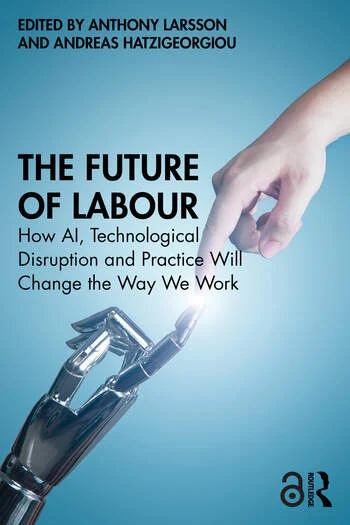
The Future of Labour: How AI, Technological Disruption and Practice Will Change the Way We Work

By Anthony Larsson & Andreas Hatzigeorgiou The Future of Labour: How AI, Technological Disruption and Practice Will Change the Way We Work is an anthology that offers a forward-looking exploration of how artificial intelligence (AI), digitalisation and technological transformation are reshaping the future of work. Through a series of studies conducted by scientists and industry professionals, this volume takes a deep dive into many of the issues related to new policies, AI and the digital transformation’s anticipated impact on the labour market....

Mortality and the Provision of Retirement Income

By Organisation for Economic Co-operation and Development This report analyses the development of mortality assumptions to build mortality tables to better protect retirement income provision. Mortality assumptions are necessary to ensure the sustainability of lifetime incomes. It explores considerations and traditional approaches for developing mortality tables, as well as provides an international overview of longevity trends and drivers over the last several decades, including the impact of the COVID-19 pandemic. The report also details the standard mortality tables developed across...

The Need For Regulation Of Private Equity: Evidence From De-Spac Transactions

By Sureyya Burcu Avci, Cindy A. Schipani & H. Nejat Seyhun In this Article, we examine whether regulation is needed to protect investors in private equity. We do this by analyzing the performance of de-SPAC transactions that solicited private investment. These private investments in public equity are known as PIPEs. Because PIPE returns are publicly available, we are empirically able to determine whether the limited PIPE investors are getting a fair deal in these investments. We find that de-SPAC investors...

Integrating Risk Management into Personal Financial Decisions

By Navin Kumar Effective personal financial planning demands navigating a landscape of uncertainty. This chapter explores how integrating risk management practices into personal finance decisions empowers individuals to achieve their financial goals. We begin by outlining the contemporary challenges individuals face and the importance of proactive planning. The chapter then delves into the concept of risk in personal finance, categorizing potential threats and their impact on financial stability. We highlight the benefits of a risk management approach, emphasizing its role...

Digital Pension Systems, Economic Growth, and Alleviation of Elderly Poverty

By Xue Wu Based on panel data from 31 provinces and municipalities in China (excluding Taiwan, Hong Kong, and Macau) from 2011 to 2023, this study empirically examines the relationship among the digital pension system, economic growth, and the alleviation of elderly poverty. The empirical analysis yields the following findings: (1) A well-developed digital pension system helps to alleviate elderly poverty; (2) Economic growth significantly mitigates elderly poverty; (3) The digital pension system serves as a mediating factor in the effect...

Recuperación del Empleo en Chile: Avances, desafíos y brechas persistentes

Por Ministerio del Trabajo y Previsión Social, Subsecretaría del Trabajo & Unidad de Estudios El mercado laboral en Chile ha mostrado avances significativos en su recuperación tras la pandemia, aunque persisten desafíos importantes en la inserción de algunos sectores rezagados. La recuperación del empleo ha sido impulsada principalmente por el crecimiento del trabajo formal y femenino. Mientras que la ocupación informal ha caído, afectando la absorción de trabajadores con menores niveles educativos. Libro completo aquí

Pensiones en México: problemas contemporáneos

Por María Ascensión Morales Ramírez & Diana Beatriz González Carvallo La creación de los sistemas de pensiones en el siglo XIX ha constituido uno de los más grandes logros, porque resolvió un problema esencial de las personas trabajadoras: los ingresos en la etapa más vulnerable de su vida. Con ellos, la vejez se reconoció como un asunto de Estado, pues aunque en forma directa afectaba al trabajador, indirectamente perjudicada a la sociedad; por ello, la seguridad social ha estado dominada...

Pensiones en Latinoamérica: Claves para atraer, retener y cuidar al empleado

Por Gonzalo Vértiz Díaz El panorama de los sistemas de pensiones en América Latina está evolucionando rápidamente. En las últimas décadas, hemos sido testigos de una transición constante a esquemas de contribución definida (CD), a medida que gobiernos y empleadores buscan hacer que los sistemas de jubilación sean más sostenibles frente al envejecimiento de la población. En América Latina, muchos países enfrentan una combinación de desafíos: expectativas de vida en aumento, sistemas de seguridad social presionados y altos niveles de informalidad laboral...