April 2022

Japan eyes expansion of workers’ insurance scheme

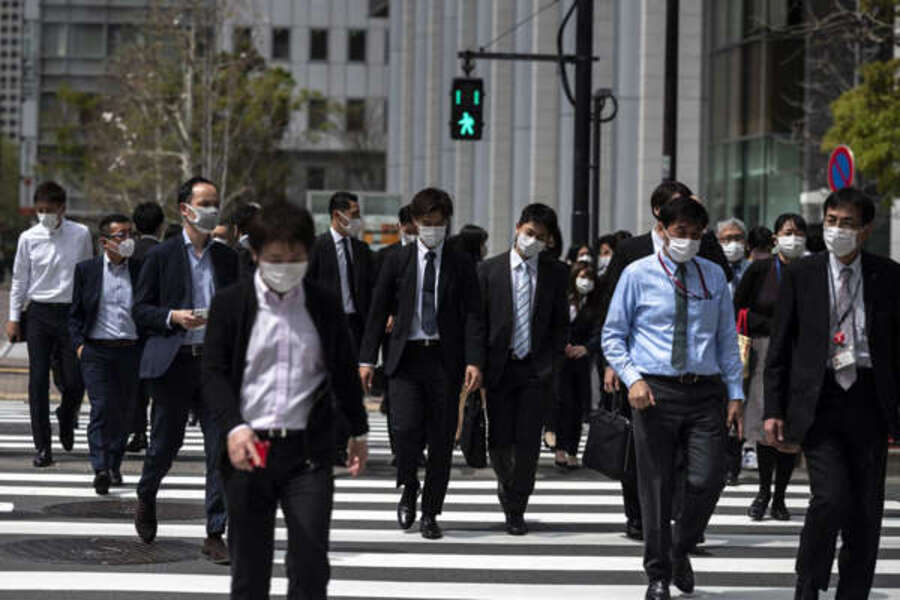
The Japanese government is reportedly discussing plans to expand the coverage of its employee pensions and health insurance programs to all workers in the country. The proposal will be initially handled by a government panel of experts on Japan’s social security system for all generations, The Japan Times reported. In June, Tokyo plans to decide on the direction for the insurance system covering all workers and have it reflected in its honebuto, or basic economic and fiscal policy guidelines. This follows the...


US. Mexican immigrants have to work longer due to inadequate Social Security benefits, study finds

Mexican immigrants are a critical part of the American workforce, but they are also financially vulnerable. As Emma Aguila explains in new research she co-authored in the Journal of Pension Economics and Finance, Mexican immigrants face greater obstacles in securing social security benefits and therefore have to work later into life. Equally important, Aguila and her colleagues, Zeewan Lee and Rebeca Wong, found Mexicans who do receive those benefits are more likely to rely on them compared to non-Hispanic white populations. However, an...

Underfunded Public Sector Pension Plans, Social Security Participation, and the Retirement Decisions of Public Employees

Underfunded Public Sector Pension Plans, Social Security Participation, and the Retirement Decisions of Public Employees

By Leslie E. Papke I analyze the effects of public pension parameters, Social Security coverage, and state pension fund sustainability on the retirement of public employees. I use data from the Health and Retirement Study, including personal early and normal retirement eligibility and state of residence. I develop a state-level measure of effective public pension plan sustainability that reflects both the degree of public plan underfunding and a state’s ability to fund the plan with its own resources. Using the...

Kenya. RBA forms new entity to handle post retirement medical schemes

The Retirement Benefits Authority (RBA) has formed a stand-alone body to handle post-retirement medical funds. Dubbed Post-Retirement Medical Funds (PRMFs) Regulations, the entity will register and regulate retirement medical schemes without the need to be entrenched in pension funds. This regulatory move is aimed at enabling more people to access quality healthcare services after retirement. Previously, such funds were operated by pension schemes as a special fund since their introduction in 2018. This means that members whose pension schemes did not wish to explore the...

Strategic partnerships and ICT solutions in extending social security coverage in Africa

By ISSA Through strategic partnerships and modern information and communications (ICT) solutions, member institutions of the International Social Security Association (ISSA) are strengthening the scope, extent, and adequacy of social security coverage. Across Africa, the quasi totality of countries has social security schemes and/or programmes theoretically covering most of the population. The policy discourse on extending social security coverage during the last decades culminates in the enactment of new legislation to expand the scope of coverage and reforms on existing schemes...

The economy-wide effects of mandating private retirement incomes

By George Kudrna This paper investigates the economy-wide effects of mandating private (employment-related) pensions. It draws on the Australian experience with its Superannuation Guarantee legislation which mandates contributions to private retirement (superannuation) accounts. Our key objective is to quantify the long-run implications of alternative mandatory superannuation contribution rates for household economic decisions over the life cycle, household welfare, and macroeconomic and fiscal aggregates. To that end, we develop a stochastic, overlapping generations (OLG) model with labor choice and endogenous retirement,...

March 2022

Fiscal Challenges and Inclusive Growth in Ageing Societies. OECD Economic Policy Paper

By OECD This paper was prepared in support of Japan’s G20 Presidency. It takes stock of ongoing and projected population ageing across G20 economies and its far-reaching implications for economic growth, productivity, inequality within and between generations and the sustainability of public finances. Rising old-age dependency ratios will put the financing of adequate pensions, health and long-term care under high pressure. The paper provides recommendations on policy responses to address ageing-related challenges and highlights good practices. A comprehensive approach is needed,...

Ghana. 10 Million workers in the informal sector not covered by social security- SSNIT

Ghana. 10 Million workers in the informal sector not covered by social security- SSNIT

The management of the Social Security and National Insurance Trust (SSNIT) has met with stakeholders to find ways to expand and deepen the coverage of the basic national social security scheme for the self-employed. Read also President Sisi approves 13% increase in pensions: Egypt’s PM This is because 10 million informal workers in the country are not covered by any social security. During a speech at the event, the Minister of Employment and Labor, Ignatius Baffour Awuah, praised the SSNIT leadership for...

Malaysia needs an all-encompassing national pension system

AS Malaysia joins the rest of the world in becoming an ageing society, it has become imperative for the government to address the challenges that increasing life expectancy pose to social security arrangements. Increasing life expectancy brings with it sweeping changes in population needs and capacities. The most evident sign is the strain on the pension system as the number of people requiring protection and support is on the rise. There are growing concerns that many are not prepared for a...

January 2022

In a Highly Indebted Economy: Security Issues for the Asset-based China’s Reform and the Financial System

By Tianyong Zhou Since the start of the 21st century, all major global economies have been experiencing a shift to a model of low consumption, low interest rate, low inflation, low growth and high debt. China is no exception. This article argues that in the high-indebtedness economic model, the proportion of committed and guaranteed debt service credit is decreasing, while the proportion of asset-backed credit corresponding to debt is on the rise; and with respect to currency stability, the role...