December 2025

Dynamic asset allocation on the rise as pension plans face an era of controlled disorder

By Prof. Amin Rajan This question has come to the fore as the swirling clouds of geopolitical events have elevated the role of dynamic asset allocation (DAA). They have challenged the timehonoured primacy of strategic asset allocation (SAA), with fixed weights for different asset classes with long-term return targets. This rigid set-it/forget-it approach worked well in the longest bull run after the 2008 global financial crisis. Since 2022, however, concerted steep rises in interest rates by key central banks to curb...
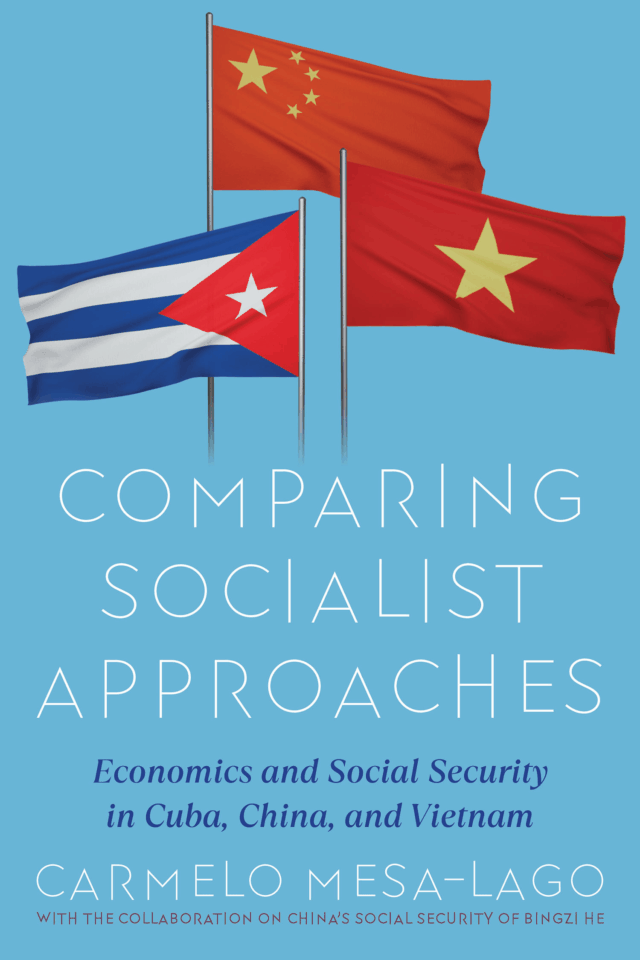
Comparing Socialist Approaches: Economics and Social Security in Cuba, China, and Vietnam

By Carmelo Mesa-Lago In Comparing Socialist Approaches, Carmelo Mesa-Lago examines the two main socialist models across Cuba, China, and Vietnam to compare central planning and socialist markets. Under the Cuban central plan, large state enterprises have been unable to generate economic growth, even with mild structural market reforms and a small controlled private sector. In the Sino-Vietnamese model of a socialist marketplace, dynamic private enterprises of all sizes, together with large state enterprises, operate under a decentralized plan with state regulation and...

State of OECD Pension Funds’ Climate Transition: Insights and recommendations from the Net Zero Finance Tracker

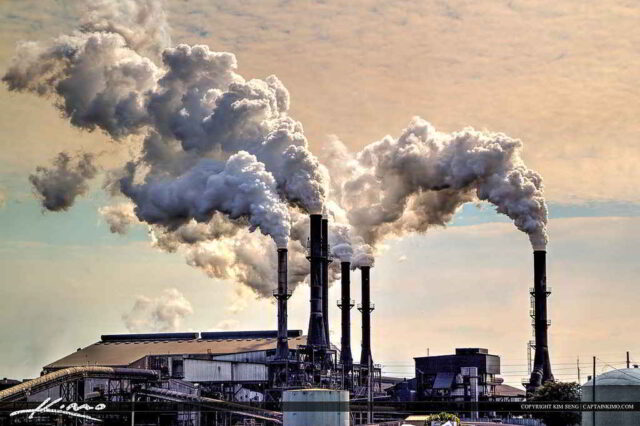
By Frederick Fabian, Claris Parenti, Maddy Taylor & Valerio Micale Unlike other institutional investors, which often focus on short-term performance, pension providers have a fiduciary duty to address long-term systemic issues and act in their beneficiaries’ best interests. In many jurisdictions, this obligation includes setting credible climate targets, implementing internal changes to strategy, governance, and process, and actively supporting the decarbonization of the real economy. Pension funds’ role in financing the climate transition is drawing sharper focus as the limits of...

Heterogeneous Institutional Investor Response to Firm Environmental Regulatory Risk

By Chunxiao Lu, Yuyang Zhang & Linxiang Ma This paper investigates whether institutional investors incorporate firm-level environmental regulatory risk into their portfolio decisions. We document substantial heterogeneity across investor types in their responses to changes in firm-level environmental regulatory risk. Long-horizon investors, such as banks, insurance companies, and pension funds, tend to tilt their portfolios toward stocks with higher environmental regulatory risk. In contrast, short-horizon investors, including investment advisors and mutual funds, reduce their holdings of these firms. These opposing...

Social Security Reforms and Inequality among Older Workers in Spain

By Cristina Bellés-Obrero, Manuel Flores, Pilar Garcia-Gomez, Sergi Jimenez-Martin & Judit Vall Castelló This chapter studies social security reforms and trends in inequalities among older workers over the last decades in Spain. Its main goal is to analyze the redistributive impact of the various pension reforms on older income inequality. Compared to the rules in 1985, recent pension reforms have led to an average increase on Social Security Wealth of approximately 18,000€ for men and 15,000€ for women. This represents...

Public pensions and family dynamics: Eldercare, child investment, and son preference in rural China

By Naijia Guo, Wei Huang & Ruixin Wang Using variations in the timing of the New Rural Pension Scheme (NRPS) across rural Chinese counties, we examine its effects on eldercare mode, child investment, and son preference. Our findings are three-fold: (1) After the introduction of NRPS, married sons are less likely to live with and provide care for their parents, while married daughters show no significant change in their caregiving behavior; (2) Parents reduce the brideprice for their sons but not the dowry...

Lost Pensions, Lost Pensioners: Is a National Registry of Pension Plans the Answer?

By David P. Blake & John A. Turner In the United States and other countries, many retirees face great difficulties in tracing their former employers in order to apply for a pension to which they are entitled. At the same time, pension plans have trouble tracking down pensioners with whom they have lost contact. The problem of lost pensions and lost pensioners was also prevalent in the United Kingdom, but in 1991 the British government established a national registry of...

European Financial Ecosystems. Comparing France, Sweden, UK and Italy.

By Stefano Caselli & Marta Zava The study examines the structure, functioning, and strategic implications of financial ecosystems across four European countries-France, Sweden, the United Kingdom, and Italy-to identify institutional best practices relevant to the ongoing transformation of Italy's financial system. Building on a comparative analysis of legislation and regulation, taxation, investor bases, and financial intermediation, the report highlights how distinct historical and institutional trajectories have shaped divergent models: the French dirigiste system anchored by powerful state-backed institutions and deep...

Labor Supply and Savings Responses to Increasing the Pension Eligibility Age in South Korea

By Janghyeok An, Devon Gorry & Jonathan M. Leganza We study how South Koreans responded to an increase in the full pension eligibility age. Using a regression discontinuity design, we document the causal effects of the change on several potential margins of adjustment. We find clear evidence of delayed benefit claiming, consistent with studies in other settings. However, we find little to no statistical evidence of changes in labor supply, in contrast with previous literature. We also find no changes...

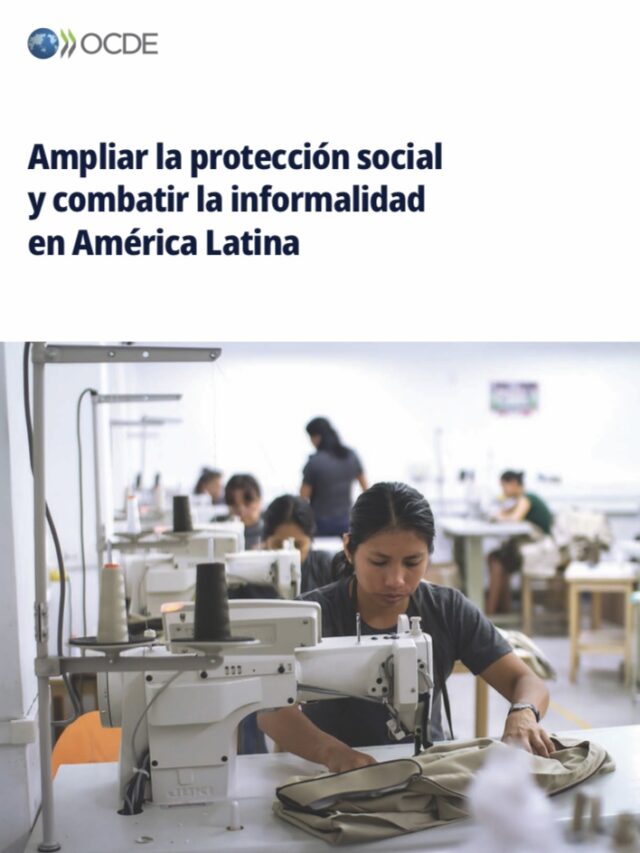
Ampliar la protección social y combatir la informalidad en América Latina

Por OCDE La informalidad es uno de los desafíos más persistentes de América Latina, que marca la vida de millones de personas. Casi la mitad de la fuerza laboral de la región trabaja fuera de los esquemas formales, sin contratos seguros, ingresos estables o acceso a la protección social. La pandemia de la COVID-19, expuso con claridad estas vulnerabilidades: mientras que los empleados formales conservaron cierta cobertura, los informales estuvieron entre los más afectados por la pérdida de empleos, la...