
July 2026

The Impact of a Rising State Pension Age Policy on Women’s Well-Being and Health Using Longitudinal Data from the UK

By Louis Compton, Magdalena Walbaum, David R. Sinclair, Gemma Spiers, Barbara Hanratty, Raphael Wittenberg Background: The UK aimed to prolong the working lives of women by introduced a policy raising women’s state pension age (SPA) from 60 to 66. The impact of involuntary prolonged employment on individual’s health and well-being is debated. We explore how the well-being, mental and physical health of the women impacted by the policy has been affected. Methods: We used data from the first 12-waves of the...


The China Imbalance Residual: A Demographic Decomposition

By Brian Peters The Chinese current-account surplus has averaged approximately 2 percent of GDP since 2015, declining from a 2007 peak near 10 percent yet remaining far above what its income level and demographic structure would predict in a global panel. We estimate this gap as the residual against the income-conditional demographic baseline fitted on 140 countries with China held out. The residual averages +5 to +12 percentage points of GDP across four sub-periods of 2000-2024, peaks at +14.3 pp...

Optimizing Retirement Financial Strategies: Integrating Annuities, Defined Contribution Plans, and Long-Term Care Costs

By Vanya Horneff, Raimond Maurer, Olivia S. Mitchell, Julius Odenbreit Nursing home costs in the United States now exceed $100,000 per year, and government assistance programs such as Medicaid help out only when retirees are largely destitute. Moreover, health shocks driving the need for such care can arise suddenly in old age, are frequently permanent in nature, and can be associated with declining mental and physical abilities. These facts raise the important question of how households can best prepare to...

How Americans Are Thinking About Aging: For older adults, income largely shapes the aging experience

By Luona Lin & Juliana Menasce Horowitz The U.S. population is aging rapidly. From 2004 to 2024, the share of Americans ages 65 and older increased from 12.4% to 18.0%, according to the U.S. Census Bureau. This is due in part to the country’s declining birth rate and increased life expectancy, but also because Baby Boomers – whose generation is defined by the increase of births in the U.S. following World War II – are now well into their 60s and 70s. This research is part of...

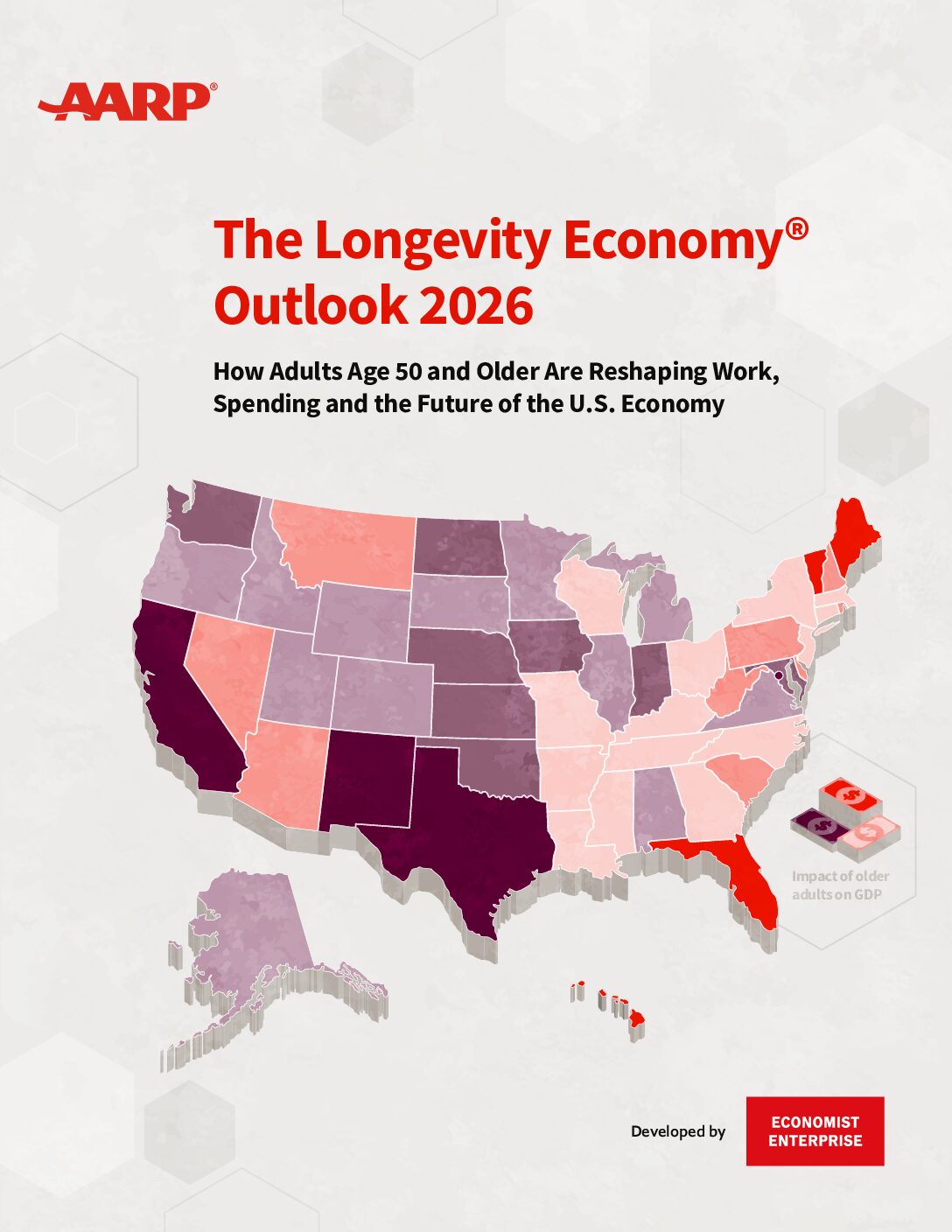
The Longevity Economy Outlook 2026: How adults age 50 and older are reshaping work, spending and the future of the U.S. economy

By AARP The AARP Longevity Economy Outlook 2026, developed by Economist Enterprise, explores the wide-ranging impacts of the 50-plus population in the U.S., measuring the size and scope of their economic activities and societal contributions. As people live longer and healthier lives, they are contributing to communities and fueling economic growth well past the traditional retirement age. The contributions of people 50-plus generate trillions of dollars of U.S. GDP, account for a major share of consumer spending, support tens of millions...

Pension Income and Post-Retirement Labor Supply

By Fabian Kindermann, Carla Krolage, Sebastian Kunz, Manuel Pannier & Karoline Ströhlein This paper provides causal evidence on how pension income affects labor supply after retirement. We exploit the introduction of the German Earned Income Pension Credit (Grundrente), which permanently increased pension income for retirees with long contribution histories and comparatively low lifetime earnings. The reform generates exogenous variation in non-labor income without creating additional labor supply distortions, allowing us to isolate pure income effects. Using administrative data covering the...

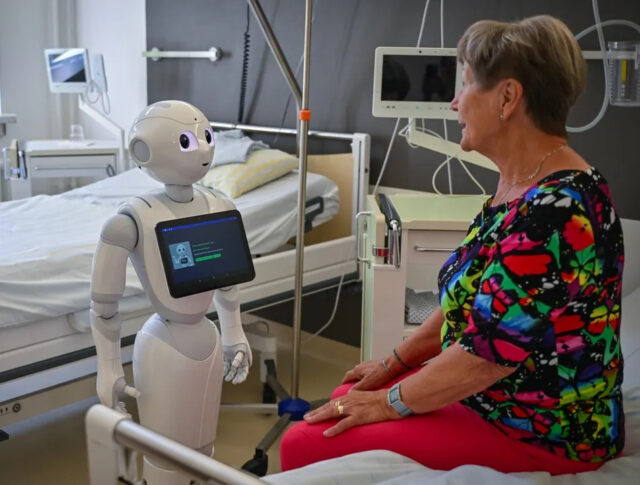
Artificial Intelligence in Elderly Care: Navigating Ethical and Responsible AI Adoption for Seniors

By David Mhlanga This paper delves into the critical intersection of ageing and the rapidly evolving field of artificial intelligence (AI). This exploration is anchored in the recognition of the unique potential that AI holds for enhancing the lives of seniors, while also acknowledging the complex ethical and practical challenges that accompany its adoption in elder care. The paper comprehensively examines how AI can revolutionize healthcare, assistive technologies, and social engagement for the elderly, offering solutions that promise increased independence,...

Observatorio del mercado laboral: ¿cómo vamos al 1T2026?

Por México, ¿cómo vamos? En el mercado laboral mexicano persisten dos fallas estructurales que necesitan ser atendidas a partir de políticas públicas integrales que puedan corregirlas: la baja participación laboral de las mujeres y la alta y persistente informalidad laboral. Al primer trimestre de 2026 (1T2026), la tasa de participación laboral de los hombres se encuentra 28.8 puntos porcentuales (pp) por encima de la tasa de participación laboral de las mujeres. Además, la tasa de informalidad laboral (TIL1) se ubica en 54.8%, es decir,...

Pobreza laboral, salario mínimo y actividad económica en México

Por Rogelio Varela Llamas En este artículo se analiza el efecto del salario mínimo en la pobreza laboral, utilizando el índice de salario mínimo real, el índice de la tendencia laboral de la pobreza y el índice global de actividad económica como variable de control. Las series son integradas de orden uno I (1) y se determina que no cointegran. Se estima un modelo en primeras diferencias y las pruebas de diagnóstico revelan que no hay problemas con los errores...

Trayectorias de las personas mayores hacia una probable edad de pensión

Por Carlos Alejandro Vélez Echagaray Objetivo: Este artículo realiza un estudio longitudinal con el objetivo de identificar los principales factores que influyen en las probabilidades de tener derecho a una pensión. Método: Para cumplir con este objetivo, se utilizó la ENASEM y se recrearon las trayectorias laborales de las personas mayores. Posteriormente, se utilizó un modelo Optimal Matching para agrupar las trayectorias laborales, por último, se aplicó un modelo logístico multinomial para encontrar las probabilidades de pertenencia a cada grupo. Los resultados indican...